Return to Nicholas Johnson Main Web Site
|
|
Earlier Publications List (1996-2016) Nicholas Johnson |

NOTE: Last updated April 10, 2016. The most generally inclusive collection of links to multiple categories of Nicholas Johnson's publications is the "Nicholas Johnson Material by Source" page of the main Web site, https://www.nicholasjohnson.org.
For publications after after May 14, 2013, there are not, yet, annotations. However, for publications prior to May 14, 2013, below, this annotated bibliography lists, and provides links to, the full text of most of the 500 additions of articles, transcripts, speech texts and comments by Nicholas Johnson created since the spring of 1996 (along with a few odds and ends). They are listed in reverse chronological order (most recent first). Some additions since November 2006 also may be incomplete and without annotations or links. Listings prior to that time are, for the most part, very thorough. In addition, the Nicholas Johnson Bibliography Main Page: 1952-1995 is available online and prints out at over 300 pages.
Index of blog entries. Since June 23, 2006, Nicholas Johnson has created and managed over 1000 blog essays in the blog, FromDC2Iowa.blogspot.com. Although those essays are not listed on this Web page (unless they are a source where these items are found), many are substantial texts that anyone visiting this "Earlier Publications List" page might be interested in knowing about. All are listed, in reverse chronological order by year, in the right-hand column of each blog post. An incomplete (only June 23, 2006 to April 8, 2016) chronological listing of each entry, with its date, heading, and URL location, is available as a downloadable spreadsheet: https://www.nicholasjohnson.org/BlogStuf/Blog-Index.xls A volume containing an edited and organized collection of blog posts from 2012 was published by Lulu Press in December 2012 as, From DC to Iowa: 2012. All of Johnson's books, with links to where they can be obtained, are listed within Nicholas Johnson Material by Source.
Contact. Nicholas Johnson contact information can be found here: Contact. (Some of the linked texts below, created prior to 1998, make reference to outdated, incorrect, e-mail addresses.)
"Senate Ignoring the People's Voice," Iowa City Press-Citizen, April 8, 2016, p. A5, and "Examining the 'People's Voice,'" The Gazette, April 10, 2016, p. A5 [embedded in "The Constitution, Supreme Court, and People's Voice," April 8, 2016]
"Some Basic Facts About Water," The Gazette, February 29, 2016, p. A6 [embedded in "Water," February 29, 2016]
"The State of the Media," Sunday Speaker Series, League of Women Voters of Johnson County, Iowa, Iowa City Public Library, February 28, 2016 [embedded in "The State of the Media," February 29, 2016]
"Design Communities to Support Communication, Interaction and Learning," The Gazette, February 7, 2016, p. C4 [embedded in "Our Communities' Second Priority," February 7, 2016]
"Why Support Sanders," The Daily Iowan, January 28, 2016, p. A4 [embedded in "Caucus With Your Heart and Head -- for Bernie," January 28, 2016]
"Why I'm Caucusing for Sanders," The Gazette, January 26, 2016, p. A8 [embedded in "Caucus With Your Heart and Head -- for Bernie," January 28, 2016]
"CIVIC's Gift to Iowa City," remarks on the occasion of the presentation of the 2015 Citizen Diplomat Award from the Council for International Visitors to Iowa Cities, Vetro Hotel, Iowa City, Iowa, January 27, 2016
"Sanders the Right Democrat for Caucus," Iowa City Press-Citizen, January 22, 2016, p. A7 [embedded in "Why I'm Caucusing for Sanders and You Should Too," January 22, 2016]
"Foreword: Censorship Its Causes and Cures," Mickey Huff, Andy Lee Roth and Project Censored, Censored 2016: Media Freedom on the Line, The Top Censored Stories and Media Analysis of 2014-15 (New York: Seven Stories Press, 2016), pp. 11-19
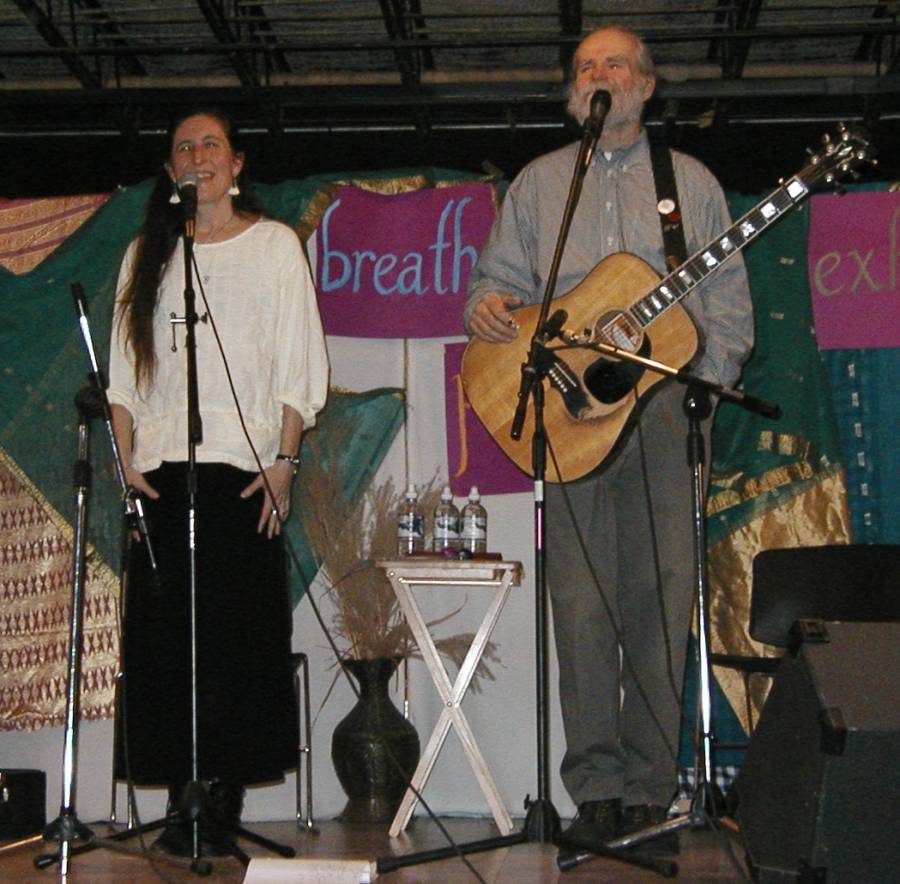
"Rockin' the Bern," remarks on the occasion of a gathering of Bernie lovers, music lovers, speakers and musicians, at The Mill, Iowa City, Iowa, December 6, 2015 [embedded in "Feeling the Bern at The Mill," December 9, 2015]
"Understanding Terrorist Thugs," The Daily Iowan, December 3, 2015, p. 4, and "What Motivates 'Terrorist Thugs'?" The Gazette, December 20, 2015, p. C4 [embedded in "Understanding Terrorist Thugs," December 3, 2015]
"Sober Risk Assessment Needed to Respond to Terror," Iowa City Press-Citizen, November 28, 2015, p. A11 [embedded in "Syria, Terrorism, Craziness and Common Sense," November 28, 2015]
"Let's Seize Our Opportunity, Take Responsibility Seriously," The Gazette, Gazette Writers Circle, November 22, 2015, p. C3 [embedded in "Anyone for Democracy?" November 22, 2015]
"Parallels Between School Systems Are Staggering," Iowa City Press-Citizen," November 10, 2015, p. A5; and "Tim Wolfe Resignation: When Money Talks in Higher Education," The Gazette (online), November 9, 2015, 4:09 p.m. [embedded in blog, "UI and Higher Education in Context," November 9, 2015]
"Syria's Refugees: Job One and Job Two," The Gazette, November 1, 2015, p. C4 [embedded in blog, "Syria's Refugees: Job One and Job Two," November 1, 2015]
"Throgmorton is City Treasure," Iowa City Press-Citizen, October 28, 2015, p. A13 [embedded in blog, "Throgmorton Is City Treasure," October 28, 2015]
"Better Ways to Pick a New UI President," The Gazette, Gazette Writers Circle, September 27, 2015, p. C5 [embedded in blog, "Seven Steps for Transitioning Universities," September 27, 2015]
"Create a Caring Community," The Gazette, September 13, 2015, p. C3 [embedded in blog, "Three Steps to Creating a Caring Community," September 13, 2015]
"The Origins and Future of Radio," document prepared in preparation for, and from which excerpts were used, in remarks on the occasion of KOHI-FM's third anniversary, Ames, Iowa, August 23, 2015. Audio of that talk is available here, and transcripts of some excerpts, along with additional information is embedded in "Local, Non-Profit Radio's Future," August 29, 2015.
"Recognizing and Reducing Racism, " The Gazette, Gazette Writers Circle, August 9, 2015, p. C2 [embedded in blog essay, "Recognizing and Reducing Racism, " August 9, 2015]
"The Militarization of America, " The Gazette, Gazette Writers Circle, July 5, 2015, p. C3 [embedded in blog, "The Militarization of America," July 5, 2015]
"Building Consensus on Iowa City's Vision, Future," Iowa City Press-Citizen, June 30, 2015, p. A9 [embedded in blog, "Coming to 'Yes' on New Buildings and Demolition," June 30, 2015]
"Statement of Nicholas Johnson Regarding TIF Funding of the Chauncey Building," City of Iowa City City Council, Iowa City, Iowa, June 8, 2015 [embedded in blog, "Chauncey's TIF," June 13, 2015]
"Curbing Waste: Bad News, Good News," The Gazette, June 7, 2015, p. C1 [embedded in blog, "The Price of Our Freedom to Waste," June 7, 2015]
"Enhancing Everyone's Experience at Kinnick," Iowa City Press-Citizen, April 29, 2015, p. A13 [embedded in "Football: Enhancing Everyone's Game Day Experience," April 29, 2015]
"Nicholas Johnson Remarks," John P. Craven Memorial Service, Central Union Church, Honolulu, Hawaii, April 9, 2015 [linked from blog, "John Piña Craven, American Treasure," February 15, 2015]
"Why You Can't Win, Break Even, or Get Out of the Game: Watching the Digital Demolition of Our Fourth Amendment Privacy," University of Iowa College of Business, Ideas & Intersections Program, Digital Privacy, Iowa City, Iowa, April 7, 2015 (plus Power Point slides; both are downloads)
"Plenty to Enjoy About 'Troll Music,'" Iowa City Press-Citizen, March 27, 2015, p. A7 [embedded in "Tonight, Tomorrow Last Chance for 'Troll Music,'" March 27, 2015]
"NFL Football: It's Only Television," The Gazette, January 18, 2015, p. C2 [embedded in "NFL: Just Another Rigged TV Show?" January 2, 2015]
"Will Germany's Economic Formula Work for Iowa?" Iowa City Press-Citizen, January 16, 2015, p. A7 [embedded in "Free College Education for Iowans?" January 16, 2015]
"Sycamore TIF Unnecessary," Iowa City Press-Citizen, November 23, 2014, p. A5 [embedded in blog essay, "Lucky's Gets Lucky: $1.7 Million of Taxpayers' Money," November 23, 2014]
Vanessa Miller, "UI Professor and Former FCC commissioner Sides with Obama on Net Neutrality; Johnson: 'The Internet Holds so Much Promise for Everybody,'" The Gazette, November 12, 2014, p. A9 [drawn from an interview with Nicholas Johnson, and embedded in >"Net Neutrality: An Interview," November 13, 2014] "Six Step Program for Avoiding War in Iraq," Iowa City Press-Citizen, November 11, 2014, p. A7 [embedded in blog essay, "Six Step Program for Avoiding War," November 11, 2014] "Residents Deserve Courthouse Annex," Iowa City Press-Citizen, October 28, 2014, p. A7 [embedded in blog essay, "Taxpayers' Money: Government Projects, Yes; Private Giveaways, No," October 28, 2014] "On the Local Option Sales Tax, Think Before You Vote," Iowa City Press-Citizen, October 8, 2014, p. A11 [embedded in blog essay, "Think Before Taxing Poor Additional 27%," October 8, 2014] "Sycamore TIF Unnecessary," Iowa City Press-Citizen, November 23,
2014, p. A5 [embedded in blog essay, "Lucky's Gets Lucky: $1.7 Million of Taxpayers' Money," November 23, 2014]
Vanessa Miller, "UI Professor and Former FCC commissioner Sides with Obama on Net
Neutrality; Johnson: 'The Internet Holds so Much Promise for Everybody,'" The Gazette, November 12, 2014, p. A9 [drawn from an interview with Nicholas Johnson, and embedded in >"Net
Neutrality: An Interview," November 13, 2014] "Six Step Program for Avoiding War in Iraq," Iowa City Press-Citizen, November 11, 2014, p. A7 [embedded in blog essay, >"Six Step Program for Avoiding War," November 11, 2014] "Residents Deserve Courthouse Annex," Iowa City Press-Citizen, October 28, 2014, p. A7 [embedded in blog essay, "Taxpayers' Money: Government Projects, Yes; Private Giveaways, No," October 28, 2014] "On
the Local Option Sales Tax, Think Before You
Vote," Iowa
City Press-Citizen,
October 8, 2014, p. A11 [embedded in blog essay, "Think
Before Taxing Poor Additional 17%," October 8, 2014] Becky Lentz and
Bill Kirkpatrick, "Wanted: Public Interest Mavericks at the FCC" (an
interview with Nicholas Johnson),
International Journal of Communication, vol. 8, Sept. 2014 "Is
War the Best Answer?" Iowa
City Press-Citizen,
September 12, 2014, p. A7 [embedded in blog essay, "Whatever
the Question, Is War the Best Answer?"
September 10 &12, 2014] "Let's
Stop Making Players Pretend to Be Students," Iowa City Press-Citizen, August 27, 2014, p. A11 [drawn from and embedded in "Curing
a Cancer on the Academy," August 20, 2014] "When
Believing Is Seeing," Iowa City Press-Citizen, July 14, 2014, p., A5 [embedded in
blog essay, "When
Believing is Seeing," July 14, 2014] "Is
Texting the Problem, or Just Part of the Problem?" Iowa City Press-Citizen, June 16, 2014, p. A5 [embedded in blog
essay, "DWI,
DWT, DWD: Keeping Our Eyes On The Road," June
13, 2014] "Re-elect
Rettig for Supe, She Knows What She Is Doing"
(Mary Vasey and Nicholas Johnson), Iowa City Press-Citizen, May 17, 2014, p. A7 [embedded in blog essay, "Re-Elect
Johnson County Supervisor Janelle Rettig" December 29, 2014 [sic]] “What
Is It With the Iowa State Board of Regents?!”
Iowa City
Press-Citizen, May 16,
2014, p. A7; embedded in blog essay, "Iowa's
Economic Foundation? Graduate Education & Research," May 5, 2014
“Blogfeed: From DC2 Iowa,”
The Gazette has a hard copy feature (unavailable
online) it calls Blogfeed, in which it runs
edited versions of online blog essays. On Sunday, May 11, 2014, p. A10, it ran
a lengthy excerpt from “Iowa’s Economic Foundation? Graduate Education & Research,” May 5, 2014 “Talking
TIF: Costs Outweigh Possible Benefits,” The Gazette, April 13, 2014, pp. A9, A12; embedded
in blog essay, "Tussling
Over TIFs: Pros and Cons; Tough TIF Talk," April 30, 2014 "Too
Many Negatives, Too Little Upside to TIFs," The Gazette, March 25, 2014, p.
A6; embedded in blog essay, "TIFs:
Too Many Negatives," March 25, 2014 "TIF: If
You Can't Beat 'em, Insist on More Transparency," Iowa City Press-Citizen, March 18, 2014, p. A7; embedded in "TIF
Apology," March 18, 2014, with the supporting "TIFs:
Links to Blog Essays," March 16, 2014 "Communications
Evolution, Revolution and the Role of the Academy," Keynote Address, Dirty Sexy Policy
Conference, Carsey-Wolf Center, University of
California Santa Barbara, February 20, 2014 "Public
Comments About Public Comments Guidelines," Iowa City Press-Citizen, February 15, 2014, p. A9; embedded in "Open
Mikes At Open Meetings? A Discussion About
Discussion," February 12, 2014. "Blogfeed: From DC2 Iowa" The Gazette has a hard
copy feature (unavailable online) it calls Blogfeed,
in which it runs edited versions of online blog essays. On Sunday, January 19,
2014, p. A10, it ran a lengthy excerpt from "Polar
Vortex; God's 'Cold Shoulder Revenge," January 7, 2014. "Blogfeed: From DC2 Iowa" The Gazette has a hard
copy feature it calls Blogfeed, in which it runs
edited versions of online blog essays. On Sunday, December 15, 2013, p. A10, it
ran a lengthy excerpt from "Gasoline
Tax Is Our Friend," December 5, 2013, in which is embedded the Press-Citizen
column, "Think Long and Hard Before Diluting the Gasoline Tax,"
immediately below. "Think
Long and Hard Before Diluting the Gasoline Tax," Iowa City Press-Citizen, Dec. 5, 2013,
p. A7; embedded in "Gasoline
Tax Is Our Friend," December 5, 2013, "Bars,
Students Should Be Thankful," Iowa City Press-Citizen, November 3, 2013, p. A8, with link to "Underage
Drinking As Human Right? I Don't Think So; Why Bar
Owners, Students, Should Embrace Iowa City's 21 Law," October 16, 2013
(the source material for the Press-Citizen piece, but without an embed
of it). "Re:
21-Ordinance is Human-Rights Violation,"The Daily Iowan, October 17, 2013, p. 4A, embedded in "Underage
Drinking As Human Right? I Don't Think So; Why Bar
Owners, Students Should Enbrace Iowa City's 21
Law," October 16, 2013 "Blogfeed: From DC2 Iowa" The Gazette has a hard
copy feature it calls Blogfeed, in which it runs
edited versions of online blog essays. On Sunday, September 29, 2013, p. A10,
it ran a lengthy excerpt from "Paying
By The Mile Is A Terrible Idea; The Gasoline Tax Is
Our Friend," September 25, 2013, "Working
Our Way Through the McGinness
Kerfluffle," Iowa City Press-Citizen,
September 20, 2013, p. A7, embedded in "Is
'Moderately Honest' Enough? When Is an Elected Official's Behavior
Disqualifying?" September 20, 2013 "A
Win-Win Advisory Board for District," Iowa City Press-Citizen,
September 5, 2013, p. A7, embedded in "School
Board Election: Whom to Vote For? Nine Candidates, Three Positions; How Can We
Benefit From All?" September 9, 2013 "The
Future of Surveillance, and How to Stop It," Text of Nicholas Johnson's Remarks,
1984 Day: Restore the Fourth's Nationwide Action Against the NSA’s
Unconstitutional Surveillance, Ped Mall, Iowa City,
Iowa, August 4, 2013, 12:00-2:00 p.m. "Magazine
Cover Not Whole Story,"
Des Moines Register, July 20, 2013, p. A19; embedded in "The
Picture Worth Destroying 11,000 Words; Dzhokhar Tsamaev Photo: Celebrity
or Monster?" July 20, 2013 "Is
Boston Bomber's Photo Worth 11,000 Words?" Iowa City Press-Citizen, July
20, 2013, p. A10; embedded in "The
Picture Worth Destroying 11,000 Words; Dzhokhar Tsarnaev Photo:
Celebrity or Monster?" July 20, 2013 "Dorman
Enlightens on Law Process,"The Gazette, June 29, 2013, p. A8 "Blogfeed: From DC2 Iowa" The Gazette has a hard
copy feature it calls Blogfeed, in which it runs
edited versions of online blog essays. On May 26, 2013, p. A10, it ran an
excerpt from "Bike
to Work, Bike for Life; Bicycles as Problem Solvers," May 17, 2013
"Blogfeed: From DC2 Iowa" The Gazette has a hard
copy feature it calls Blogfeed, in which it runs
edited versions of online blog essays. On May 12, 2013, p. A10, it ran excerpts
from "The
Morning After; More Jail Cells ("Justice Center") Strikes Out; Third
Time's Not Charm ," May 8, 2013, and "Still Many More
Options for Jail," for which, see below. "Still
Many More Options for Jail"
The Iowa City Press-Citizen invited a number of local individuals to
address one each of three questions. Question 1: Some critics of Johnson County’s plan for a new justice center oppose building
more jail space because of racial disparity in the jail and because some
non-violent criminals are incarcerated. Are those reservations relevant to the
justice center vote? What can be done locally to address those concerns?
Question 2: Is the justice center proposal the most cost effective solution for
addressing the problems that come with the overcrowded jail and century-old courthouse?” Question 3: What should happen next if voters say
"no"? The answers were published online. I chose Question 3,
"What should happen next if voters say 'no'?" The Press-Citizen subsequently
chose to publish a version of my response in its hard copy edition in the form
of a Letter to the Editor: Nicholas Johnson, "Still Many More Options for
Jail," Iowa City Press-Citizen, May 6, 2013, p. A7, from the
original online essay, embedded in "The
Morning After," May 8, 2013, where it is headlined, "Vote Again,
But Separate Courthouse From Jail." This essay suggests that most
opponents agree "something" needs to be done, but it does not follow
that "therefore" the proponents' proposal is the only option; it
would be beneficial to first approve Courthouse improvements (about which there
seems to be little controversy), and then at least consider the possibility of
a totally separate criminal justice facility. "Online
Comments RE: 'Getting to "Yes" by Voting "No" On Justice
Center"
See, "Getting to 'Yes' by Voting 'No' On Justice Center," and
"There Are Alternatives," below. The day after that column appeared,
an addendum was added to the blog essay. The next day (by now, May 2), The
Daily Iowan, on its own, edited and took excerpts from that addendum, and
ran it on its opinion page under "Online Comments": Nicholas Johnson,
"Online Comments RE: 'Getting to "Yes" by Voting "No"
On Justice Center," The Daily Iowan, May 2, p. A4, embedded in the
blog essay, "There
Are Alternatives," April 30, 2013. It suggests an additional two
steps: (1) a calculation of the potential reductions in incarceration numbers
as a result of the use of alternatives to putting more people in jail, followed
by (2) a "peak-load" analysis; that is, (a) on the assumption that occuplancy rates change from day to day, and that (b) it
doesn't make financial sense to construct enough additional jail cells to be
able to house every single person on every day of the year, (c) what are the
optimum number of days per year for which it makes sense to build enough to
house everyone, and the number of days for which it makes more sense to send
some elsewhere. "Getting
to 'Yes' by Voting 'No' On Justice Center" This column in the Daily Iowan
was in part a response to one by one of the proposal's proponents the prior
day. It points out that proponents' emphasis on why "something" needs
to be done fails to join issue -- since the dispute isn't over need, the disipute focuses on what that "something" should
be, how much of it, where it's to be located, and what new procedures will
accompany construction. The column notes the distinction in negotiations
between "positions" and "interests," and that adopting
Margaret Thatcher's TINA stance ("There Is No Alternative") is no
path to compromise. An analogy is drawn to the innovative response to
communities' increased need for landfills: recycling and composting, with the
suggestion there are also alternatives to building ever-more jail cells, and
the suggestion that a detached, one-stop-shop criminal justice center
might better serve our needs. Nicholas Johnson, "Getting to 'Yes' by
Voting 'No' On Justice Center," The Daily Iowan, April 30, 2013, p.
A4, embedded in the blog essay, "There
Are Alternatives," April 30, 2013. "Vote
'No' on Justice Center, But 'Yes' for Courthouse" The Johnson County, Iowa, Supervisors
propose to build a new, expanded jail and associated facilities as a modern architecture
attachment to a 100-year-old architectural gem of a Courthouse. At a bond
election in November 2012, it was voted down. It was then scheduled for a
second vote May 7, 2013. The county's voters are sharply divided between the
"yes" voters and the "no" voters. Johnson proposes -- if
and when there is yet a third vote -- separating the proposals to improve the
Courthouse, about which there is relatively little disagreement, and getting
them approved. That would clear the deck to give more serious attention to the
advantages, laid out in this column, of a separate, detached Criminal
Justice Center. Nicholas Johnson, "Vote 'No' on Justice Center, But 'Yes'
for Courthouse," Iowa City Press-Citizen, April 12, 2013, p. A7,
embedded in the blog essay, "Vote
'No' on Justice Center; 'Yes" for Courthouse, Detached Criminal
Facility," April 12, 2013. "Congress'
First Step in Long Journey"
This column is a proposal and plea that Congress consider, as a first step
toward elimination of corporate tax loopholes, and drawing down the debt, that
it simply substitute above-the-table subsidy payments for the present tax
deductions. It acknowledges the debt elected officials owe to their campaign
contributors, and therefore the difficulty of simply eliminating the returns
contributors get for their "investment." Making public and clear who
is getting taxpayers' money, and how much, might be a first step in this
journey of a thousand miles. Nicholas Johnson, "Congress' First Step in
Long Journey," The Gazette, April 4, 2013, p. A5, embedded in the
blog essay "First
Step to Reducing National Debt," April 4, 2013. "Are
the Iowa Universities' Stations No Longer 'Educational'?" The Gazette reported that Iowa
Public Radio responded to The Gazette's open meetings/public records
request that since it was not a government body it didn't have to comply with
the law. Johnson responded with a Letter to The Gazette that read, in
part, "Today’s Iowa Public Radio is neither
noncommercial nor educational. Indeed, it’s
baffling why schools that think they’re
misunderstood don’t use this valuable resource
to tell their story. 'Self
Help for a Helpful University,' If the
universities want to fritter away what their stations could contribute to the
schools’ mission, that’s one thing. But if
IPR is truly 'not a government body,' and a part of neither the Regents nor the
state schools, there is, minimally, at least an ethical and moral issue as to
whether the schools should continue to hold their valuable licenses to these
'educational” stations.'" Nicholas Johnson, "Public Universities
Not Using Radio Well," The Gazette, March 28, 2013, p. A5. It is
embedded in the blog essay, "Are
the Iowa Universities' Stations No Longer 'Educational'?" April 2,
2013. "Blogfeed: From DC 2 Iowa" The Gazette has a hard
copy feature it calls Blogfeed, in which it runs
edited versions of online blog essays. On February 24, 2013, one of three it
ran was drawn from "Home
Grown Drones; Drones Abroad, Drones At Home," February 16, 2013. As
the blog essay title suggests, the subject was drones. "[Notwithstanding]
the absence of the traditional elements of a 'war' . . . we are using them
[drones] to invade countries with which we are not at war . . . to kill their
non-uniformed citizens or visitors . . . because we believe they might someday
[attempt to kill U.S. military personnel], or are engaged in planing or training to do so. . . . [B]efore
we have even developed a vocabulary, and a legal and ethical set of standards
for describing, not to mention judging, what we are doing with our drones
abroad, we're confronted with anoither set of issues
regarding our drones at home." "Like
Death and Taxes, TIFs and TIFing Seem Here to
Stay" This
column begins with, "Considering all the downsides of tax increment
financing (TIF), you have to wonder why public officials continue to use it. Is
there that much joy in playing Santa with other people’s
money? Whatever the reason, like death and taxes TIFs are here to stay. Officials
and their lucky beneficiaries love them, and the public doesn’t
seem to care — at least not enough to make an organized, political
difference. Nonetheless, it’s worthwhile to
remind ourselves from time to time why they are such a bad idea. Here’s a summary." This is followed with a
summary presentation of twenty, count 'em, twenty categories of reasons
why TIFs are a bad idea. As of the time of this entry in "Recent Pulications," no one has yet come forward to explain
why each and all of these twenty assertions are wrong. The column was
originally published as "Like Death and Taxes, TIFs and TIFing Seem Here to Stay," Iowa City Press-Citizen,
February 3, 2013, p. A7, and embedded in the blog essay, "Tough
TIF Talk," February 3, 2013. "Proposed
Social Security Changes Punish the Poor" As a part of the effort to bring
the federal budget, deficit, and debt under control, those who have always
opposed any Social Security program at all are advocating a re-calculation of
the Social Security inflation index. This column argues that Social Security
was, and should be, "off the table" for these purposes (because it is
separate and self-funded, and addressing its issues is a diversion from the
most pressing "fiscal cliff" challenges). Moreover, the change
proposed -- a "chained CPI" -- would be a significant cut in the benefits
for the elderly poor; one that presumes that, for example, a reduction in
purchasing power is not really a cut if the recipient can substitute beans for
meat. It is not an effort to design an index more precisely applicable to the
elderly; such an index, "the elderly index," is available -- but not
being discussed because, in part, it would require larger payments
rather than smaller. The column was published by the Iowa City Press-Citizen,
December 26, 2012, p. A11, and reproduced in the blog entry, "Social
Security: The Press-Citizen Column," the same day. (The column
is a 650-word derrivative of an
2179-word earlier blog entry, "Social
Security, Inflation, and Punishing the Poor," December 19, 2012; and
see, "Rappelling
Down the Fiscal Bluff; Why Cliff is Clearly the 'Least-Worst' Win-Win
Solution," December 16, 2012.) Letters to the Editor in the Press-Citizen
criticizing the December 26 column, prompted a Letter of response:
Nicholas Johnson, "Let's Move Beyond 'Tis-'Tain't,"
Iowa City Press-Citizen, January 7, 2013, embedded in "Social
Security and the Cliff: A Response," January 7, 2013. "Readers
Nominate Persons of the Year: Theater Group Should be Person of the Year" The Press-Citizen selects
a "Person of the Year" each year. Sometimes that includes a group,
such as the Englert Civic Theatre Group in 2000.
November 30 Johnson nominated the Combined Efforts Theatre, "Because in
addition to great theater, CET provides an all-volunteer forum in which
residents of all ages, with and without disabilities, get to know and
understand each other while working together on a common project . . .." Published in the Iowa City Press-Citizen,
November 30, 2012, p. A7, and embedded in "Iowa's
Inclusiveness: Source of Pride and Reward," December 5, 2012. "How
the County Can Get to 'Yes' on the Justice Center" See, "Vote 'Yes' for Justice
Center, But With Issues," October 15, 2012, below. Bond funding for the
proposed building went downt to defeat in the
November 6, 2012, election. Some of the proponents advocate going back to the
voters with the same proposal. Johnson argues for a process involving
proponents and opponents designing a compromise that might win approval.
Responding to the rational objections with civil discussion and compromise is
likely to be more effective than stiff-arming the electorate. Published by the Iowa
City Press-Citizen, November 16, 2012, p. A7, and reproduced in "'Iowa
Nice' & the Compromise Three-Step," November 16, 2012. "Value of Independent
Judiciary"
(with Paul Gowder) A unanimous Iowa Supreme Court
decision found an Iowa law banning gay marriage to be a violation of the civil
rights provisions of the Iowa Constitution. Opponents of gay marriage settled
on the Iowa "judicial retention" elections as their weapon to remove
from the bench those justices who had signed on to the opinion. Johnson and Gowder argue that the purpose of retention elections is,
and should be, limited to voters' evaluation of the judges' "integrity,
professional competence, judicial temperment,
experience and service" -- not their agreement or disagreement with
individual opinions -- thereby eliminating judges' need to campaign and accept
contributions. They conclude, "Independent judges, uninfluenced by
campaign contributions, and supported by the public, enable each of us to live
under a 'rule of law' rather than arbitrary and unchecked political decisions.
If we protect them now, they'll be able to protect us in the future."
Published as "Value of Independent Judiciary," The Gazette,
October 27, 2012, p. A5, and embedded in the blog entry, "Judicial
Retention and Iowa Justice David Wiggins," October 27, 2012. "School Boards:
Governance and Intransigence" As a member of the Iowa City Community School District
Board, 1998-2001, Johnson started his term with a focus on governance issues --
drawing on the work of John and
Miriam Carver. This included the establishment of measurable Board goals
(what the Carvers call "ends policies"), or as Johnson says, the data
necessary to answer the question, "How would we know if we'd ever been
successful?" (It also involves Board members talking, and ultimately
writing their agreements regarding, among other things, their individual and
group relationships with the "CEO" (superintendent) and each other,
and "executive limitations" on the superintendent's actions.) The Carvers'
publication, Board Leadership: Policy Governance in Action, asked
Johnson to prepare for their September-October 2012 issue the story of his
experience with the ICCSD Board, introduction to and implementaton
of the Carver governance model, and his reflections regarding what happened to
it after the terms expired for those Board members who had successfully tried
it. That article was published as "School Boards: Governance and
Intransigence." Individual hard copies of the September-October 2012
issue, or subscriptions to, Board Leadershipi:
Policy Governance in Action are available from Jossey-Bass,
One Montgomery St., Ste. 1200, San Francisco, CA 94104, or through the Jossey-Bass Website.
Online versions of the publication, and this
article, are available by subscription from Wiley Periodicals' Wiley Online Library. See also
Johnson's Governance Web
Page. "Vote
'Yes' for Justice Center, But With Issues" The Johnson County, Iowa,
criminal courtrooms and jail are thought by the Sheriff and County Board of
Supervisors to be inadequate to handle the current populations. Intuitively, as
phrased that seems a reasonable proposition. However, it leaves a number of
unanswered questions. What is the rationale behind the number of
additional jail cells? Should each of Iowa's 99 counties be building jails
large enough to handle their peak number of inmates each year? Or should there
be a rational use of neighboring counties' jails empty cells? Why is there no
central rationalization of local governments' mounting taxpayer bonded debt?
(The "Justice Center," as proposed, will add another $48 million.
Should we do more with a holistic approach to the proportion of jail population
that suffers from mental illness and alcohol or other drug dependency?
Published as "Vote 'Yes' for Justice Center, But With Issues," Iowa
City Press-Citizen, October 15, 2012, p., A7, the column can be found
embedded in the blog entry, "Prisons:
The Costs and Challenges of Crime," October 15, 2012. "Maybe
Taxpayers Should Buy Wal-Mart a Gift Shop" "The issue? Whether taxpayers
really support the councilk handing over taxpayers'
money, without their approval, to favored for-profit businesses." On this
occasion the Iowa City City Council chose to help a
local bookstore battle the competition from e-books and online sales, not with
a creative 21st Century way to run a profitable bookstore, but with a way to
get out of the bookstore business -- money for a "museum quality gift
shop" and cafe. Given that the Big Box stores are among the businesses
taking the greatest hit from online commerce, Johnson suggests perhaps the
Council's next step should be to buy a gift shop for the local Wal-Mart stores.
Published as "Maybe Taxpayers Should Buy Wal-Mart a Gift Shop," Iowa
City Press-Citizen, June 11, 2012, p. A7, the column can be found embedded
in the blog entry, "E-Commerce
Challenges Businesses, Governments, Taxpayers," June 11, 2012. "Moen TIF
Proposal Just Doesn't Pass the 'Sniff Test'" Fifty years ago tax increment
financing, or TIFs, were designed to encourage urban renewal of blighted areas.
Should they now be used to enrich the developers of millionaires’
high-rise condos? The local newspapers' stories indicate this Mark Moen deal is
even worse than a TIF. Like other TIFs, it shifts tax revenue away from schools
and Johnson County, and it’s unfair to the competing
landlords without TIFs. So why worse? It’s a
direct payment to Moen before construction of his $10 million, 14-story
tower; a “forgivable loan.” Forgive a $2.5 million loan?! Can the
Council guarantee the tower’s economic success?
That it wouldn’t be built without the TIF? That
taxpayers’ interests are protected if it fails, or Moen becomes bankrupt?
So far, this use of taxpayers’ money offers more questions than answers.
"Moen TIF Proposal Just Doesn't Pass the 'Sniff Test,'" Iowa
City Press-Citizen,April 9, 2012, p. 7A, and embedded in the
blog entry, "TIF
Towers," April 9, 2012. "Making
a 'Prudent TIF' More Than an Oxymoron" TIFs are a way public officials
can transfer taxpayers' money to the bottom line of the owners of for-profit
private businesses. The recipients are grateful, the officials seemingly
addicted to the process, and taxpayers are either oblivious or confused. As a
result TIFs show no signs of slowing down. Since it doesn't appear they can be
stopped or modified, perhaps the best approach would be "TIF impact
statements" -- like environmental impact statements, or the Powell
Doctrine's checklist of questions to be answered before going to war: Why does
the need for this TIF exceed all conventional needs for public funds? Among
for-profit enterprises why does this one have highest priority? Are there other
ways of funding it? What will be the impact on the recipients' competitors?
This checklist, and more, is examined in "Making a 'Prudent TIF' More Than
an Oxymoron," Iowa City Press-Citizen, November 29, 2011, p. 7A,
and embedded in the blog entry, "TIF
Impact Statements," November 29, 2011. "Shared
Governance Still Needed"
When Michael Gartner, a former member of the Iowa Board of Regents, wrote an op
ed column attacking the
concept of "shared governance" of universities (involving the faculty
in major institutional decisions), Johnson responded, "Shared governance
is a major component of most successful corporations. . . . It's
understandable Gartner didn't like the University of Iowa faculty's vote of 'no
confidence' in his regents. The NFL owners didn't like it when the players
voted no confidence in them either. But if the corporate CEOs Gartner wants as university
presidents are good ones, they will be insisting on shared governance. Shared
governance in higher education began in 1920. There are even more reasons for
it today, 91 years later." Published in the Iowa City Press-Citizen,
July 20, 2011, p. A9, and embedded in the blog entry, "Should
Faculty Share in University Governance?" July 28, 2011. "Legislature
Shifted the Cost of Education" The Des Moines Register did a major
investigation and report of "the rising costs" of college education,
but phrased it in terms of the ever-increasing share of those costs allocated
to "rising tuition" -- with the suggestion that this was in major
part the fault of university administration for not controlling costs. Johnson
responded in a Register op ed, "A major
reason for the increase in tuition is not the cost of education, but the
allocation of those costs between taxpayers (who receive a public benefit from
a well educated workforce) and the private
beneficiaries (the students who go on to better jobs and lives). . . . The most
appropriate allocation? That's a debate worth having. But for now, let's
recognize that it is the Iowa Legislature that has chosen [by reducing the
state's contribution to its 'state universities'] to allocate an
ever-increasing share of the costs to students' tuition; not the Iowa Board of
Regents, universities' administrators or faculty members." Published in
the Des Moines Register, May 29, 2011, p. 20, and embedded in the blog
entry, "Allocating
Costs; Setting the Price," May 30, 2011. "Just
What's a Board to Do?" When it looked like the Iowa City
Community School District would likely have a significant number of new board
members after the election, Johnson offered some suggestions regarding what the
departing members might be able to accomplish before they left. "[An
assessment of the District's] major challenges and opportunities."
"What the rest of the country and world are doing in K-12 education . . .
and what ought to be given serious consideration [here]." And their
recommendations regarding governance." Published in the Iowa City
Press-Citizen, May 21, 2011, p. A17, and embedded in the blog entry, "The
School Bored, Take Two, May 21, 2011. "TIF
Helps the Rich Get Richer"
There are many ways by which politicians can transfer taxpayers' money to
corporations and the wealthy, including out-and-out cash payments (subsidies)
and tax breaks. A favorite of local governments are "TIFs" (for
"tax increment funding"). Nicholas Johnson wrote of a proposed local
TIF project: "Capitalism excels at what it does best. . . . But government
has a lousy record when picking businesses. Corporatism (technically fascism)
intertwines the worst features of both government and business with predictable
results -- whether in Iowa City or Washington. . . . Capitalists are eager for
investments backed by business plans documenting cash flow and high returns.
There's no shortage of money for those projects. They don't need taxpayers'
money. . . . In fact, if those sources aren't adequate, if this TIF project
will fail without a mere $250,000 from taxpayers, that's a good sign it's not a
wise investment. And if it doesn't make sense for capitalists it darn sure
doesn't make sense for taxpayers." Published in the Iowa City
Press-Citizen, April 25, 2011, p. A7, and embedded in the blog entry, "Brother,
Can You Spare a TIF?" "Branstad and Public Transparency" At the beginning of newly elected Iowa
Governor Terry Branstad's 2011 term (along with the
Republican control of the State House of Representatives) the Iowa City
Press-Citizen requested and ran a series of op ed
columns on "Issues to Watch: State Government." Nicholas Johnson was
asked to reflect on the meaning and implications of, and issues surrounding,
Governor Branstad's professed commitment to
"transparency," or openness in government. He notes the distinctions
between "data," "information," "knowledge," and
"wisdom," comments that government and the media often offer little
more than data and information when what citizens need is knowledge. The
knowledge they need, he suggests, involves the linkages between the various
ways in which taxpayers' money is transferred to the bottom line of for-profit
corporations, the sources of campaign contributions, and which legislators
support the payments. Published in the Iowa City Press-Citizen, January
5, 2011, p. A7, and embedded in the blog entry, "Governor
Branstad's Transparency; Making Transparency in
Government Meaningful," January 5, 2011. "Net
Neutrality"
Nicholas Johnson was interviewed the afternoon of December 21, 2010, by Michele
Tafoya, host of "The Michele Tafoya Show," WCCO-AM 830, Minneapolis,
regarding the FCC's "net neutrality" rules announcement. She began by
asking, "Net neutrality, can you dumb this down . . . What does it
mean?" In his effort to respond, Johnson drew comparisons, contrasts and
analogies to the AT&T network prior to breakup, the fees paid by trucking
companies for highway maintenance (a payment per truck rather than per
company), and the costs associated with an eight-lane, rather than a four-lane,
Interstate highway (similar to the costs of additional bandwidth). He urged
that the national benefit from the free flow of information is best served if
95 percent of users, and content suppliers, pay a flat fee for service, and any
increases in prices based on usage be limited to the top five percent of the
heaviest users and suppliers. This link goes to a transcript of the exchange. A
podcast
of the interview is available from the WCCO site (as of December 23, 2010).
"Making
'Shop Locally' a Meaningful Suggestion" In this Iowa City Press-Citizen
op ed column, Nicholas Johnson notes "the Press-Citizen
Editorial Board is urging us to 'shop locally,'" and then asks, "But
what does 'buy local' mean?" If the point is to spur the local economy by
keeping our money circulating in the community, Johnson asks, don't we need to
have a little more detail about how much is leaving for "raw
materials," "manufacturing," "packaging,"
"utilities," "national franchises," "local owners"
who in fact live elsewhere, and other components of the retail price? " If you want your money to circulate as fast as
possible locally, giving more of it to local workers is the answer," he
contends. Without this kind of detailed data and analysis, he argues,
"'shop locally' is just a rousing bumper sticker of a slogan, and, as Tom Joad says to the filling station attendant in Grapes of
Wrath: 'You're jus' singin' a kinda song.'"
Published in the Iowa City Press-Citizen, December 3, 2010, p. A9; and embedded
with additional discussion in the blog entry, "Downtowns'
Future: 'Shop Locally' Column & Dialogue; Making 'Shop Locally' a
Meaningful Suggestion," December 7, 2010 (see also, "'Buy
Locally'? Good Luck; 'Buy Locally': Rousing Slogan, Largely Meaningless,"
November 24, 2010). "The
Commercialization of Non-Commercial Radio" Nicholas Johnson asks, "When, and
why, did our Iowa universities’ non-commercial, educational radio stations
go commercial?" To make his point, the column is interrupted every
paragraph or so with the full text of a sampling of the actual commercials
running on Iowa Public Radio at the time this piece was written. He notes that
at the time the licenses for these stations were granted -- and to Iowa's state
universities; not contracted out to something called "IPR" -- their
Congressional and FCC purpose was to provide a non-commercial
alternative to commercial radio. Moreover, "Law aside," he argues,
"the universities are spending big bucks on technology, personnel and
press releases to improve their image, encouraging 'faculty engagement' with
Iowans, and lobbying for a level of financial support from the Legislature more
befitting 'State' universities. Their failure to enlist in these endeavors the statewide
radio network they already own is a bewildering oversight of monumental
consequence." Published in the December 2010 issue of The Prairie
Progressive, p. 2 (distributed November 17, 2010); and embedded in the blog
entry, "Commercializing
Non-Commercial Radio; IPR's 'Enhanced Underwriting,'" November 19,
2010. "Opinions
and Personality: Brown on the Law" Nicholas Johnson clerked for U.S. Court of Appeals, Fifth
Circuit, Judge John R. Brown, 1959-60. In 2010 (17 years after Judge Brown's
death), as evidence of his impact on his former clerks (the first of whom
clerked 55 years earlier), they came together informally to organize and attend
a celebration of his 100th birthday (December 10, 2009) with a lecture and
dinner on March 1, 2010, at the University of Houston (where his papers are
archived). Nicholas Johnson's contribution of memories to that occasion was a
manuscript uncovered in Johnson's archives. It was written shortly after his
clerkship, but never fully footnoted or published until 2010, as Nicholas
Johnson, "Opinions and Personality: Brown on the Law," 47 Houston Law
Review 553 (Fall 2010), distributed in early November 2010. "Was
It Something I Said? General Semantics, the Outspoken Seven, and the
Unacceptable Remark"
This is the speech text of Nicholas Johnson's presentation to the Institute for
General Semantics Conference in New York City, October 30, 2010, based on the
draft article, below. The Power Point
slides used on that occasion are also available online. "Was
It Something I Said? General Semantics and the Unacceptable Remark" This is the October 22, 2010, draft of
an article, a work in progress, that evolved from the
research Nicholas Johnson did in the course of preparing for a presentation to
the New York City Conference of the Institute for General Semantics, October
30, 2010. It represents an inquiry into the possible contribution of general
semantics to an understanding, and more sensible handling, of employees'
"unacceptable remarks" -- as illustrated in seven case studies,
including Sharon Sherrod, Helen Thomas, and General Stanley McChrystal,
among others. "NPR Botched its Firing
of Juan Williams" Juan
Williams, former Washington Post journalist and prize-winning author,
was employed by both Fox TV and National Public Radio (NPR). He appeared on a
Fox program with Bill O'Reilly on October 18, 2010, following which he was
fired by NPR on October 20. Johnson argues that the comment of Williams that
was seized on by NPR (he is sometimes a little nervous when he sees Muslims on
airplanes), when read in context, was actually used to make precisely the
opposite point from that which NPR drew from it. Johnson notes that even NPR's
Ombudsperson acknowledged "a more deliberative approach" might have
avoided the "public relations nightmare" NPR created, and that even
Jesse Jackson has acknowledged he's a little nervous when he thinks he's being
followed by a potential African American robber. Published under this headline
by the Iowa
City Press-Citizen on October 27, 2010, p. A15, it is available as "Juan
Williams and NPR: Sacked for Speech," embedded in "NPR
Botched Firing of Juan Williams; Sacked for Speech," FromDC2Iowa,
October 27, 2010, and see also the related, "Unacceptable
Remarks: Ex-NPR Juan Williams; What Words Warrant Firing?"
FromDC2Iowa.blogspot.com, October 22, 2010. "The Conservative Case
for Judicial Retention"
The Iowa Supreme Court's Varnum decision,
holding the legislature's law banning same sex marriage to violate the Iowa
Constitution, became a rallying focus for the anti-gay marriage crowd when
three of the court's justices came up for "retention" on the November
2, 2010, ballot. Judges, lawyers, law professors and editorial writers took the
position, among others, that a vote not to retain a judge, based upon one's
opposition to the outcome in a single decision, was a perversion of the
judicial retention standards and procedure. The argument did not seem to
persuade many of those opposed to Varnum.
Johnson decided it was important to put the argument in the language of
political conservatives, and relied on The Federalist Papers to make his
case. The
column appeared in The Gazette (Eastern Iowa), on October 17, 2010,
p. A17, and was also embedded in a related blog entry the same day, "Why
Conservatives Support Judges Retention; Those Supporting Removal Are
'Conservatives in Name Only' (CINO)," October 17, 2010. "Honor Workers Every
Day" The death of
Tom Fosdick, a construction worker at the University of Iowa's Boyd Law
Building, prompted this Iowa City Press-Citizen column by Nicholas
Johnson. He notes President Obama's honoring of those who've died in America's
wars in Iraq and Afghanistan over the years, and that a similar number die in
workplace accidents in the United States every year. He argues that those who
built America, with skills and a willingness to assume risks that most of us
don't have, deserve our respect -- along with better pay and workplace safety
protections -- every day, not just on Labor Day. "Honor
Workers Every Day," Iowa City Press-Citizen, September 6, 2010,
p. A7, and embedded in a related blog entry the same day, "Labor
Day: Honor Workers Every Day; Nick's 2010 Labor Day Press-Citizen
Column," September 6, 2010. "The DPJ's FCC: Letter
from America"
Nicholas Johnson made four appearances at four Japanese universities in the
Kyoto-Osaka area from June 30 through July 8, 2010. They were occasioned by the
proposal of the newly elected Democratic Party of Japan ("DPJ") to
move media regulation from the Ministry of Interior and Communication to an
independent regulatory commission, a "Japanese FCC." The author's
contribution was designed to be reflections from a former FCC commissioner on
the challenges confronted by the U.S. FCC in its attempts at broadcast
regulation. This article was written during the course of preparing for those
presentations, some of which drew upon it without, of course, including the
endnotes. The extensive references in those 75 endnotes, linked to sources on
the Internet, are now made available for any in those audiences, or others,
interested in pursuing further the subjects discussed in the lectures. This
is the version as of July 27, 2010. "Public Access to
Media: History, Status and Future" This was the third of four appearances at four Japanese
universities during Nicholas Johnson's June 30-July 8, 2010, speaking tour in
the Kyoto-Osaka area. The audience on this occasion consisted of about 200
undergraduate media studies students of Professor Tsutomu Kanayama
at Risumeikan University, Osaka, Japan. Johnson
lectured in English; Professors Kanayama and Shinji Uozumi provided the translation into Japanese. The lecture
was designed to introduce undergraduates to the U.S. "public access
movement," the concepts of rights of "entry" and
"access" to mass media, why the Internet is not an adequate
alternative, the regulatory role of both "East coast code" and
"West coast code," the inadequacy of the mere language of the U.S.
First Amendment and Japanese Article 21 to resolve disputes, thereby
necessitating reference to the purposes and goals of "free speech,"
and the origins and evolution of "public access" cable channels in
the U.S. It was presented at Ritsumeikan University,
Osaka, Japan, July 6, 2010. This
is a copy of the advance text from that occasion. "A Japanese ‘FCC’:
A Former U.S. FCC Commissioner’s
Perspective" This
was the second of Nicholas Johnson's four appearances at four Japanese
universities in the Kyoto-Osaka area of Japan, June 30-July 8, 2010. This
lecture was in some ways a full 30-40-minute expansion of the much shorter
presentation the prior day under the same title, in that the lecture focused on
description of the U.S. experience with media content regulation, the issues
raised by those efforts, and how some of them have been resolved. Conclusions
regarding the implications of this history for Japan were left to the audience.
It was organized around the following questions: Introduction: how much FCC do
you want?; Is there a need for regulation of the
media?; What are the constitutional constraints on government regulation of
media?; What has the U.S. FCC regulated with regard to the media -- how and
why? What issues have emerged?; What are the
limitations on the independence of an "independent regulatory
commission"?; The counterforce of public participation. It was presented
to the Faculties of Law and American Studies, Center for American Studies,
Study Group Number 2: The American Legal System, at Doshisha
University, July 5, 2010. This
is a copy of the advance speech text. "A Japanese ‘FCC’:
A Former U.S. FCC Commissioner’s
Perspective"
Nicholas Johnson made four appearances at four Japanese universities during a
June 30-July 8, 2010, speaking tour in the Kyoto-Osaka area. The invitations
were occasioned by a 2009 proposal from the then newly-elected Democratic Party
of Japan for a "Japanese FCC." On this occasion he spoke at a Japan
Society for Studies in Journalism and Mass Communications Workshop, at the
Kansai University, Osaka-Suita, Japan, July 4, 2010. This
is a copy of the advance speech text. "Whatever Happened to
the 1934 Communications Act?" Nicholas
Johnson is interviewed about a number of FCC and media policy issues on Ed
Madison's "Media Talk" program # 107, May 13, 2010. Available for download or streaming from the Media Talk Web site and as a transcript.
"Corporate Free
Speech" Although the
Supreme Court went well beyond what was necessary in resolving the Citizens
United case, when it declared that corporations have full First Amendment
free speech rights, the disproportionate influence of corporations and their
money on American politics and government was not altered all that much.
Unaffected were the ability of corporate executives to contribute to candidates
and political parties, to "bundle" checks from corporate employees,
to set up political action committees (PACs), to make million-dollar
contributions to parties, to have multi-million-dollar lobbying programs, and
to broadcast commercials or documentaries attacking, or supporting, candidates.
All that was altered was the McCain-Feingold prohibition on their broadcasting
such material 30 days before primaries and 60 days before general elections,
which the Court ruled could not constitutionally be restricted. Nicholas
Johnson's comments were part of the weekly "Ethical Perspectives on the
News" program on KCRG-TV9, Cedar Rapids. The Moderator was Scott
Samuelson; the other panelists were David Halfpap,
Senior Vice-President, Aegon USA, and Nathan Willems,
Iowa House of Representatives, District 29; with Executive Producer Cedric J. Lofdahl and Associate Producer Terry Boyden. The show was
taped April 6, first broadcast April 25, 2010, 10:30 a.m., and a transcript
of Nicholas Johnson's comments uploaded May 19, 2010. "Broadband
Expansion"
"Why does the FCC think America needs its newly-
announced ‘National Broadband Plan' and why are Iowa cities scrambling to
be Google’s choice for superfast broadband? We
examine broadband expansion with former FCC Commissioner Nicholas
Johnson." Ben Kieffer's "The
Exchange," Iowa Public Radio, originally broadcast April 5, 2010, with
audio available for streaming or download from "The
Exchange" Web site. "Dear Mr. President . .
." In the Press-Citizen's
edition on the day President Barack Obama delivered his health care speech to a
3000-person packed Field House in Iowa City, its editorial page reported,
"We asked several local readers and writers what they would say to
President Obama if they were given a minute to speak with him today. Here are
edited versions of some of their replies . . .."
Here is a link to Nicholas Johnson's submission to the paper, along with what
was chosen for publication. "Dear
Mr. President . . .," Iowa City Press-Citizen, March 25, 2010,
p. A7. "Much at Stake for Iowa
in FCC Broadband Plan"
"Having spent seven years as an FCC commissioner writing what were mostly
critical, dissenting opinions, I want to complement the FCC this time. The NBP
is one of the agency's largest, boldest efforts ever. There is much in it that
mirrors my own recommendations, such as promotion of broadband for poor
families and underserved rural areas, a super-fast access point in each
community, and better informed consumers. On the other hand . . . the NBP
offers broadband consumers no hope of protection from price-gouging by
limited-competition phone and cable companies earning upwards of 80 percent profit
margins. The industries' campaign contributions had already eliminated local,
state and federal regulation." Originally published as an op ed column in the Des Moines
Register, March 24, 2010, p. A15, and embedded in the blog entry, "Broadband:
Save Us From the Broadbandits," March 24, 2010. "The Broadband
Challenge: Consumer Protection in a Deregulated Digital Age" In late 2009 and early 2010 the State Public
Policy Group undertook, on behalf of the Iowa Department of Economic
Development, a review of Iowa's future infrastructure needs. It specifically
focused on five sectors: Buildings and Vertical Infrastructure, Energy, Natural
Resources, Telecommunications, and Transportation. Nicholas Johnson was a
member of the Telecommunicatons Sector Committee. In
that connection, he prepared this paper, "The Broadband Challenge:
Consumer Protection in a Deregulated Digital Age," for the
Telecommunications Sector Committee members' use. It is listed as a reference
in, and linked from
the online, SPPG report, "Infrastructure Plan for Iowa's Future
Economy: A Strategic Direction," May 2010, "Infrastructure Strategy
for Iowa's Future Economy, Telecommunications Sector Report &
Recommendations," February 2010, pp. 127, 156. Here is
the direct link to the paper, presented in February 2010. "What Happens if UI
Were to Lose its Monopoly on Certification?" "If students can learn for free,
why pay? Because it's not about learning. It's about degrees. Degrees increase
income, and universities control the degrees monopoly. What if they didn't?
Monopolies are fragile and short lived in today's 'flat world.'"
Originally published as an op ed
column in the Iowa City Press-Citizen, February 20, 2010, p. A15, and
embedded in the blog entry, "Higher
Ed: When UI Loses Its Monopoly," February 20, 2010 (a subject
addressed earlier in "From
SUI to ACT: Higher Ed's Crumbling Monopoly," January 31, 2010).
The Current State of Radio
and Television Johnson
was invited to address the residents of the Oaknoll
retirement community in Iowa City the evening of January 28, 2010, on the
subject of television. It was an opportunity to reminisce about the origins and
history of broadcasting with an audience that lived through much of it, as well
as the early history of Iowa City. And it included an effort to bring the story
up to the minute: "There are changes in the technology of broadcasting,
the impact of digitization, the convergence of technologies and industries, the
economics and business models. There are changes in regulatory schemes and the
role of government, the popularization and adoption of the Internet and World
Wide Web, and the impact of all of this on our sense of self, family relations,
what are now called social networks, the workplace, politics and government,
retail marketing and banking, crime and warfare. January 28, 2010; here
is a link to the prepared remarks. "Media and the
Internet: The Ultimate Internationalization" The University of Iowa International
Programs debuted a new video contribution the evening of January 28, 2010, at
the local Prairie Lights Books, called "Prairie InSights."
The first program's theme was "The World's Our Stage: Why
Internationalization?" Gerhild Krapf, Director, External Relations for International
Programs, was the program moderator. Johnson's prepared remarks for the
occasion began, " "With all due respect to
my colleagues this evening, I would contend that what I teach – media law
and Internet law – represent the ultimate in 'internationalization.'"
Here
is that text. "Moto FCC Iin-karano Message" Following World War II Japan operated with a broadcasting
regulatory commission modeled on, and similar to, the U.S. Federal
Communications Commission. After two years it was abolished. With the coming to
power of the Democratic Party of Japan, the idea has been proposed once again.
The concern is that to leave the regulation of broadcasting to a ministry that
is a part of the executive branch creates a conflict of interest with regard to
the regulation of broadcasters' programming about the government. Former FCC
commissioner Nicholas Johnson was asked to comment on this proposal, and did so
in collaboration with Japanese communications scholar Shinji Uozumi. The Japanese language version of their paper is
available in pdf format as JOHNSON, Nicholas
& Shinji UOZUMI, "Moto FCC Iin-karano Message
(The Message from a former FCC Commissioner), "HO-SO REPORT (BROADCASTING
REPORT)," No. 222, Jan. 2010, pp. 22-25
(Media So-go Kenkyu-sho (Media Research Center)). Johnson's English language submission for the piece
is available as an html file. January 2010. "Censorship From State
to Self" (a
chapter in the book, Making the Invisible Visible) "If we believe
that a prerequisite to democracy is a free flow of information and opinion --
not incidentally from as well as to a nation's citizens -- this
imposes enormous demands upon that nation's mass media to uncover and present
the full range of information and opinion as fully, fairly and accurately as
possible. Engineers refer to the 'signal to noise ratio' of electronic
communications. Censorship eliminates the signal entirely. But, as we have
seen, 'misperceptions' are another way of confusing noise with signal. And both
can come from a reporter's self-censorship as well as from a global media
conglomerate's pushing either its owner's ideology or its stock price." (An earlier
version was presented to the Commission on Radio and Television Policy:
Central, East and Southeast Europe, Vienna, Austria, October 21, 2005.)
Published as a chapter in Richard Farson, editor, Making
the Invisible Visible: Essays by the Fellows of the International Leadership
Forum (Greenway, 2009), p. 58. "School Board Has Work
to Do"
"[F]or for the board to delegate its responsibility for boundaries to a
committee of unelected citizens in the form of a multiple-variable set of
criteria with no algorithm, made up of vague categories with no metrics, is an
abdication of its responsibility, a kicking the can down the road, a recipe for
chaos and frustration, and an unconscionable imposition on the time, energy,
good will and financial resources of 30 dedicated local citizens and the public
at large." Published
in the Iowa City Press-Citizen November 2, 2009, and embedded in the
blog entry, "Boundaries:
Only Board Can Do Board's Job; Drawing School Boundaries Made Easy,"
November 2, 2009. "Board Members Won't be Universally Beloved, So Don't Try to be; There's a
Board Because Supposedly Seven Heads Are Better than One. Unanimous Votes
Defeat that Purpose"
"With 15,000 school districts, there are few challenges you'll confront
that haven't been identified, addressed, resolved and Web-posted by at least
one of them. Plan to spend hours each week with the online K-12 trade journals
and reports from governments, other districts, foundations and academics. Don't
keep one eye on re-election. You won't be universally beloved, so don't try.
Speak up. Write out your suggestions and dissents. There's a board because
supposedly seven heads are better than one. Unanimous votes defeat that
purpose." Published in the Iowa City Press-Citizen, August 19,
2009, p. A11, and embedded in the blog entry, "School
Board Members' Advice; So You Want to be a School
Board Member," August 19, 2009. "GOP Puts Party First
in Health Care Debate"
"Why do Republicans fight meaningful health-care reform? The answer's not
pretty. The Cato Institute candidly explains in a blog entry headlined,
'Blocking Obama's Health Plan Is Key to the GOP's Survival.' Bill Kristol's 'Project for the Republican Future' said as much
in 1993: 'The Clinton [health-care] proposal is a serious political threat to
the Republican Party.' Looks as if those who thought health-care reform opponents
were just paying back some of their most generous campaign contributors gave
the politicians too much credit. It's worse. It turns out some officials are
willing to put partisan political advantage ahead of Americans' health
care." Published in the Des Moines Register, July 8, 2009, p. A12,
and embedded in the blog entry, "Why
GOP Fears Meaningful Health Care," July 8, 2009. What Do You Mean and How
Do You Know? An Antidote for the Language That Does Our Thinking for Us As the blurb summarizes: "We are
the only species able to talk ourselves into difficulties that would not
otherwise exist, from divorce to war. Here's a book full of practical
suggestions on how to use our language to improve our lives." Preview
and book available from Lulu Publishing since June 21, 2009, the book was
created in anticipation of Johnson's University of Iowa "First Year
Seminar" on General Semantics, scheduled for the Fall Semester, 2009.
Virtualosity: Eight Students in Search of Cyberlaw
As the blurb summarizes: "Nicholas Johnson and eight law students in the
University of Iowa Cyberspace Law Seminar, Spring
2009, investigate everything from property rights in virtual worlds to domestic
cyber attacks to K-12 students' rights with their
online, off-campus speech." Preview
and book available from Lulu Publishing since June 16, 2009. "Many
Past Board Members Tried"
A school board member commented "'that he wished all the former board
members who have been writing guest columns advocating for district-wide
boundary changes would have actually implemented those changes back when they
were on the board themselves.' Let me assure you it was not for lack of trying.
I clearly argued to the board I served on a decade ago the district-wide
boundary changes and cluster school concept I wrote about on these pages. . . .
The only thing you need to know to accomplish something as an Iowa City School
Board member is how to count up to four. It makes little difference what one
board member advocates. Until you have four votes, nothing happens."
Published in the Iowa City Press-Citizen, June 15, 2009. "District Needs Cluster
Schools" "Do
we need a do-over, a district-wide rethinking of our elementary schools'
boundaries? Based on citizens' organizations, talk at meetings, this
newspaper's editorials, columns and readers' online comments,
that seems to be the community consensus. What might be helpful now are
conceptual ideas that attempt to make the most of this opportunity, while
taking into account the desires of students, parents, teachers, school board
members, central administrators, taxpayers, developers and realtors. Here are
some approaches that, with community input and modification, might have
potential." Op ed column published by the Iowa
City Press-Citizen, June 3, 2009, and embedded in the blog entry, "Cluster
Schools: Potential for IC District?" June 3, 2009. "Don't
Fear Fairness Doctrine" The
Fairness Doctrine ((a) over-the-air stations must cover at least some
controversial issues in their communities of license, and (b) in doing so must
present some range of views about those issues) was a staple of
broadcast regulation for the first 60 years of radio (and television's)
history. It was accepted by the broadcasters, FCC, Congress, courts and public.
However, courts ruled that the FCC had the authority to repeal it if the
agency wished -- which it did in the tsunami of deregulation during and
following the Reagan Administration. Twenty years later there is a
mini-movement to reinstate it (notwithstanding President Obama's stated
opposition to doing so). The prospect of its returned has fueled a wildfire of
opposition, primarily from conservative Republicans (although there are also
conservative Republicans who see the Doctrine's benefit to them) who are
especially concerned it might be used to cancel Rush Limbaugh's program. In
this op ed column in the Gazette
Johnson explains why that's nonsense (the Doctrine only applies to licensed
stations, not talk show hosts), and gives broadcasters virtually total freedom
in chosing subjects, formats, and time. It was
published March 13, 2009, p. A4. "Carterfone: My Story" Nicholas Johnson was invited to present
the keynote address at the “Carterfone and Open Access
in the Digital Era” conference of The High Tech Law Institute and the BroadBand Institute of California, held at the Santa Clara
University School of Law, in Santa Clara, California, on October 17, 2008 -- in
recognition of the 40th anniversary of Johnson's opinion in the FCC's Carterfone decision in 1968. The conference
recognized the contribution of the decision's reversal of AT&T's
restrictive tarriff to what ultimately became the
ability to connect computers via the telephone network and the creation of
today's Internet. It also addressed the current implications of that decision
for controversies involving cell phone and handheld device connection to the
Internet today. Johnson's paper was subsequently revised, expanded, and more
thoroughly footnoted into this law review article. Nicholas
Johnson, "Carterfone: My Story,"
25 Santa Clara Computer & High Technology Law Journal 677 (March 2009).
"The Exchange"
Interview With Nicholas Johnson
Ben Kieffer, host of Iowa Public Radio News'
hour-long program, "The
Exchange," interviewed Nicholas Johnson about his new book, AYour Second Priority, and a ramge issues involving the mass media, from IPR's WSUI-AM
910 in Iowa City, Iowa, on February 24, 2009. Kieffer
put questions regarding "second priority," whether the Internet will
displace older media, should the Fairness Doctrine be reinstated, the 40th
anniversary of students' speech rights (Tinker v. Des Moines decision)
-- along with the decline in young people's reading of mainstream media, and
the role of blogs, community radio stations, and public access programming on
cable. Here is an audio mpg file
of that interview, as well as a transcript
of their exchange. "Reforming the
FCC" On
January 5, 2009, a "Reforming the Federal Communications Commission,”
conference was held in Washington, D.C., as a joint project of Public Knowledge
and Silicon Flatirons, a Center for Law, Technology, and Entrepreneurship at
the University of Colorado. The purpose of the conference, and the follow up Website created thereafter, was
to provide information and solicit suggestions regarding the changes need to
take place at the Federal Communications Commission (FCC) for the agency to
restore the public’s confidence that it will
meet its legal obligation to promote the “public interest, convenience and
necessity.” As an initial matter, the suggestions were submitted to the
new leadership at the FCC as well as the appropriate officials in the incoming
Obama Administration. At the conference, former Chairmen, Commissioners and
staff members of the agency, along with experts from academia, the public
interest community, and industry evaluated how the agency operated in the past,
how it operates currently, and how it might operate in the future. The
consensus was clear – the FCC has serious procedural, organizational, and
cultural problems that must be addressed by the agency’s
incoming leaders as soon as practicable. There are multiple links to the
remarks of former FCC commissioner Nicholas Johnson on that occasion: an
MSWord1997-2003 formatted text on this
server, an html
version and also a pdf
version on the conference Web site, and a video of the exchanges among the
panel members, of which he was one, from the
main Web site and also here
from YouTube.com. The date was January 5, 2009. "Carterfone:
My Story"
Nicholas Johnson was
invited to present the keynote address at the “Carterfone
and Open Access in the Digital Era” conference of The High Tech Law
Institute and the BroadBand Institute of California,
held at the Santa Clara University School of Law, in Santa Clara, California,
on October 17, 2008 -- in recognition of the 40th anniversary of Johnson's
opinion in the FCC's Carterfone decision in
1968. The conference recognized the contribution of the decision to the beginings of computer connection to the telephone system
and today's Internet, and addressed the current implications of that decision
for controversies involving cell phone and handheld device connection to the
Internet today. This entry links to
the paper Johnson prepared for that occasion (in MSWord1997-2003 format) --
a paper which, in modified form, has been accepted for publication in the SCU
Law School's Computer & High Tech Law Journal for 2009. "A
$2.20 Gift to Our Great-Grandchildren" Beginning in the fall of 2007 Nicholas
Johnson began promoting the idea of a greenbelt around much of Iowa City and
Cedar Rapids in Iowa's Johnson and Linn Counties. Early in 2008 the Johnson County
Conservation Board proposed a possible $20 million bond issue for the
additional purchase and set aside of conservation land in the county, a
proposal which Johnson supported. By the time it was on the ballot in November
much of Eastern Iowa had already sustained the tragic flood damage from the
floods of 2008. Those who normally oppose any increase in property taxes were
out in force urging a vote against the bond proposal -- which had to pass by
60% to take effect. In this piece he points out the return on investment the
bond will provide, primarily financially but with other values as well. It was
published by the Iowa City Press-Citizen, October 30, 2008, p. A15.
"After the Flood:
Vision for Long Range Recovery"
A local Iowa City group, FAIR!, sponsored a post-2008
flood program September 9, 2008, to address the causes and prevention of
floods, with a panel of three: Jim Throgmorton (UI
professor of urban and regional planning and former city council member),
Connie Mutel (author of The Emerald Planet)
and Nicholas Johnson. His proposal for "How to Prevent Flood Damage"?
"It's easy," he says, " "there are only three rules: (1) Don't put businesses or homes in floodplains. (2) Don't put
businesses or homes in floodplains. (3) Don't put businesses or homes in
floodplains. Period." Johnson presented, and spoke regarding, the Power
Point presentation, Nicholas
Johnson, "Benefits from Johnson County's Greenbelt and Greenways,"
September 9, 2008. "The Exchange"
Interview With Nicholas Johnson
Ben Kieffer, host of Iowa Public Radio News'
hour-long program, "The
Exchange," interviewed Nicholas Johnson about his new book, Are We
There Yet?, and a ramge issues involving
government and politics, from IPR's WSUI-AM 910 in Iowa City, Iowa, on
September 2, 2008. Kieffeer asks what is the most
relevant past experience for a president to have had, will the new
communications technology threaten or strengthen democracy, what are the
consequences of "government by campaign contributions," and what is
the most appropriate role for third parties and grassroots movements? Here is
an audio mpg
file of that interview, as well as a transcript
of their exchange. "The Question of
Television Violence" Scarcely
a "recent publication," it was recently discovered that this Canadian
Film Board film of Senate hearings on television violence, including Johnson's
testimony and exchange with Senator Howard Baker is still available. The film
is the work of Graeme Ferguson in the Board's "Challenge for Change"
series, and is described by the Canadian National Film Board as, "A film
report of the hearings of the United States Senate Subcommittee on
Communications investigating the effects of television violence. An NFB crew
recorded the four days of intensive debate in Washington, where representations
were made by the three major networks, the Surgeon General of the United
States, independent scientists, and representatives of concerned parent groups.
The hearings established that there is a correlation between violence on the
screen and violence in real life." Details: ID NO. 113C0172061; Duration:
56 min 0 s; Production Year: 1972; Producer: Colin Low. The
Question of Television Violence [click
on "Home Use," put "The Question of Television Violence" in
the Search box, click on the title when it appears]. "Flying Video Screens,
Stories and Tourism" Nicholas
Johnson was asked to apply his lessons from the Iowa Child/Earthpark
indoor rain forest project to the "Stories Project" proposed for the
space that would have been occupied by the rain forest along the Iowa River in
Coralville before it was rejected by the City. His op ed
appeared in the Iowa City Press-Citizen on August 30, 2008, p. A15,
along with a critique offered by the project's creative catalyst, Josh Schamberger, and an editorial from the paper's editorial
board. The column is embedded in a blog entry, "Tell Me
a Story," August 30, 2008 (with links to the Stories Project Web site,
critique and editorial). "Past Success and
Future Possibilites" The media and telecommunications
reform organization, FreePress,
holds a National Media Reform Conference every year or so that has grown to an
attendance in the thousands of a wide variety of persons associated with one
aspect or another of mass and alternative media. Nicholas Johnson has often
participated. At the June 6-8, 2008 conference in Minneapolis he spoke at an
event organized by Charles
Benton of the Benton Foundation and
entitled "Past Success and
Future Possibilities: A Discussion with Media Reform Pioneers" that
included film maker and community video pioneer George Stoney, CBS correspondent
Randall Pinkston (speaking on
behalf of the United Church of Christ's Dr. Everett Parker), Free Press'
moderator Stevie Converse,
and Nicholas Johnson. The
Power Point he used on that occasion is available here, Nicholas
Johnson, "What's New." Text of his remarks and or audio or video
may be uploaded later. The panel's presentation was June 7, 2008, 2:30-4:00
p.m. "It
May Seem Corny, But Sullivan's Good" Nicholas Johnson endorces
Rod Sullivan for re-election to Johnson County, Iowa, Board of Supervisors,
saying, among other things, "I've known presidents, and I've known school
board members. And I can tell you, Sullivan is, in my book, one of the most
decent, the most worthy, public officials I've ever known of the whole
lot." Published in the Iowa City Press-Citizen, May 29, 2008, p.
A4. Book: Are We There Yet:
Reflections on Politics in America (Morrisville: Lulu, June 2008) (Johnson's recent writings
about candidates' "experience," "campaigning,"
"issues," "spin," "process," and above all the
role of money -- sprinkled with an occasional contemporaneous blog entry as the
2008 primary progressed). Available from Prairie
Lights in Iowa City, the
publisher, and Amazon.
Book: Your Second
Priority: An FCC Commissioner Speaks Out (2nd edition, Morrisville: Lulu, May 2008) (Johnson's
recent writings about the power and failings of the media, his contention to
public interest advocates being "whatever is your first priority, your second
priority has to be media reform.") Available from Prairie Lights in Iowa City, the publisher, and Amazon.
"Assessing Candidates
'Experience'"
Drawing distinctions between "experience as a U.S. Senator" and the
breadth of international, domestic and administrative/executive experience that
might be useful to a president, as well as noting the difference between
"30 years' experience" and "one year's experience 30
times," Johnson concludes regarding the 2008 presidential primary
finalists, "All are qualified; none is uniquely 'experienced.' Clinton
loses credibility by suggesting otherwise." Published by The Gazette,
March 30, 2008, p. A9, and embedded in the blog entry "Gazette
Op Ed: Candidates' 'Experience,'" March 30, 2008. "Here's a 'Least-Worst'
Solution for Florida, Michigan"
The Democratic presidential primary of 2008 created a problem of what to do
with delegates from Florida and Michigan -- states that violated the Democratic
Party rule that they should not move the dates of their primaries earlier in
the year. Nicholas Johnson proposed a solution in an op ed
column published by the Des Moines Register March 15, 2008, p. A11, and
embedded in the blog entry "'Least-Worst'
Florida, Michigan Solution," March 15, 2008. "Preserving for Our
Grandchildren"
Nicholas Johnson extolls the virtues of Greenbelts: "Greenbelts help to
clean the air and water while holding the soil, reduce greenhouse gases,
provide unlimited recreational opportunities of all kinds, preserve family
farms, increase real estate values both inside and outside the greenbelt and
serve as an unbelievable magnet in attracting new, clean businesses."
Published by the Iowa City Press-Citizen, February 20, 2008, p. A13, and
embedded in the blog entry "Greenbelts
for Grandchildren," February 15, 20, 2008. "Shed
Light on Problem Behind Fighting; Adults' Decisions Increase Violence" Nicholas Johnson questions
whether many educational administrators' approach to high school violence --
"video cameras, ID badges and locks, armed guards, metal detectors and
lockups" -- is as effective as smaller schools when "the data is
overwhelming [that] when enrollment goes above 600 students there is an increase
not only in violence but in dropouts, absences, alcohol and drug abuse,
bullying, graffiti, teen pregnancy and often a decline in academic
performance." Published by the Iowa City Press-Citizen, January 16,
2008, p. A13. "Assessing the
Presidential Picks: Qualities to Keep in Mind When Picking a President" Nicholas Johnson offered some guidance
to his fellow Iowans prior to what would be for some of them their first
experience supporting a potential presidential candidate at an "Iowa
precinct caucus." He urged picking someone other than those (Obama,
Clinton, Edwards) virtually guaranteed top billing in
New Hampshire, in order to keep the race open. He analyzes each in terms of
"Who has the broadest, deepest range of experience." He also
mentioned understanding of citizen empowerment, independence from special
interests with an accompanying, willingness to put forward "best
practices" policies, and "a people person," among other
observations. Published by the Iowa City Press-Citizen, December 22,
2007, p. A15, and embedded in the blog entry, "Op
Ed: Caucus Choices Analysis [Dec. 22]," December 22, 2007. "UI
Show Insightful and Entertaining" Nicholas Johnson reviews a local production of "Anton
in Show Business" and urges attendance not only for its entertainment
value but for the insights it provides the audience into the workings of the
entertainment industry that has such an impact on Americans of all ages.
Published by the Iowa City Press-Citizen, p. A13, December 7, 2007.
"Talking
Back to Your Television Set 37 Years Later" The Unitarian-Universalist Society of
Iowa City asked Johnson to speak to its "Worthley
Club" February 6, 2007. As this was the 37th anniversary of the
publication of his book, How to Talk Back to
Your Television Set, Johnson chose to review some of the changes -- and
remaining challenges -- in broadcasting during those years. The topics the text
addresses include conditions in the 1920s, the impact of cable television and
the Internet, the continuing "obligations, and limits, of
capitalism," some propoals, "content,
conduit, and the First Amendment," political broadcasting reforms,
ownership limits and diversity of views, and the "adequacy of American
journalism." The text was subsequently distributed by the International
Leadership Forum as International
Leadership Forum, Commentary 17, November 6, 2007.
"Binge Drinkers for 21
Ordinance" The
University of Iowa, in Iowa City, is often ranked among the nation's top
"party" (i.e., alcohol imbibing) student bodies. Binge
drinking is a serious problem, with all its obvious consequences. Although
"underage" (i.e., less than 21) drinking is illegal, the
community's notion of a "solution" was to "toughen up"
local practice by forbidding underage drinking only between 10 p.m. and 2 a.m.
A bar owners'-organized, student body-supported, campaign voted down the radical
proposal. Johnson argued, tongue in cheek, that binge drinking students should
have supported it as a sweet deal. "Binge drinking students are blessed
with powerful bar owners, a UI administration on both sides of the issue, a
self-censored faculty, and a City Council that refuses to vote. But you can’t count on the continuation of such cowardice,
irresponsibility and stupidity. . . . Reject this ordinance and even Iowa City
could respond like sensible communities with a real '21-only.' Illegal drinking
only 20/7 instead of 24/7 is a restriction. But unless you’re
not macho enough to get blotto by 10, isn’t it a
whole lot better than not drinking at all?" Published by The Daily
Iowan, October 29, 2007, and embedded in the blog entry, "Sidestepping,"
October 27, 29, 2007. "'@#$%& the FCC'
and the Case for Deleting Expletives" Published by the Iowa City Press-Citizen, October
20, 2007, p. A17, embedded in blog entry, "The
Case for Bleeping Expletives," October 20, 2007. "Courage,
Councilors"
Nicholas Johnson takes on "corporate welfare, subsidies, tax breaks and
the TIFs that transfer taxpayers' dollars to a business's bottom line" and
provides 12 categories of reasons why "corporate subsidies make no
sense for Iowa City," as he says "both because of the multiple
categories of reasons they’re foolish for any
community, and the additional reasons they’re
especially silly for Iowa City." Published by the Iowa City
Press-Citizen, October 3, 2007, p. A12, and embedded in blog entry, "Courage,
Councilors," October 3, 2007. Your Second Priority (First Edition, Myrtle Orchard
Press-Lulu, Morrisville, North Carolina, Sept. 2007, 208 pp.) "Public Officials and
Private Actions"
When the Press-Citizen editorialized that a local county official should
resign because he had pleaded guilty to drunk driving, Nicholas Johnson argued
that "the media's power to destroy a reputation and to promote the loss of
an official's job should be more sparingly used. Keep it for serious
job-related misbehavior -- like starting unnecessary wars in the Middle East, a
matter that has yet to produce any calls for resignations by this
newspaper." He acknowledged that "drunk driving is dangerous
behavior," that "the media has a constitutional right to embarrass us
for whatever reason it chooses," and that "alcohol is our nation's
No. 1 hard drug." But he continues, "all I
know of his reputation is that he has been one of the most competent and
innovative . . . in Iowa -- if not the United States. That doesn't make it OK for
him to drive with an illegal blood alcohol level, but it does raise an issue
regarding when personal behavior -- even illegal personal behavior -- should
require a forced resignation. . . . [G]iven [the newspaper's] lack of an anti-drunk driving campaign, and the
editorial's failure to show a direct relationship between the county auditor's
driving and his performance in office, it appears to be little more than a
personal attack -- for reasons we can only guess." Published by the Iowa
City Press-Citizen, August 11, 2007, p. A17, and embedded in blog entry, "Press-Citizen
Above & Beyond 1st Amendment," August 11,
2007. "Introducing
Governor Bill Richardson to Iowa City" During Iowa's pre-2008 Democratic Party
Presidential Primary season, Nicholas Johnson emphasized Governor Richardson's
breadth of experience when introducing him to a large Iowa City gathering at
the University of Iowa's Memorial Union on August 2, 2007. "In Media Concentration
Age, Fairness Needed More"
Published by The Gazette [Eastern Iowa], July 17, 2007, p. A4, and
embedded in blog entry, "Wellmark, Rape and Murder," July 17, 2007. "Activism: Having a
Positive Impact on the World"
Nicholas Johnson's address to the Resources for Life Conference, Iowa City,
Iowa, July 7, 2007. "Where Are We Going?
Who's Going With Us?"
Published by the Iowa City Press-Citizen, June 19, 2007, p. A11. "Community Media at
Risk" Nicholas
Johnson participated with three other guests in a special hour-long edition of
Iowa City, Iowa's, public access cable (PATV) presentation of the "Live
& Local" program involving, among other issues, those discussed in his
Des Moines Register op ed column from a week
earlier, immediately below. Audio and video excerpts have not yet been
uploaded. The program was first broadcast live, April 20, 2007, and repeatedly
re-run thereafter. "A
Fight Over Video Services: Rein in Prices by Keeping Tough Local
Regulation"
Telephone companies are free to enter into the cable television business under
the same terms as cable companies. Not satisfied with this "level playing
field" they've been working over state legislatures in an effort to tilt
the field in their favor with special terms for themselves that opponents
believe do not well serve present cable subscribers or the cities that have
issued them franchises. (In Iowa, it also involved campaign contributions of
some $165,000.) The Des Moines Register wanted to present the arguments
pro and con regarding the version of this legislation pending before the Iowa
Legislature. It chose Max Phillips, President of Qwest Iowa, to present the
company's position, and Nicholas Johnson to present the opposition. Johnson
itemizes a significant list of ways in which the bill will hurt Iowans.
Published by the Des Moines Regislter, April
12, 2007, p. OP9; listing added May 7, 2007. Also embedded in blog entry "UI
Held Hostage Day 446 -- Cable and Kaul,"
April 12, 2007. "Process Matters Most
in Election" When
the University of Iowa Community Credit Union CEO and Board decided to change
the credit union's name to "Optiva," there
was a good deal of opposition among the members -- eventually enough to
overturn that decision, at a membership meeting February 28, 2007. Much of the
opposition was directed at the name, "Optiva."
But there was also concern about the way in which it was done, as Johnson
explained in a piece in the Press-Citizen, "Process Matters Most in
Election." He wrote, "For UICCU administrators to make genuine
efforts to seek out members opinions before making decisions is like fastening
their seat belts: 'It's not just a good idea, it's the law.'" (Congress
has provided that credit unions are "member-owned, democratically operated
. . . organizations.") He concluded, "Process isn't trivial. It's the
heart and soul of credit unions, without which we're just 'bank customers'
risking loss of the legal benefits, along with responsibilities, of
membership." Published February 27, 2007; listing added May 7, 2007, and
embedded in blog entry, "UI
Held Hostage Day 402 - Feb. 27 -- Optiva,"
February 27, 2007. "Poetic
License: The Iowa Bets Song"
As the Press-Citizen explains, "Poetic License is a weekly feature in
which the Press-Citizen asks local residents to comment poetically on current
events." Nicholas Johnson was asked to comment on the controversy
surrounding the use of the copyright "Iowa Fights Song" (and other
obvious ties to the University and its athletic program) as the basis for a
commercial promoting the joys of playing the Iowa Lottery. Johnson's proposed
parody of the commercial, which he titled "The Iowa Bets Song," was
as follows: "We'll
take your cash or check or credit card Published February 19, 2007;
listing added May 7, 2007. "Talking
Back to Your Television Set 37 Years Later" The Unitarian-Universalist Society of
Iowa City asked Johnson to speak to its "Worthley
Club" February 6, 2007. As this was the 37th anniversary of the
publication of his book, How to Talk Back to
Your Television Set, Johnson chose to review some of the changes -- and
remaining challenges -- in broadcasting during those years. The topics the text
addresses include conditions in the 1920s, the impact of cable television and
the Internet, the continuing "obligations, and limits, of
capitalism," some propoals, "content,
conduit, and the First Amendment," political broadcasting reforms, ownership
limits and diversity of views, and the "adequacy of American
journalism." Uploaded April 18, 2007. "It's Sure Cheapter Than a Rain Forest" When Iowa's Senator Chuck Grassley questioned
the propriety of permitting tax deductions for contributions to college
football programs, Johnson agreed that the IRS' definition of
"charitable" ("relief of the poor" or "defending
human and civil rights") didn't sound much like football. But he came back
with a proposal of his own: "Keep 'the Iowa Hawkeyes.' Keep Kinnick Stadium. Keep the tailgating and drunken crowds.
But make the football program its own, separate for-profit corporation. It
keeps the football revenue, but pays to lease Kinnick.
The corporation could pay the coach whatever it wanted. It might even pay the
players a little fairer share of those revenues, too." Published February
3, 2007; uploaded April 18, 2007. "New Jail
Isn't Answer" In
response to a Daily Iowan editorial advocating a new jail for Johnson
County, Iowa, Johnson agrees that prisoners "are still people and still
entitled to decent care," but asserts that's "not the issue."
"Some see crowded jails and want to buld more
and bigger ones. Others ask, 'Why are these people in jail?" He advocates
that, before building more jails ("our public-housing program") we
apply "basic systems analysis and 'thinking outside the cell' to 'crowded
jails.'" Published by The Daily Iowan January 25, 2007; uploaded
April 18, 2007. "Community
Problem Solving"
Iowa Public Radio's program, The Exchange, hosted by Ben Kieffer,
dealt with community planning and problem solving in the January 4, 2007
program. One of the guests was Tim Boyle, Executive Director of the Cedar
Rapids Convention and Visitors Bureau. Nicholas Johnson, who has been
maintaining a Web site regarding the proposed Iowa indoor rain forest, noted
that the project has not raised a dime in ten years, and asked Tim Boyle what
is the best way to deal with a community's "cheerleaders" -- those
who seem prepared to become boosters for virtually any big
"attraction" but are unwilling to focus on the "Business School
101" data regarding realistic projections of visitors and cash flow.
Uploaded April 18, 2007. "General
Semantics, Terrorism and War"
Nicholas Johnson provided the keynote address at a symposium in New York City
on September 8, 2006, "The World in Quandaries: Coping with Controversial
Communication in the Global Village -- Personal, Social, National,
Cultural," jointly sponsored by Fordham University, the New York Society
for General Semantics and the Media Ecology Association. (The
"quandaries" is a reference to his father's book, Wendell Johnson, People
in Quandaries (1946), the 60th anniversary of which was also being
celebrated on this occasion.) A text drawn from that address has now been
published in ETC: A Review of General Semantics, vol. 64, no. 1, pp.
45-64 (January 2007). That text will be made available as a pdf link from
here once it is available. "Rethinking
Higher Education"
With higher college tuition crowding out many for whom the public universities
were once created, Johnson reminds readers of the national economic benefits
that came from free public education and the "GI Bill" post-World War II. What used to be adequate as K-12
education now requires K-16, he asserts, and if the public and its elected
representatives are unwilling to provide it he has an alternative. Recognize
that the college education market is now a national, not a state, market.
Establish a national fund, half provded by taxpayers,
half by the college graduates. But key their payback to their economic benefit,
as a proporton of their adjusted gross income.
Published by the Iowa City Press-Citizen, November 13, 2006; uploaded
April 18, 2007. "Lets Not Gamble With Students' Lives" This op ed is
a response to a Press-Citizen article, "Students Find New Ways to
Earn Cash" (linked from this text), that led, and concluded, with what
Johnson took to be the paper's promotion of gambling as a way for students to
put themselves through school (such as, that the featured student had found
that gambling had "proven to be much more lucrative than any regular
job"). Johnson questions whether the reporter or editor ever confirmed his
brags before risking the harm from encouraging more student gambling, which
Johnson quotes sources as indicating is expanding among the high school
population as well and causing a variety of harm to students. Published by the Iowa
City Press-Citizen, October 3, 2006, and listed here October 9, 2006.
"General
Semantics, Terrorism and War" Nicholas Johnson was asked to keynote a conference in New
York City September 8, 2006, occasioned by the 60th anniversary of the creation
of the New York Society for General Semantics and the 60th anniversary of the
publication of Wendell Johnson's basic general semantics book, People in
Quandaries. (Nicholas Johnson is Wendell Johnson's son.) Other sponsors
included the Media Ecology Association, the Institute of General Semantics, and
Fordham University. This footnoted version of that speech text provides some
basic explanation of "general semantics" (as well as demonstrating
some of its techiques), describes its origins in
concerns flowing out of World War II, and relates them to the language we still
use in talking about (and engaging in) "war" and especially a
"war on terrorism." He includes lessons he learned in Viet Nam and
applies them to Iraq, a description of "the Powell doctrine," and
some suggestions regarding "What We Can Do." Originally prepared
September 8, 2006, subsequently revised and expanded with footnotes, and
uploaded September 13, 2006. (And see, Ben
Hauck, "'The World in Quandaries' Symposium.") "Earthpark Business Plan: A Review" After years of fruitlessly asking the
rain forest promoters for one of the most basic documents of any new project
seeking financing -- their "business plan" -- Nicholas Johnson had
occasion to come upon, examine and write this review of a document and
appendices so titled, dated March 2006. He points out that so long as the
promoters have neither the money ($155-180 million), haven't raised a dime, and
have no prospects for doing so in the immediate future, it doesn't really make
a lot of difference what is in their "business plan." Nonetheless, he
goes through it, complementing their consultant for the thorough check list of
issues and considerations, while questioning many of the numbers that are
provided, and noting the many blanks and omissions in a document not really
focused on the only two remaining possible locations, Pella and Riverside.
Written August 12, 2006, the review was uploaded here August 14. "Caution:
Rain Forest Ahead" As
the Riverside, Iowa, City Council and the Washington County Riverboat
Foundation confront the pros and cons of inviting the Iowa indoor rain forest
("Earthpark") to town, Nicholas Johnson
offers them some words of caution. Whether $180 million or the reduced-size
$155 million project, it still doesn't have the money and hasn't raised any in
10 years. The focus of what's going on inside is still not clear (e.g.,
teacher training, overnight camping, national research center, theater and
entertainment, tourist attraction). The project's claims that "no city
money" will be involved are demonstrably false. And when, as many suspect,
the project is unable to sustain itself in a few years, the burdens on the
City, financially and otherwise, will be substantial. This op ed column was published in the Iowa
City Press-Citizen August 9, 2006, and uploaded here August 14. "Internet
Neutrality" The
Iowa City, Iowa, public access organization (PATV of Iowa City) presents a
weekly discussion program over the local cable system it calls "Live and
Local," hosted by Adam Burke. The evening of June 26, 2006, Nicholas
Johnson was a guest, along with Ben Anderson and Sam Garchik,
on a program devoted to the then-current debate over legislation designed to
protect "network neutrality." Johnson's remarks have been transcribed
and are available here. Uploaded to this site July 31, 2006. "Line
Blurs Between Campaign Contributions, Bribes" In response to a Des Moines Register
editorial argument that "Spending money to further political views is
freedom of expression, pure and simple," Johnson replied in an op ed that it "states both too much and too little."
He detailed the instances in which governmental "abridging the freedom of
speech" is considered constitutional. While campaign cash is sometimes
protected "speech," he says, "it's not
always. Under slightly different circumstances, the same participants,
exchanging the same money, are engaged in punishable 'bribery' not protected
'speech.'" Indeed, "In Washington's current 'culture of corruption'
the gossamer line between 'campaign contributions' and 'bribery' is see-through
thin. Special interests buy their legislation." He goes on to propose that
Iowa adopt the kind of public financing of elections that seems to be so
popular in states like Maine and Arizona. Published in the Des Moines
Register, July 5, 2006, and uploaded July 10. "Perspective
on Military Murder and the Mission at Hand" In addressing the case of the eight
U.S. troops charged with murdering an Iraqi, Johnson suggests that, while not
justified, their actions need to be perceived and understood in terms of the
perspective of the thousands of innocent civilians who are killed in war --
often deliberately (as in Dresden and Hiroshima during WWII). He also believes
that "you can't play basketball on a football field," in other words,
that there are some of the world's problems virtually inacapable
of being resolved through war (indeed, in which war is counterproductive), and
some sets of conditions under which no military force can accomplish the
mission it has been handed. "Murder" is almost inevitable when the
military is asked to conduct war in urban areas where the soldiers can't speak
the native languge, there are no front lines, there
are ethnic or religious divisions, and because they don't wear uniforms,
members of the military's "enemy" are indistinguishable from innocent
civilians. Published as an op ed
column in the Iowa City Press-Citizen, July 2, 2006, and uploaded July
3. "When
Too Much is Not Enough"
Responding to a Daily Iowan story quoting Iowa Regent President pro tem
Teresa Wahlert as saying, "'You get what you pay
for. You don't get an extremely qualified academic and entice him to stay' with
a lower salary," Johnson writes, "You get what you pay for? Consumer
Reports has spent 70 years disproving that canard. . . . Perhaps someone
who could earn much more, but takes the job anyway (because of the
challenge, opportunity for growth, sense of contribution, or affection for the
institution), is the president who would be most likely to be 'enticed to
stay.'" Published in The Daily Iowan June 30, 2006, and uploaded
July 3. "Taking
One Step Beyond" Broadcasting
& Cable, a leading
broadcasting industry trade magazine, celebrated its 75th anniversary with a
special edition. It included a section headlined, "Taking One Step Beyong: B & C Asks 14 Industry Veterans to Gaze Into the Crystal Ball." The 14 included, among others,
Tom Brokaw, Ted Koppel, Newton Minow, Leslie Moonves, Brian Williams -- and Nicholas Johnson. The
article used a Q & A format. Excerpts from examples: "B&C: What
represents this business at its worst?" Nicholas Johnson: "The
myopic focus on stock prices over programming." "B&C: How
about at its best?" Nicholas Johnson: "'This business' is at its
best when it realizes that it is ever so much more than 'just another
business.'" "B&C: What makes you hopeful about the future of
TV? Nicholas Johnson: "What makes you think I'm hopeful?"
Published May 22, 2006, and uploaded here June 19, 2006. "Voters
Should Boycott Moneyed Candidates" Nicholas Johnson contends that the number one problem in
American government and politics -- the extent to which law and policy is
driven by campaign contributions rather than the public interest -- can only be
addressed by citizens rising up and taking a pledge to simply refuse to vote
for any candidate whose campaign is funded by large personal contributions, PAC
and other special interest money. The comments were made during a call-in to
the WOI-AM 640 "Talk of Iowa" program devoted to Representative Ed
Fallon's campaign for governor, May 30, 2006. Uploaded here June 5, 2006, and
expanded June 19, 2006. "Standing
With Ed Fallon" Nicholas Johnson was asked to introduce
Representative Ed Fallon, candidate for governor of Iowa in a four-way primary
race, June 6, 2006, at a gathering at The Mill, in Iowa City, May 2, 2006.
Johnson quoted from the country song lyrics, "you've got to stand for
something or you'll fall for anything," and suggested that not only is it
not worth losing one's soul in order to win elections, but that it hasn't
proved a very effective way to win elections either. Uploaded May 8, 2006.
"First
Amendment: Freedom For Religion" During the April 13, 2006, tornado (see
item immediately below), one of the grand, historic Iowa City, Iowa, buildings
to suffer the most severe damage was St. Patrick's Catholic Church, a brick
structure built in the late 19th Century. In an effort to help raise money for
its rebuilding, a group of UI Hawkeye basketball players offered to play a game
against coaches, under the sponsorship of the West High School Boosters' Club.
A local member of the Freedom From Religion Foundation
brought this to the attention of the organization's national headquarters, which
promptly protested on grounds such a fund raising event would violate the
constitutional separation of church and state. The local paper devoted a page
to the Foundation's spokesperson, a represenative of
the church, and Nicholas Johnson. Each of those pieces and more is available
here. Johnson endeavors to summarize the applicable law, points out ways the
project could have been undertaken legally, and reports his hope that
"Iowa City might use this opportunity to organize a great ecumenical coming
together. I visualized people of many faiths -- Buddhist, Christian, Hindu,
Jew, Muslim and others -- working side by side, in the spirit of an Iowa 'barn
raising,' building both a stronger sense of religious community and a great
church. It may still happen." The piece was published in the Iowa City
Press-Citizen on April 29, 2006. "Tornado Damage,
Iowa City, Iowa, April 13, 2006" Iowa City, Iowa, suffered sufficient tornado damage during
the evening of April 13, 2006, that it became national news. This site contains
Nicholas Johnson's commentary about his experience that evening in his
neighborhood, along with links to pictures of tornado damage in his part of
Iowa City that he photographed during a morning walk on April 14, "the
morning after." This Web page also provides links to major collections of
professional photographs of damage throughout other locations in Iowa City.
Prepared and posted April 14, 2006, and revised April 15, 2006. "Values
Fund May Not Be So Valuable for Taxpayers" The so called "Iowa Values
Fund," among other things, provides cash to businesses that can be bribed
to come to the state, or that blackmail the state with a threat to leave
without cash grants. Johnson finds the program inconsistent with his
understanding of "free private enterprise," noting "if a
business can't garner the support of sophisticated investors and loan officers,
shouldn't we think twice before filling its tin cup with public money?" He
argues that "The prestigious, independent Corporation for Enterprise
Development concludes that 'most economists agree incentives are not good
development policy' because they foster unfair competition, don't create net
new jobs and divert attention from better strategies." The piece, as
uploaded, comes with links to detailed footnotes and sources. Published in the Des
Moines Register April 13, 2006, and uploaded as a "special" at
that time. "Pricey
Presidents' Added Cost"
With the departure of the University of Iowa's President, David Skorton, the lead on the Des Moines Register's story
was, "Money — lots of it — will play a key role in attracting
and keeping the next University of Iowa president." Johnson responded in a
Daily Iowan op ed column, March 7, with a
quote from Skorton, “When the median family
income in Iowa is around $45,000 and I make over $300,000, it’s
hard to argue that is not a lot of money. It’s
very generous.” He notes the disparity in compensation of CEOs and their
workers, the likelihood those attracted by pay alone will stay no longer than
their next better offer, and asks, "Is there no one of quality in America
who would love to assume the challenges, opportunities and prestige of leading
this great university for compensation President Skorton
deems 'generous'?" Published March 7, 2006, and uploaded here March 13.
"Shooting
Our Messengers" Johnson
County, Iowa, Sheriff Lonny Pulkrabek testified
before the Iowa Legislature regarding a range of options for fighting crime in
more cost effective ways. One idea was to substitute citations and fines as
punishment for possession of the very smallest amounts of marijuana.
Republicans attacked him as "irresponsible" for his failure to
"enforce the laws on the books." Johnson came to Pulkrabek's
defense. He notes the costs of the U.S. continuing to be number one in the
world for the number of persons in prison ("our nation's primary public
housing program"), citing the much more radical proposals from Gary
Johnson, the former Governor of New Mexico, a
conservative Republican who thinks putting drug users in prison is "a
waste of money." Johnson says public officials willing to take the
political risks associated with offering solutions to problems need to be
supported rather than attacked if we are going to have more like Pulkrabek. Published as an op ed column in the Iowa City Press-Citizen,
March 3, 2006, and uploaded here March 6. "Retroactive
Ethical Judgments and Human Subjects Research: The 1939 Tudor Study in
Context" has
been published as Chapter 9 in Robert Goldfarb, editor, Ethics: A Case Study
From Fluency (Oxford and San Diego: Plural
Publishing, 2005). Nicholas Johnson's chapter is a rewrite and update of his
paper presented at the "Symposium on Ethics and
The Tudor Study: Implications for Research in Stuttering," organized by
the Ph.D. Program in Speech and Hearing Sciences of the City University of New
York and held at the CUNY Graduate Center, New York City, December 13, 2002.
The chapter, as a pdf file, was uploaded to this Web site February 20, 2006.
"Technology's
Role in Domestic Spying"
The Iowa ACLU's Ben Stone was the guest on WOI-AM 640's "Talk of
Iowa" for a discussion of the constitutional law questions raised by
President Bush's NSA spying on Americans program, and public opinion regarding
the tactic as a means of fighting terrorism. Nicholas Johnson commented that
it's very difficult to address the legal issues surrounding the propriety of
"searches" without explaining the technological differences between
putting alligator clips on an individual's telephone line, on the one hand and monitoring
every phone simultaneously on the other. The former makes search
warrants possible; getting 300 million search warrants to do the latter is
another matter. The program was broadcast February 2, 2006; Nicholas Johnson's
comments were transcribed and uploaded February 6, 2006. "Can't
See the Forest: Lessons from a $180 Million Terrarium" Nicholas Johnson was invited to
address rain forest issues for the Environmental Law Society of the University
of Iowa College of Law on January 27, 2006. This links to the full text of
those remarks in which he described, but disassociated himself from, the
ridicule that has been heaped on the project, talked about his own experiences
with and respect for nature, told the law students they would need to address
"which side are you on?" with regard to their legal services for the
polluters, asked, but did not resolve, the extent to which botanical gardens
and aquariums actually increase public support for environmental law, noted the
legal arguments regarding the "legal rights" of animals and even
plants, and then expanded on the "lessons" described in his op ed of the week before (Nicholas
Johnson, "Time to Learn from 'What Works,'" Iowa City
Press-Citizen, January 20, 2006). Uploaded to this site January 30, 2006.
"Time
to Learn from 'What Works'" Johnson identifies a number of factors he says tend to be
associated with attractions and other projects that work: focus, community
based, logical location, up-front financing, business plans, control of cost
overruns, realistic projection of revenue streams, and a realistic evaulation of these factors by public officials and mass
media. He cites examples of such projects both in Iowa and around the country.
He concludes, "Iowa needs bold vision. Naysaying doesn't help; but rational
analysis does. And when 'the emperor has no clothes' we ignore the difference
at our peril." The op ed column was published in
the Iowa City Press-Citizen January 20, 2006, and uploaded to the Web
site January 23. "The
Politics of Domestic Spying" President George W. Bush apparently issued a secret order
permitting the National Security Agency (NSA) to "spy on Americans."
Johnson lists a sampling of the range of issues he says are "more
deserving of books than a column," but then discusses the implications of
the potential abuse of such technological capacity during political campaigns,
given that it is operated by a secret agency with little oversight. He cites
numerous examples of past abuses by government involving the NSA and other
technologies, and asks "How would we even know if abuses occurred during
our congressional and presidential elections?" This op ed column was published in the Daily Iowan
January 19, 2006, and uploaded Janary 23. "Rain
Forest Lessons" After
two years of rain forest promoters unsuccessful efforts to raise a dime from
private donors the Des Moines Register editorialized, "Rain
Forest Hinges on Donor Support; D.M. a Fine Site, But City Must Weigh Its
Priorities," Des Moines Register, December 13, 2005. Johnson
responded in this Des Moines Cityview op ed column of December 29. He
argued that the project's "gate" required more hinges than donor
support. He questioned why public officials and the media, from the project's
birth, emphasized only "the 'Wow!' and the wonderful" while ignoring
the lack of focus, business plans, realistic projections of visitors, and other
of the "Management 101" considerations any venture capitalist or bank
loan officer would have brought to bear. Uploaded January 1, 2006. "Rainforest
Project Requires Focus" With
Dubuque emerging as one of the targets of the rain forest promoters' travelling
sales pitch, Nicholas Johnson wrote the Dubuque Telegraph Herald's
readers, "enthusiasts' 'wow!' is no substitute for realistic business
plans, no justification for emphasizing benefits while ignoring costs and
risks." He awards the project "Three 'F's' for focus, funding and
feasibility," and notes that "Without focus, there can't be a
business plan. Without a business plan, it's impossible to evaluate the
feasibility of any project's projected revenue stream." He says,
"Dubuque has done attractions right. . . . Most are solidly grounded in
Dubuque's history and natural setting; realistic in scope and financing. Their
synergy adds sparkle to this Iowa gem of a city." Published in the Telegraph
Herald December 15, 2005, and uploaded here December 19. "Thinking
Outside the Cubicle: Business Skills in a Wider World" In response to the speaking invitation
from the University of Iowa business fraternity, Alpha Kappa Psi, Nicholas
Johnson explained that, although he had never managed a for-profit enterprise,
he had used business skills throughout his life, from his first board
membership as a high school student (the national YMCA board) through his
current interest, as what Ralph Nader calls a "public citizen," in
what he sees as the failure to use basic business practices with the
proposed indoor rain forest in Coralville, Iowa. He urged the College of
Business students to think equally broadly as they select not only occupations,
but volunteer activities: business skills are needed in a far wider world than
just the for-profit sector. Delivered November 9, 2005; linked from here
November 10, 2005. "Censorship
from State to Self"
This is the text of remarks delivered by Johnson as a panelist at a meeting in
Vienna, Austria, of the Commission on Radio and Television Policy: Central,
East and Southeast Europe, "Media Regulation, Censorship, and the
Potential for Corruption: Practices Protecting or Controlling the Public,
October 21, 2006. He discussed the pressures from the financial community on
publicly-held corporations, advertisers' influence, journalists'
self-censorship and other limitations, and stories "off the radar."
He said, "It makes little difference who wears the boot that steps upon
the hose of news and information; whether we call it 'censorship' or 'ediing;' whether it is done by government, global media
conglomerates, or advertisers. Propaganda is propaganda; omission is omission;
and the ignorance and misinformation that result are equally damaging regardless
of who bears responsibility." Johnson cited the data on Americans'
misperceptions about the 2003 Iraq War, and urged the group to think beyond
"censorship" to the range of factors inhibiting citizens' access to
the information and opinion necessary for their functioning in a popular
democracy. Uploaded October 14, 2006; Delivered October 21, 2005; linked from
here November 1, 2005. "Fork
in the Road and Alternative Futures" Nicholas Johnson was the opening panelist at the
"Town Meeting on the Future of Media," sponsored by FreePress and attended by FCC Commissioner Jonathan Adelstein and Commissioner Michael Copps
assistant Jordan Goldstein. He spoke of the deterioration of FCC standards over
the past 35 years, and the alternative future the agency might choose. The
event, attended by approximately 500 persons, was held October 5, 2005. This
advance text was posted to the Web October 11, 2005. An audio version of the
evening is also available, and linked from this text. "Why
You Should Care Who Serves on the FCC" Not withstanding the headline, this op ed column focuses on "why you should care who holds
the license to your local TV station," and alerts readers to a somewhat
unprecedented opportunity to meet with -- and testify before -- two FCC
commissioners at a forum in Iowa City, Iowa, on October 5, 2005. The column
touches on everything from the impact of televised violence to the quality of
children's programs as reasons why TV's audience should "be there."
Published in The Gazette, September 25, 2005, and posted to the Web site
September 26. "Your
Second Priority" Johnson
says that for 40 years he's been telling labor and other organizations,
"Whatever is your first priority, your second priority has to be media
reform." In these 2005 Labor Day remarks to the Iowa City Federation of
Labor Labor Day Picnic he provides a number of
illustrations of the hostility of America's corporate, mainstream media to a
presentation of the concerns of labor, from the perspective of labor. He notes
the October 5, 2005, Free Press-sponsored FCC Hearing in Iowa City and urges
the audience's participation. Uploaded as a link from the "Nicholas
Johnson and Media Reform" Web site September 6, 2005. "Power
Question is Simple One" Nicholas
Johnson explains why "The public power questions are both more simple than
first appear for the voters, and more complicated than first appear for the
lawyers." This op ed
column was published in the Iowa City Press-Citizen, and uploaded to
this site, on August 29, 2005. "The
Significance of Iowa City's 'Public Power' Vote; Where Are the Relevant
Statutory Provisions and What Do They Say?" Nicholas Johnson doesn't offer a
"legal opinion" as such, but does try to work his way through the
possibly relevant statutes and their apparent meaning in an effort he describes
as an "intellectual exercise" in an effort to figure out what will be
happening, legally, when the voters go to the polls on November 8, 2005. First
written August 1, 2005, and linked from this site August 29, 2005. "Is
the FCC Wrong to Hire the Religious Right?" Nicholas Johnson was a guest on
"The Mike Webb Show," KIRO-AM, Seattle, Washington, the evening of
August 11, 2005. The primary subjects during Mike Webb's interview of Johnson
were issues related to the FCC's recent hiring of Peggy Nance. A former board
member of Concerned Women of America, Mediaweek
described Nance as an "anti-pornography activist and former lobbyist for
groups that push for Christian precepts in public policy." (The full
article can be accessed from this link.) She was hired to work in the FCC's Office
of Strategic Planning and Policy Analysis. This transcript of Johnson's side of
the interview was uploaded August 22, 2005. "Perils
of Public Payment for Private Projects" Four articles in the July 21 and 22 Des
Moines Register prompted Nicholas Johnson to this comment and listing of
seven categories of concerns raised when private land (eminent domain) or cash
(taxes) is transferred from one individual or group to another private
individual or business by the State for what's represented to be "public
purposes." Written July 22, and uploaded July 27, 2005. "The
Trifecta of Local Development" Three major development projects, discussed in three Iowa
City Press-Citizen stories on July 21, reminded Nicholas Johnson of Molly
Ivins' description of some of her fellow citizens of Texas who believe that
"more is better and too much is not enough." The projects included a
$200 million proposal for a town of 1500, a $107 million project for a town
under 1000 population, and yet another housing and industrial development for
Iowa City-Coralville. Written July 21 and uploaded July 27, 2005. "How
to Violate Copyright Without Copying Anything"
The Gazette editorialized regarding the Grokster case, "Stop Bumming Your Music"
(July 1, 2005). It wrote "What Grokster is doing
is wrong. And by extension, those illegally downloading copyrighted songs are
wrong, too." In this Gazette op ed column Johnson responds, "The Gazette
got it backward." The question, the central question in the case, is
whether Grokster (which copied nothing; it simply
made its software available) has violated the copyright laws "by
extension" because those using its software were violating
copyright. "The challenge," writes Johnson, "lies in striking
the balance between encouraging technological and intellectual progress on the
one hand, and preventing theft on the other." Published and uploaded July
10, 2005. "KUD-Rain
Forest 'Understanding' Retains, Creates Questions" On June 23, 2005, local papers reported
that the negotiations between the rain forest project and KUD were underway.
(See "Rain
Forest Hires Rain Man; A Commentary on Rain Forest Project's Negotiation with
KUD," below.) By July 7 they reported that a $5.5 million
memorandum of understanding had been signed. Nicholas Johnson reviews the terms
of the understanding, and notes that most-to-all of the previously unanswered
questions regarding the project remain. KUD, well regarded as a contractor and
project manager, is not primarily known for its fundraising abilities, and the
project is still at least $90 million short. Written July 8, and posted to the
rain forest Web site July 11, 2005. "What
Works: Colonial Williamsburg and Coralville's Rain Forest" Following a June 8 visit to the Colonial
Williamsburg Foundation's facilities in Williamsburg, Virginia, and research on
the Foundation's Web site, Nicholas Johnson presents his analysis of the
features of this "attraction" that have made it so popular with
visitors from around the world. The piece is, thus, comparable to the July 17,
2004, Des Moines Register op ed,
"Coralville
Project Can't Match Up to Omaha's Zoo," below, which analyzed the
Henry Doorly Zoo from this perspective and then
compared its qualities with those of the Coralville rain forest proposal. Based
on his analysis Johnson concludes that the rain forest promoters' promises of
attendance may be overly optimistic. Written June 29 and uploaded July 1, 2005.
"Public
Finance and Public Broadcasting" Nicholas Johnson was the guest of host Gayane
Torosyan on WSUI-AM, Iowa City, Talk of Iowa,
June 22, 2005. This is a transcript of Part 2 of 2 from that guest appearance.
The subject was the public financing of public broadcasting, the $100 million
cuts being discussed in the House of Representatives at that time, the early
origins of public broadcasting, and the original intention to keep it's programming free of political pressure from the White
House and Congress, and its funding free of the pressure of commercial
underwriting. Part 1, below, used the proposed Coralville rain forest as a case
study. Recorded June 22, transcribed and uploaded June 27, 2005. "Rain
Forest Hires Rain Man; A Commentary on Rain Forest Project's Negotiation with
KUD" The
Gazette and the Iowa City Press-Citizen reported on June 23 that the
rain forest project was negotiating with John Best of KUD to take over
consulting responsibilities for fund raising, design and construction of the
project. The Iowa Pork Forest blog site responded. This commentary is
Nicholas Johnson's response, with the provision of links to the articles, blog
site, and the consulting firms' Web sites. Posted June 24, 2005. "Public
Finance and the Coralville Rain Forest" Nicholas Johnson was the guest of host Gayane Torosyan on WSUI-AM, Iowa
City, Talk of Iowa, June 22, 2005. This is a transcript of Part 1 of 2
from that guest appearance. The subject was the process and propriety of public
financing of for-profit and non-profit projects. Part 1 used the proposed
Coralville rain forest as a case study. (Part 2 dealt with the public funding
of public broadcasting.) Recorded June 22, transcribed June 23, and uploaded
June 24, 2005. "Senators
Refuse Condemnation of Lynching" Following the U.S. Senate vote on S.Res.
39, apologizing for the Senate's failure over the years to condemn lynching,
contributors to The Carpetbagger Report: Reality-Based Commentary, Analysis,
and Tirades on Politics in America discussed which senators did, and did
not, co-sponsor the resolution. Johnson researched official sources and
reported the results: about half of the 87 who co-sponsored the resolution did
so in February, when it was first offered, and another half in June, just
before the vote; 8 co-sponsored it after the voice vote; 13 never
co-sponsored it. Written and submitted to The Carpetbagger Report on
June 19, 2005, uploaded to this site June 24, 2005. "Unfocused
and Unfunded, Rain Forest Inspires Mostly Questions," The Des Moines Register
editorialized in support of the Coralville rain forest on April 25, 2005:
"Fund the Unexpected, the Iowa Rain Forest" (linked from Nicholas Johnson's
Coralville rain forest Web site). "Unfocused and Unfunded" is
Johnson's letter to the editor responding to that editorial. The Register
editorialized the project is "not as crazy-sounding as it once was."
Johnson's response points out that one full year after the Register's
earlier editorial endorsement the project still has no name, not one dime more
funding, no focus, specific plans, budgets, nor realistic projections of
ongoing operating funds. Published, and uploaded to the Web site, June 5, 2005.
"Media
Responsibility and the Iowa License Renewals" Nicholas Johnson was the guest on the
Iowa-statewide "Talk of Iowa" radio program May 31, 2005. The host
was Gayane Torosyan. The
program is carried on WSUI-AM, Iowa City, and WOI-AM, Ames. The program was
truncated from its usual 60 minutes to 20 because of President George W. Bush's
news conference. This "Talk of Iowa" program is scheduled to be
continued May 22. Meanwhile, during the available 20 minutes the topic
discussed was the St. Louis Media Reform Conference (May 12-15), the Iowa TV
station license renewals due at the FCC in late 2005, and the recent formation
of Iowans for Better Local TV, which Johnson described as one of hundreds of
local groups springing up across the country. Audio
posted May 31, 2005, transcript
posted June 2, 2005. "Broadcasting
and It's Regulation: 1895-1970" Nicholas Johnson participated in "The FCC Past and
Present" panel at the National Conference on Media Reform, St. Louis, May
14, 2005, along with former FCC Commissioner Gloria Tristani
(now with the United Church of Christ, Office of Communication) and sitting
Commissioners Michael Copps and Jonathan Adelstein. Johnson's extemporaneous remarks, arguing that
officials in the 1920s were more aware of the risks of media power than
officials today, are available in this transcript. An audio recording of the
entire panel is available at https://www.freepress.net/conference/=sessions
(scroll down to "Saturday May 14 9:00 A.M"). Posted to the Web May
28, 2005. "The
Register's Rain Forest Endorsement: A Summary Response" The Des Moines Register once
again editorialized in support of the rain forest on April 25, 2005, saying the
project is now "not as crazy-sounding as it once was." With links to,
and quotes from its current and past editorials, Johnson questions that
conclusion, listing the categories of questions that have yet to be addressed,
let alone answered, if the rain forest promoters' dreams are to be transformed
into fiscally-responsible detailed plans. Written and posted April 26, 2005.
"What's
New? Evaluating Iowa Child's $20 Million Application" and "The
Rain Forest Education Plan" Has the Coralville Rain Forest
project's application for $20 million from the Community Attractions and
Tourism fund, or its newly proposed "Education Plan" helped resolve
any of the long-pending questions and concerns about this project? Johnson
thinks not, and explains in these two "blogs" written, and posted,
the days of the announcements: April 20 and 21, 2005. "Time
to Build or Get Off the Lot" A
Coralville Rain Forest local advisory council member, Sandra Hudson, wrote a
column in the local paper revealing that it was a "misconception" to
think of the project as a tourist attraction insofar as "the primary
intent is scientific research and education." This column is Nicholas
Johnson's response. He notes that there has been no shortage of promoters' dreams
over the nine years of the project's evolution (including dreams of a
scientific research center). The problems have involved tethering those dreams
to reality. There is still a $90 million shortfall in funding this $180 million
project, the name keeps changing, there is no focus on a single dream,
the promoters resist transparency regarding specific plans, programs, and
budgets. Johnson concludes, "Now why don't they pick just one [of those
conflicting dreams], share with use their detailed budgets, construction and
program plans -- and 'show us the money.'" Published in the Iowa City
Press-Citizen, and posted here, April 11, 2005. "Politicians
Lie" The Iowa
Legislature gave some consideration to a law prohibiting a politician from
lying about his or her opponents. Steve Nicoles of
Cedar Rapids, Iowa, station KCRG-TV9, interviewed Nicholas Johson
about the bill and used a couple of lines from that interview in brief news
story broadcast on various newscasts March 10 and 11, 2005. (Johnson noted that
"political speech" lies at the core of what the Supreme Court
protects under the First Amendmetn.) This transcript
of the story was posted here March 28, 2005. "Why Iowa
Needs to Raise Its Cigarette Tax" Nicholas Johnson identifies four issues involved in
reducing the disease and medical costs associated with cigarette smoking:
alternatives for tobacco farmers, seriously addicted adults, secondhand smoke
effects, and concludes that the most cost-effective approach is to concentrate
on reducing the numbers of young, new, "replacement smokers" -- which
can be done most effectively by raising the price of cigarettes. "And
that's why Iowa needs to increase its cigarette tax." Published as a
letter to the editor in The Gazette, March 11, 2005, and uploaded March
14, 2005. "The
Responsibilities of Philosopher Kings" Nicholas Johnson was invited to address
the 2005 Drake Law Review Banquet in Des Moines, Iowa. This is the advance text
of his remarks on that occasion. He spoke of the threats to our concept of
democracy under the "rule of law," including the threats to judges
here and abroad, and the responsibility of law school graduates to defend our
system, and provide public policy leadership, not unlike what Plato advocated
some 2500 years ago in the Republic as the role of his propsed "philosopher kings." The address was
presented March 11, 2005, and uploaded here March 14, 2005. "Indecency
in Broadcasting" The
subject for the WSUI-AM910 segment of "Talk of Iowa" on March 9,
2005, was indecency in broadcasting and the Congressional and FCC response.
This is a transcript of the exchanges between Nicholas Johnson, host Gayane Torosyan and Guest Lyombe S. Eko during the program.
Uploaded to the Web March 14, 2005. "Hypocrisy
and Indecency in Broadcasting" Nicholas Johnson was a guest on "The Mike Webb
Show," KIRO-AM, Seattle, Washington, the evening of March 1, 2005. The
primary subject during Mike Webb's interview of Johnson was the current
emphasis on regulation of indecency in broadcasting. This transcript of Johnson's
side of the interview was uploaded March 14, 2005. "'No Child'
Leaves Kids Behind" This
op ed takes the position that while there may be
faults with the administration of the No Child Left Behind Act, its underlying
purpose -- to help all children learn and narrow the academic gap between the
under- and over-privileged -- both remains valid and requires some
system of measurement and comparison of results. Those who merely bash No Child
Left Behind without offering better ways to achieve its goals raise serious
questions about the genuineness of their commitment to all K-12
students. The column was published in the Iowa City Press-Citizen and
uploaded here March 8, 2005. "Is
Ward Churchill a Conservative?" University of Colorado tenured professor Ward Churchill, in
making the point that the U.S. policy and diplomatic/military/economic program
of violence, death and exploitation abroad is likely to provide a backlash in
the form of terrorist attacks on the United States, included in his rhetoric a
reference to the occupants of the Twin Towers on 9/11 as "little Eichmanns." The outburst of outrage that expression
occasioned included everything from calls for his firing to death threats.
Meanwhile, credentialed conservatives were making the same points in a
different language. Johnson poses a little quiz for Churchill's critics to see
if they can identify which statements came from whom, and concludes with
concern over a public willingness to "shoot the messenger" not so
much for what he says but for the way he says it. Published in the University
of Iowa's Daily Iowan, and posted here, February 28, 2005. "10
Questions With Nicholas Johnson" Bill and Fred Jacobs, of Jacobs Media, have an
interview feature they call "10 Questions With . .
.." For the feature on February 21, 2005, they selected Nicholas
Johnson as the interviewee. A number of the questions addressed aspects of the
then-current FCC's focus on "indecency" in programming, and others on
the FCC's relationship to the audience in general and advocates' production of
massive e-mail and other campaigns in particular. Posted to this site February
26, 2005. "Open
Minds About Open Meetings" This
op ed column draws from the Drake Law Review
article, listed four items below, "Open Meetings and Closed Minds: Another
Road to the Mountaintop." Iowa law requires that multi-headed agencies
(such as commissions, a city council or school board) deliberate and make
decisions in "open meetings" (that is, meetings which the public and
media have the right to attend). The law says its purpose is to ensure
"that the basis and rationale of governmental decisions . . . are easily
accessible to the people." There is, however, no requirement that the
agency reveal that "basis and rationale," and it often fails to
emerge from open discussions. Johnson argues agencies should have, as an
option, the alternative given to courts: closed deliberations followed by
reasoned, written opinions -- as well as the freedom to engage in closed,
creative brainstorming sessions when there is no proposed decision on the
table. Published in the Des Moines Register, and uploaded here February
18, 2005. "Rain
Forest Dreams and Deficits" This
op ed column is Nicholas
Johnson's response to an earlier editorial in the [Eastern Iowa] Gazette,
"Reversing Iowa Stagnation," December 23, 2004. The Gazette
had editorialized that "we like the risk and potential reward of The Environmental
Project" (the indoor $180 million rain forest project proposed for
Coralville, Iowa). Johnson asks, "How can you know?" you like or
don't like the "risk and potential reward" of a project that, nine
years into the effort, is (a) $90 million short of its $180 million goal and
has raised nothing over the past 10 months, (b) still hasn't settled on a name,
let alone a clear focus (from among possible missions as varied as corporate
demonstration projects, amusement attraction, serious scientific research
center, and teacher training facility), and (c) either doesn't yet have, or has
but stonewalls about the revelation of, detailed plans and budgets for the
construction and operation of whatever the promoters eventually settle on
wanting to do? Published in the Gazette as "Bold Thinking Requires
Focus to Match Potential," January 9, 2005, and uploaded here January 10.
"Principles
of Red Lion on the Endangered List" The Prometheus case, reviewing
FCC ownership standards, gives broadcasters the opportunity to challenge the Red
Lion case in the Supreme Court (the case upholding the Fairness Doctrine,
subsequently repealed by the FCC). Broadcasters argue there is no longer a
"scarcity" of frequencies to justify FCC regulation of conentration. Johnson disagrees, drawing on both the
historical origins of government regulation and the purposes of the First
Amendment. Published in the December 20, 2004, issue of Television Week
and uploaded to this Web site December 25. "Can [Animal
Rights] Research Conflict be Resolved?" A University of Iowa animal research lab
was trashed in November 2004 by what was believed to be members of a group
called the Animal Liberation Front. The predominent
response from administrators and researchers alike was to condemn the
"terrorism" and call for greater security. Johnson writes that one of
the very purposes of the First Amendment is the substitution of informed
dialogue for violence, and proposes the animal researchers at least consider
the strategy of more open transparency. He suggests they post to the Internet
the full details of each animal experiment along with their explanations of why
the experiment involves substantial potential human benefit, absolutely
requires the use of animals in the research, and utilizes the absolute mininum number of animals necessary, and causes them the
minimum possible pain and other harm. Published as an op ed column in the Iowa City Press-Citizen, and
posted here, December 23, 2004. "Open
Meetings and Closed Minds: Another Road to the Mountaintop" In this Drake Law Review article
Nicholas Johnson asserts that Iowa's current open meetings law is both
over-inclusive and under-inclusive, and self-defeating of its ostensible
purpose ("that the basis and rationale of governmental decisions . . . are
easily accessible to the people"). There is no assurance that requiring
that all "deliberations" of multi-headed agencies be held in public
will reveal the "basis and rationale" of their decisions. There is,
however, a high probability that it will seriously interfere with creative brainstorming
and thorough exploration of the issues underlying those decisions. If reasoned
opinions from an otherwise secretive decision making process of the Supreme
Court of the United States are thought adequate, he asks, why are they not a
perfectly acceptable option for a small town school board in Iowa? The
article appears in 53 Drake L. Rev. 11 (2004) (volume 53, number 1, distributed
in mid-December 2004). It was posted here December 20, 2004. "Media
Concentration: An Historical Perspective" FCC Commissioners Michael Copps and Jonathan Adelstein have
"gone public" in both senses over their concern about the current FCC
rush to media consolidation: they have expressed their views in dissenting
opinions, and they have gone to the public to seek input from the
public regarding the impact that FCC-encouraged concentration of media control
has had on the public. They have done this in a series of public "Forums"
around the country. They invited Nicholas Johnson to speak at one of their
Forums, this one in St. Paul, Minnesota. This link goes to his prepared remarks
on that occasion, presented December 9 and posted here December 20, 2004.
"Nicholas Johnson
and Media Reform" In
anticipation of the FCC Forum (see immediately above), a new Web site was
created that provides links to at least a small sampling of Nicholas Johnson's
past and current articles and speeches regarding media issues generally. This
link goes directly; there is also a "Media Reform" link to it from
near the top of the "Main Page" (reached by clicking on "Enter
Here" from the opening site, www.nicholasjohnson.org). Posted here
December 7, 2004. "Media's
Role in Citizen Activism" Barbara
Ehrenreich, lecturer and widely published author, most notably in this
connection of Nickel and Dimed: On (Not) Getting By
in America (Metropolitan Books, 2001), delivered a campus-wide lecture at
the University of Iowa on November 15, 2004. She discussed, among other things,
citizen activism generally. Following her lecture there was a question and
answer exchange with members of the audience. What is linked here is her
exchange with Nicholas Johnson. The event was held November 15; the exchange
was posted here December 20, 2004. "Dear
Vice President Agnew"
Although this 1970 New York Times article is, in 2004, scarcely a
"recent publication," it has recently been uncovered, scanned and
uploaded to the Web both because of its historical interest and its current
relevance. President Nixon's Vice President, Spiro Agnew was occasionally used
by the Nixon Administration to attack its "liberal" enemies. When
things weren't going all that well for the Administration in late 1970, Agnew
launched an attack on the "drug culture" represented in rock music
lyrics. Then-FCC Commissioner Nicholas Johnson took on the Vice President,
pointing out that (a) many of the lyrics could only, fairly, be characterized
as anti-drug, (b) the Administration was reluctant to do anything about the
"drug pushers" of alcohol, nicotine, and the nation's pill cuture (who happened to be major campaign contributors),
(c) nor was it seemingly willing to tackle many of the conditions that, in
Johnson's view, were giving rise to the demand for drugs. Published by the New
York Times, October 11, 1970, it was uploaded to this site 34 years later,
on November 11, 2004. "Election
As a Civics Class" Many schools provide for anonymous
student evaluations of professors. So how do we "students" (citizens)
evaluate our "professors" (candidates) following this
semester-long civics class (presidential campaign)? Nicholas Johnson thinks
they skipped too many chapters in the text book: citizen empowerment, campaign
contributors' abuses, the role of third parties,
impending economic disaster, and the reluctance of candidates to disclose their
positions on the issues when asked. It was published as an op ed in the Des Moines Register,
and posted here, November 6, 2004. "Democrats'
Recovery Begins by Looking in the Mirror" This is Nicholas Johnson's early
"morning after the night before" reaction to the Democrats' handling
of the November 2, 2004, presidential election. Johnson believes the party has
lost its way, without a vision, ideology, program or even political strategy.
He expresses the hope that, without Nader to scapegoat, the party's leadership
"will, at long last, take a look in the mirror, finally devise our own
30-year strategy [as the Republicans did], and begin the long, hard walk down
the dusty road to recovery." It was published as an op ed column in the [Eastern Iowa] Gazette, and
was posted here, November 4, 2004. "Selected
Writing About Nicholas Johnson" This new Web site was uploaded October
26, 2004, as a beginning list of articles and other writing by others about
Nicholas Johnson -- primarily regarding his role as an FCC commissioner
(1966-1973). As originally created it contains links to the full text of many
of the publications, more of which will be added as they are uncovered. "Sinclair’s Political Advocacy and the Public
Interest" Text
based upon Don Shelby's interview of Nicholas Johnson regarding the
then-current controversy surrounding the Sinclair stations' proposed broadcast
of what was essentially a propaganda attack on Democratic presidential
candidate, Senator John Kerry, close to the time of the November 2, 2004,
election. The interview was aired on "The Don Shelby Show," WCCO-AM 830, Minneapolis, October 12, 2004,
and uploaded here October 19, 2004. "Birthday
Greetings to Z102.9" Nicholas
Johnson's October 7, 2004, on-air exchange with KZIA-FM's Scott Schulte on the
occasion of the 30th anniversary of Eliot Keller and Rob Norton's license being
granted by Johnson's former Federal Communications Commission. Posted October
17, 2004. "Teleprompters
and Media Ethics" Nicholas
Johnson asks if it's possible General John Abizaid's
interview on Tim Russert's September 26, 2004,
"Meet the Press" could possibly have involved the prior availability
of the questions to the General, and his use of a teleprompter for reading the
answers. Posted to the Tung Yin Blog September 27, and to this Web site October
17, 2004. "Can't
See the Forest Or the Trees" This op ed column, drawn from
"Boosterism and the Fog of Rain Forests,"
below, was published in the (Eastern Iowa) Corridor Business Journal,
October 4, 2004, issue and uploaded to this site October 5, 2004. "Boosterism and the Fog of Rain Forests" The Iowa City Sunrise Optimist Club
asked Nicholas Johnson to update the members as to his perspective on the
proposed indoor rain forest in Coralville, Iowa. Characterizing himself as
"neither booster nor basher" Johnson described some of the still
unresolved issues, the $90 million shortfall on this $180 million project, and
with reference to "benefit-cost" and "risk assessment"
analysis addressed the uncertainty the project will produce the necessary
operating revenue over the long haul, and the options confronting the local
community if it does not. This advance text was made available October 3, 2004;
the talk was presented October 5. "'The
Corporation' and the Search for Agreement" The Mark Achbar,
Jennifer Abbott and Joel Bakan film, "The
Corporation," presents a fairly thorough and powerful array of corporate
abuses. As such, it stimulates a "piling on" by those pre-disposed to
lay many of society's problems on corporations -- as it equally stimulates
those who teach or study business to take positions that are either dismissive
or defensive. Having seen the film twice, and attended a discussion of it at
the University of Iowa College of Business, Nicholas
Johnson prepared these comments in response to the positions advocated by both
the antagonists and defenders of corporations. Posted here October 1, 2004.
"Media
as Politics: What's a Voter to Do?" Advance text of Nicholas Johnson's convocation lecture at
Earlham College. Johnson contends that "those who own the country"
(John Jay's phrase) continue to hold the view that they should run it, and are
aided in doing so by a mass media that is successful in "manufacturing
consent" (Noam Chomsky's phrase). He offers suggestions by way of attemtps to answer "what's a voter to do?"
involving both media reform and political reforms. This lengthy text (much of
which was not actually delivered) is complete with dozens of links to Internet
sources. The lecture was delivered September 15, 2004, and the text posted here
September 17. "Media
Talk." Transcript
of Nicholas Johnson's comments during hour-long interview on Dave Berkman's Wisconsin Public Radio network program,
"Media Talk," July 9, 2004. The exchange ranged over a number of
subjects including the "public interest" standard and responsibility
of broadcasters, the consequences of the growing concentration of media power
in fewer and fewer hands, especially when coupled with the Supreme Court's view
that with the mass media owner's freedom to speak goes his or her First
Amendment right to exclude all others, and the current FCC and Congressional
emphasis on indecency in broadcasting. Transcribed and posted August 1, 2004.
"Coralville
Project Can't Match Up to Omaha's Zoo" Nicholas Johnson's Des Moines
Register op ed column of July 17, 2004, itemizes
the differences between the secrets of the financial success of Omaha's Henry Doorly Zoo (which includes a rain forest) and the boosters'
claims for the as yet unbuilt, and only half-funded, Coralville Rain Forest
scheduled for "ceremonial" ground breaking in the fall of 2004. As
the Register excerpted from the column, "'Vision' is the easy part.
The challenge is in balancing the books." Posted here July 17, 2004.
"Progress
or Dystopia for Community Media?" Nicholas Johnson, who as FCC Commissioner played a major
role in the creation of community cable access channels, addresses the
accomplishments and challenges confronting the community media movement,
including its version of Pogo's observation that,
"We have found the enemy and he is us." Published in the Spring 2004 issue of Community Media Review, received
July 15, 2004, and uploaded here July 17, 2004. "Nicholas Johnson's
Major Magazine Articles." This
Web site contains links to the full text (mostly in pdf format) of many of the
articles written by Nicholas Johnson and published in major magazines, the bulk
of which were published during his FCC tenure (1966-1973). Uploaded July 14,
2004. "Law Review and Law-Related
Articles." Formerly
only available as bibliographic entries, there is now a Web site with links to
the full text of the 33 law review and law-related articles written by Nicholas
Johnson from 1956 to the present. Completed and uploaded June 29, 2004. "FCC
Debate Masks Issues." In
this Iowa City Press-Citizen Sunday feature, "Q & A,"
former FCC Commissioner Nicholas Johnson responds to Jeff Charis-Carlson's
questions about the role of the FCC in particular and the recent crackdown on
"obscenity" in particular, with some alternative theories as to
what's really going on here. Published June 27, 2004, and posted here July 1,
2004. "Wendell Johnson
Audio Lectures and Other Audio Material." Wendell Johnson's University of Iowa
general semantics lectures from the fall semesters of 1962 and 1963 have been
copied from 40-year-old reel-to-reel audio tapes into digital format and are
now available from a streaming server along with other, related, audio
material of interest. Completed and uploaded June 25, 2004. "Looking
for Insights on Blogs." Nicholas
Johnson discusses the role of "blogs" in the online world of public
policy commentary, with an example from a blogger's insight about public
finance. Privately financed ventures, whether by shareholders or bankers,
require rigorous review of business plans. Publicly financed projects, such as
the Coralville Rain Forest, not only have no institution to provide rigorous
review, they often don't even have detailed business plans. Johnson notes that
while public officials have received contributions from the forest's
backers, none have given contributions to the project. He quotes the
proposal of blogger "Tusk & Talon" that public officials be given
a financial stake in public spending by awarding them a personal contribution
of a percentage of all wasteful spending they succeed in curtailing. "Of
course Iowans need 'vision.' But is this one 20/20? There's no one to tell
us." Published in the Iowa City Press-Citizen, and posted here,
June 3, 2004. "What's
Kerry Thinking?" Nicholas
Johnson attempts some verbal reverse engineering in trying to figure out what
political campaign strategy would have brought Kerry to the kind of campaign he
is running and positions he is taking. Posted here May 15, 2004. "Labels and
the Law." This
excerpt from Kirk Johnson, "Kobe Bryant Enters Plea of Not Guilty," New
York Times, May 12, 2004, quotes Johnson addressing the legal and general
semantics significance of the use of the word "victim" to designate
the woman involved in a case of alleged rape when the defendant's defense is
that the sex occurred but was consensual -- a controversy that was very real in
the Kobe Bryant trial. Posted May 15, 2004. "Lessons from
Abu Ghraib." Nicholas
Johnson finds additional lessons in the pictures from Iraq's Abu Ghraib prison.
Why did administrators finally react to the pictures when they had ignored for
months the "much worse" written reports from the International Red
Cross and others? (1) Johnson suggests is it not uncommon for administrators of
a variety of large institutions to be more concerned about public relations
than the substantive problems of which they are (or ought to be) aware -- and
which they are being paid handsomely to resolve. (2) That being the case, it is
even more essential that our mass media courageously perform their
constitutional "checking value" role, and that censorship -- whether
external or self-censorship -- be seen for the literally un-American act it is.
Published in the University of Iowa's Daily Iowan, and posted here, May
11, 2004. "The Neutrino
Explanation of the Ploggly Hypothesis." During the WSUI-AM910 program "Talk
of Iowa," Nicholas Johnson, guest physics professor Dr. Mary Hall Reno,
and host Dennis Reese, exchange views regarding the scientific method: the ploggly theory of pencil shavings and the neutrino theory
of energy and matter. Broadcast May 4 and posted here May 7, 2004. "Getting
Businesses to Do More." Nicholas
Johnson offers some new ways to think about the socially positive contributions
of business people, from "doing well by doing good," to using
for-profits to accomplish non-profits' missions, to innovative ways to give
more than money and tiime (such as advertising that
informs the public while promoting the business, or volunteer time that makes
full use of the business person's talents), as well as things that consumers
can do to affect the business climate. Published as an op ed column in the Iowa City Press-Citizen, and
posted here, May 4, 2004. "The University of Iowa and
the Historic Melrose Neighborhood." As the University of Iowa grows and builds it acquires
increasing quantities of land -- often destroying historic Iowa City
neighborhoods in the process. One such neighborhood is the Melrose
Neighborhood, bounded by Melrose Avenue to the north, the original Rock Island
Railroad tracks to the south, and Riverside Drive to the east. Nicholas Johnson
has created this new Web site as a place from which to link photos, maps and
other information about one of the first areas to be settled west of the Iowa
River and the home of many persons affiliated with the University. First
created April 30, 2004. "Will
Rain Forest be a Boon or Boondoggle?" Nicholas Johnson's Des Moines
Register op ed column of April 29, 2004,
summarizes the range of as yet unidentified or unaddressed issues still
surrounding the "Iowa Environmental/Education Project" with only a
few months remaining before ground breaking in the fall of 2004. He concludes,
"To make this project successful, borrowing from the country song, 'We've
got a long way to go and a short time to get there.' We might make it still.
But until the promoters are willing to provide the media and public with a
roadmap, destination, credit card and gas gauge, our odds aren't very
good." Posted here April 29, 2004. "The
Coralville Rain Forest: A Brief Overview of Remaining Issues" On April 7, 2004, Citizens Against
Government Waste gave Senator Charles Grassley their "Soak the Taxpayers
Award" for the $50 million rain forest gift from federal taxpayers and
designated the project "the poster child of pork." Much national
publicity followed. Believing the focus on such ridicule diverts everyone's
attention from a whole host of categories of very serious questions
about a project scheduled to begin construction in six months, Nicholas Johnson
drew up this annotated list. It is supported by references to statements of
promoters and others from Iowa City Press-Citizen stories since 2000.
Posted here April 9, 2004 (and subsequently revised). "The
Elephant in the Rain Forest." Following a March 22, 2004, open public forum sponsored by
the Iowa City Press-Citizen, at which 11 spokespersons for what is now
called the Iowa Environmental/Education Project praised its virtues, Nicholas
Johnson believes there are still "many other categories of
questions crying out for answers." Among those categories, "the
elephant in the living room" -- or, in this case, the rain forest -- is
the challenge of coming up with an additional $90 million in up-front capital
before the scheduled groundbreaking in the fall of 2004. Published in the Press-Citizen
as an op ed column, and
posted here, March 25, 2004. "Rain
Forest Issues and Concerns."
Putting some brief thoughts and questions together prior to attending a March
22, 2004, open public forum sponsored by the Iowa City Press-Citizen, at
which the promoters of the Iowa Environmental/Education Project (formerly
"Iowa Child") were scheduled to present its details, this is what
Nicholas Johnson came up with for himself. Written March 22, 2004, and posted
here March 24, 2004. "Programming
Indecency and the FCC." This
transcript of an interview of Nicholas Johnson on KPBS-FM, San Diego, conducted
by Tom Fudge, covers a wide range of subjects, but begins with, and emphasizes,
the then-current focus on "indecency" in broadcasting from Congress
and the FCC. This attention was widely believed to have been motivated by the
public comment following a Janet Jackson routine during the Superbowl
halftime entertainment. The program aired March 10, 2004; the transcript was
uploaded to this site March 21, 2004. "What
Are Nader's Options?" Nicholas
Johnson asks UI Professor Peverill Squire, if you
don't want Ralph Nader to run for president as an independent, what alternative
strategy can you offer him for doing something about the big money
contributions that eat at our democracy like a cancer? I suspect Nader would
welcome any workable alternatives. A "Talk of Iowa" transcript from
the February 23, 2004, program on WSUI, posted here March 5, 2004. "Public
Investment, Private Profit: A Decision Tree." Between the economic activity that is
clearly private sector, and that which is traditionally governmental, are an
increasing array of combinations of the two. Nicholas Johnson does not argue
that overlap should never be permitted. But he does offer a draft
"decision tree" as a way of working one's way through the analysis of
when the intertwining of public resources and private profit is appropriate and
when it should be prohibited -- or at least heavily conditioned. Originally
written as an e-mail February 26, 2004, it has been modified and uploaded here
May 1, 2004. "Rain
Forest Questions Remain." "Is
the 'Iowa Child' rain forest financially viable? Asking the question isn't
'opposition.' It's common sense." Nicholas Johnson points out that
Coralville, Iowa, isn't the "destination" that Washington or San
Francisco are. Where will the visitors, especially repeat visitors, come from?
Comparable "attractions" all across America "open on fleecy
clouds of confidence only to fall into seas of red ink." Why will this one
be different? The public's paying for the construction, and may have to pick up
the pieces when it fails. It deserves answers to these questions. Published in
the Iowa City Press-Citizen as an op ed column, and posted here, February 16, 2004.
"Superbowls and Less Than Super Leadership." WCCO-AM's Don Shelby interviews Nicholas
Johnson regarding the FCC then and now, with focus on the Superbowl
half-time entertainment in general and the Janet Jackson routine in particular,
journalism and other programming quality, the consequences of conglomerate
corporate ownership, and other matters. Recorded February 11 and posted here
March 2, 2004. "Jackson
Reaction Seems Odd." Nicholas
Johnson is interviewed by the Iowa City Press-Citizen's "Sunday
Q&A" reporter about Janet Jackson's Super Bowl performance and the
FCC's reaction. Johnson suggests the FCC might better begin by investigating
the sexual offensiveness of commercials. Published, and posted here, February
8, 2004. "Why
Do Networks Send TV Programs to Iowa Before the East Coast?" Nicholas Johnson answers a caller's
question regarding why Iowans are sent their network television programming one
hour "earlier" than viewers on the east coast. The exchange occurred
during the lighthearted "Our Big Brain" edition of "Talk of
Iowa," WSUI-AM, February 5, 2004, and was posted here February 6. "Is
Kerry 'Bush Lite'?" Nicholas
Johnson asks WOI-AM's Dr. Politics on "Talk of Iowa" whether there's
a risk to the Democrats nominating a candidate to oppose Bush's war, Patriot
Act, No Child Left Behind, and lobbyist support who, as senator, voted for
the war, Patriot Act, No Child Left Behind, and has received more lobbyist
money than any other senator. The program aired February 3, 2004; the
transcript was posted February 4. "Iowa
Child: Question About Questions." Nicholas Johnson asks the Iowa Child
chief administrator, David Oman, why it is so difficult for the public to get
answers to basic questions about the financial viability and other aspects of
the Iowa Child project. This is a transcript of the exchange on WSUI-AM's
"Talk of Iowa," January 26, 2004, posted here February 4, 2004.
"Iowa
Caucus Evaluation." Following
the Iowa caucuses, January 19, 2004, Nicholas Johnson explains the process and
analyzes Dennis Kucinich's results in a comment entered in the
Kucinich4President Yahoo! Group discussion. Posted here January 20. "Kucinich
Compassionate, Courageous, Electable." "If everyone who resonates to
Dennis Kucinich would vote for him he’d not only
be electable, he’d be elected." He, alone
among the Democratic candidates is willing to stand up to the
military-industrial complex, the insurance and pharmaceutical companies,
because "He knows we can neither win elections nor survive as a species by
capitulation to corporations or by confrontation with the world." Given
how poorly the other candidates do in polls pitting them, one at a time,
against President Bush, and given Daniel Brown's analysis of the numbers,
"Kucinich is not just the wisest choice, he may be Democrats’ only
choice." Published in the Iowa City Press-Citizen, and posted here,
January 14, 2004. "Comment
on Kurt Nimmo's 'Ashcroft Goes After the Left."
Having lived through
the years of Hitler, Senator McCarthy and COINTELPRO, Johnson quotes the famous
lines from Martin Niemoller, and urges readers to
object to this Administration's policies. Posted January 4, 2004. "Can
Howard Dean Win?" The
Des Moines Register's David Yepsen, and
WSUI-AM's host Al Kern, respond to Nicholas Johnson's "Talk of Iowa"
questions for Yepsen regarding Howard Dean. Why are
progressives supporting a candidate with such conservative credentials, and
does Yepsen think Dean can he beat President Bush?
The show aired December 23, 2003. "The
Electability Myth." Half
the Democrats can't name a presidential candidate. Popularity among Democratic
primary voters doesn't equal ability to beat President Bush. In fact, polls
indicate that none can as of December 2003. Moreover, there's no meaningful
difference between the percentage of the voters
favoring one Democrat over another. It's nearly a year until the election; not
even a primary vote has yet been cast; voters' preferences can change over night. Put it all together and it makes it a little
silly to pick a presidential challenger to Bush on the basis of
"electability." Democrats would do better to focus on program
if they really want to win back the disaffected -- and Dennis Kucinich's
program may be the best to do it. The Daily Iowan, December 18, 2003.
"TV's
Presidential Horse Race: Homer to Gazette, Gomer to Television." Nicholas Johnson congratulates and
thanks the eastern Iowa Gazette for its series about the Democratic
presidential candidates and its full-page comparison of their positions on the
issues and takes to task the broadcast media in general, and ABC in particular,
for their emphasis on endorsements, polls and money. (ABC pulled its reporter
from the Kucinich campaign the day after he complained about TV's focus during
the New Hampshire debate, December 10.) The piece appeared on The Gazette's
opinion page, December 16, 2003. "It's
Not Which Candidate Can Win, But Which Policies." Nicholas Johnson argues that Iowa
Democrats need to focus on helping the Party "regain its soul" by
supporting the candidate -- Dennis Kucinich -- who supports the people-oriented
policies that can inspire the apathetic, alienated and angry electoral dropouts
to register once again as Democrats, attend the caucuses and vote in elections.
Iowans shouldn't concern themselves with "who can win." There are
plenty of forthcoming primaries, and the Democratic National Convention itself,
to sellect the candidate with the greatest
possibility of beating President Bush. The piece appeared as an "Iowa
View" on the Des Moines Register's Opinion page December 12, 2003.
"A
Great Return on Investment." In
this December 12, 2003, Iowa City Press-Citizen opinion piece Nicholas
Johnson praises the Press-Citizen for researching and reporting the
campaign contributions that preceded a congressional grant of $50 million for
the "Iowa Child" rainforest project. He goes on to point out that the
return -- usually 1000:1, or 2000:1 -- is not an aberration; it is the standard
return to campaign contributors over the years. Posted December 12, 2003.
"Kucinich:
Health Care, Not Health Insurance." Speaking for Congressman Dennis Kucinich
at the AARP Iowa Health Care Forum, Coralville, Iowa, December 8, 2003,
Nicholas Johnson explains the congressman's universal, single-payer plan as
something supported by 62 percent of the American people and virtually every
civilized, industrialized nation on earth -- but not by the four other leading
candidates also represented at that event. Posted here December 8, 2003.
"Pill
Bill Chock-Full of Defects." Nicholas
Johnson argues that the Republicans' bill, supposedly providing pharmaceutical
benefits to seniors, may be politically useful in the 2004 election, but won't
even go into effect until 2006, by which time (since it forbids pharmaceutical
price controls or imports) most seniors may well end up paying more than they
do now. The primary beneficiaries, he says, will be the pharmaceutical and
insurance companies that have been some of the largest campaign contributors to
the senators and members of congress who voted for the bill. This op ed was published in the November
29, 2003, Muscatine [Iowa] Journal, and posted here December 8, 2003.
"We've Got
Trouble With a Capital 'P.'"
Harold Hill, the Music Man, is back in Iowa, only this time it's not a pool table,
it's a real pool: a million-gallon acqurium in a 4.5
acre rain forest called "Iowa Child" that will need to be heated
throughout Iowa's winters and cooled in its summers. The Republican Speaker of
the House, Dennis Hastert, says the $70 million contribution of federal tax
money makes it a "pork project." Nicholas Johnson agrees: "It
does have something of the aroma of a hog lot." Moreover, the secrecy and
speed makes it look like "elected officials and backers are trying to
sneak into town, under cover of darkness, a questionable project larger than a
herd of white elephants and nearly six times costlier than the recently
approved school bond issue." Published in the Iowa City Press-Citizen,
and posted here, November 18, 2003. "Kucinich
vs. Dean: Pentagon Budget, Pre-Kindergarten and Health Care." Congressman Dennis Kucinich
responds on air to Nicholas Johnson's question, via e-mail, regarding
differences between him and Governor Howard Dean on issues regarding defense
spending, public funding of preschool programs, and health care. "Talk of
Iowa," WSUI-AM 910, Iowa City, Iowa, with host Dennis Reese and guest
Congressman Dennis Kucinich, November 14, 2003. "The Limits
of Human Subjects Research." Nicholas
Johnson and psychiatrist and human subjects researcher
Dr. Michael Flaum are engaged in conversation with
host Gayane Torosyan
regarding the history, effectiveness and detrimental consequences of ethical
standards for human subjects research. "Week's End," WSUI-AM 910,
Iowa City, Iowa, November 9, 2003. "The
History of Media Reform: Scanning the Horizon." This is the advance text of Nicholas
Johnson's remarks at the History of Media Reform Panel of the National
Conference on Media Reform in Madison, Wisconsin, November 7, 2003. He offers a
broad view of the sweep of what he contends should be considered as "media
reform" efforts well beyond the work of the so-called public interest
organizations of the 1960s and beyond. Posted here November 7, 2003. "Kucinich
and Education."
Nicholas Johnson points out to the student readers of the University of Iowa
student newspaper, the Daily Iowan, that while they and others in the
state are arguing about the amount of tuition increases, Dennis Kucinish has staffed out and introduced legislation to
fully fund education for all from age three through a college degree. Johnson
says this is something the U.S. did after World War II that it called "the
GI Bill" and that it's worth a serious look now -- if the media could only
look at serious issues in the presidential primary rather than report it as a
horse race. He concludes the opinion piece, "you
have a personal stake in Iowa's precinct caucuses Jan. 19." Published in
the Daily Iowan and posted here November 6, 2003. "Kucinich
Fights for Health Care."
Nicholas Johnson argues that presidential primary and general election
campaigns should be seen as a great opportunity for adult continuing education
about citizenship and public policy issues -- and would be if only the media
would focus on something other than the candidates' standing in the polls and
fund raising. At a time when seemingly everyone is focusing on health care
costs Johnson notes that most proposals retain corporate profit-maximizing;
meanwhile, Kucinich is proposing, and two-thirds of all Americans support, the
kind of "single-payer" program that exists in virtually every
civilized, industrialized nation. The opinion piece was published in the Iowa
City Press-Citizen, and posted here, October 31, 2003. "Politics
and the Funding of Higher Education." With public higher education
confronting deep, deep cuts -- at the University of Iowa and throughout the
country -- legislators and educational administrators are accepting the
reduction, setting priorities and debating how much to raise tuition. Johnson
argues that presidential candidate Dennis Kucinich has the more creative and
courageous approach: free college tuition for all. It worked when we expanded
public education from 8th grade to a full 12 years including high school. It
worked for college with the "GI Bill" after World War II, empowering
a generation and energizing an economy. It's time to extend public education
once again, from K-12 to K-16. Nicholas Johnson's comments were presented to
host Dennis Reece, and guest UI Professor Peverill
Squire, on the "Talk of Iowa" program over WSUI-AM 910, Iowa City,
Iowa, October 27, 2003. "Dennis
Kucinich and the National Democratic Party's Future." This is the prepared text of Nicholas
Johnson's talk as a Kucinich "surrogate" at an October 25, 2003,
gathering of Iowa Democrats in Des Moines organized by Chet Culver. It offers
the party faithful a report and analysis of the national Democratic Party's
demise over the last 30 years -- along with Johnson's recommendations regarding
how to reverse the trend, and Congressman Kucinich's potential contribution to
that result. An
earlier version was presented to the Muscatine County [Iowa] Democratic
Party Dinner, October 11, 2003. "Media
Concentration and Democracy."
This is the text of Nicholas Johnson's presentation to the Iowa City, Iowa,
Unitarian-Universalist Church, August 10, 2003. It
deals with, among other things, the reasons for the First Amendment, early
history of broadcasting regulation, and the multiple adverse consequences from
global, multi-media, conglomerate corporate mergers. "Back
PLA Deal for Local Schools."
Nicholas Johnson argues "1. The contractors have already won 95 percent of
their battle. All we’re talking about is a pilot
project for the remaining 5 percent. 2. There are no magic ingredients in PLAs.
That’s why they’re
called 'agreements.' The parties (district, unions, contractors)
can put in them virtually anything they want. So what’s
the fight about? For the sake of the kids, let’s
get on with it." The opinion piece was published in the Iowa City
Press-Citizen July 23, 2003. "Kucinich
Backers Aren't Kidding."
Nicholas Johnson reports that Congressman Dennis Kucinich supporters believe
that not only can he win, he may very well be the only Democrat who can beat
President Bush. This Des Moines Register op ed column from July 21, 2003, sets forth their reasoning
as to why same-old-same-old capitulation to corporate interests won't cut it.
"Wendell A.L. Johnson
Memorial Web Page"
was updated July 18, 2003, with links to Nicholas Johnson, "Retroactive
Ethical Judgments and Human Subjects Research: The 1939 Tudor Study"
-- a paper presented, by invitation, at a City University of New York symposium
in December 2002 -- and a couple of articles in the eastern Iowa Gazette:
Tom Owen, "When
Words Hurt: Stuttering Story Missed the Mark" and "UI
Professor's Son Defends Him, Research," both July 13, 2003. "Is Dean 'a Liberal'?"
This well-documented article by Nicholas Johnson is an effort to collect and
cite chapter and verse on some of former Vermont Governor Howard Dean's
positions on a number of issues. It is, in that sense, a response to any who
look at "Who Comes Closest to Your Dreams and Beliefs . . .
Kucinich or Dean?" (below) and are so stunned as
to believe that its representation of Dean's positions can't possibly be true.
It is dated July 7, 2003, and is available in three formats: html,
pdf,
and doc.
"Who
Comes Closest to Your Dreams and Beliefs . . . Kucinich or Dean?" Nicholas Johnson's chart comparing the
positions of presidential candidates Dennis Kucinich and Howard Dean on 19
issues; it raises questions as to why Dean has been characterized as
"liberal" by his supporters and the media. First posted June 25,
2003. "Another Iowan for
Kucinich."
Nicholas Johnson prepared and uploaded this new Web page during the last week
of June 2003. It provides links to his, and others', endorsements, Web pages
and writing about presidential candidate Congressman Dennis Kucinich. "Want
Free Speech Rights? Go Buy a Station." The FCC has proposed
weakening its rules limiting mass media ownership. Some in Congress want to
hold the agency to its present standards. In this June 23, 2003, Des Moines
Register op ed column
Nicholas Johnson argues, "Either is unacceptable. . . . FCC and Congress'
approval of media concentration is outrageous. But it's made multiples worse
when only owners have First Amendment rights, they can censor, own content as
well as distribution systems, combine multiple media within one firm, have few
to no obligations to their communities and are not even limited by a watered
down fairness docgtrine." Uploaded to this site,
June 23, 2003. "PLAs
Help Grow Local Economy." Nicholas Johnson responds to an anti-project labor agreement
column: "Our state, like our nation, cannot build economic growth on
layoffs and reducing wages. And yet that’s what
architect John Lind’s June 14 column (“Bad
PLA(y) on school building”) urges the school board to perpetuate. . . .
PLAs produce savings . . .. That's one of the reasons
PLAs are so widely used by experienced builders in the private sector. They are
more likely to complete projects with quality workmanship, ahead of schedule
and under budget. Why deny the public sector these benefits? Don’t our school children deserve as much?" The
piece was published on the opinion page by the Iowa City Press-Citizen,
and uploaded to this site, June 21, 2003. Interviews with
Nicholas Johnson Regarding the June 2, 2003, FCC Ownership Rules: Our thanks to the University of Iowa News Services and
the Institute for Public Accuracy for
their invitations, and role in arranging, some of these media events. "Proposal for
I.C. School Builders is Akin to Teachers' Pacts." Nicholas Johnson's literary
friend, Elmer, explains to him how the proposed Project Labor Agreement for the
Iowa City Community School District's new elementary school involves principles
and a process not unlike what the School Board has been doing for years in its
labor relations with the District's teachers. The op-ed column appeared in the
Eastern Iowa Gazette on Sunday, June 1, 2003, and was uploaded to this
site the same day. "FCC Proposed
Ownership Rules Changes." At a time when the FCC was expected to announce new broadcast
station ownership rules on June 2, 2003, arguments raged in some media as the
date approached over the pros and cons of the proposed changes. NPR's Laura Sidell interviewed Nicholas Johnson about station ownership
limits and related issues. This link goes to a transcript of his answers during
that interview on May 21, 2003. Posted here June 7, 2003. "The Federal
Communications Commission and Media Ownership." At a time when the FCC was
expected to announce new broadcast station ownership rules on June 2, 2003,
arguments raged in some media as the date approached over the pros and cons of
the proposed changes. An Iowa City, Iowa, Public Access Television program,
"Live and Local," hosted by Adam Burke, featured Nicholas Johnson as
the guest discussing these issues on May 19, 2003 (live, with repeats on May 24
and 26). This link takes you to a transcript of the exchange between Adam Burke
and Nicholas Johnson on that occasion; uploaded here May 30, 2003. "Make School
Projects Labor Friendly." The Iowa City Community School District Board held an
informational meeting May 13, 2003, regarding "project labor
agreements" (PLAs) in general, and in particular the possible use of one
for a very small portion of its forthcoming near-$40 million construction
program. Johnson details at some length the evidence that "Iowa is not
very friendly to working people," the advantages to the District of this
proposed PLA, and the conclusion that given labor's work in getting the school
bond issue passed this "tiny, experimental PLA" would be "good
for kids" as evidence that their adult role models value the contribution
of the trades and service sector people in the community. The piece was
published as an op ed column
by the Iowa City Press-Citizen, and uploaded to this site, on May 15,
2003. "Forty
Years of Wandering in the Wasteland" Nicholas Johnson was asked to contribute to a special
issue of the Federal Communications Law Journal commemorating the fortieth
anniversary of former FCC Chair Newton Minow's
"vast wasteland" speech. He used the opportunity to look back and
describe both what had changed in broadcasting over that time, and what remains
the same, what has improved and what become worse. It was published in the May
2003 issue (55 F.C.L.J. 521), posted to the Web site in September 2004, and
inserted here in this list December 26, 2004. "War in Iraq:
The Military Objections" is a paper prepared for delivery on February 27, 2003, at the
University of Iowa College of Law's "International Law Talks: War with
Iraq," Sponsored Jointly by the International and Comparative Law Program
and the National Lawyers Guild. The paper examines the war in Iraq not
from the perspective of international law, humanitarian concerns, or risk of a
resulting increased terrorism in the United States, but from a military
perspective. When can national interests benefit from the use of military force
and when not? What do the wisest military leaders themselves believe are
necessary prerequisites to a successful military venture? The paper presents
some elements of the so-called "Powell Doctrine" that speak to these
questions, and goes on to argue that the U.S. civilians' decisions with regard
to military efforts in Iraq failed to take into account the best military
thinking. With revisions through April, the paper continued to expand with
endnotes and an appendix as many of the concerns of February were played out
over the weeks that followed. "Ten Questions
for Bush Before War." This op ed appeared as a Daily Iowan "Guest
Opinion" on February 4, 2003. In it, Johnson does not argue for or against
going to war with Iraq, only that before going to war there are a number
of questions that need to be asked, and answered that, in his judgment, had not
yet been adequately addressed. They involve such things as the impact of the
war on terrorists ability to recruit -- and launch
more attacks on the U.S., the diversion from our country's anti-Al Qaeda
efforts and attempts to rebuild Afghanistan. With the passage of time since
this was written, each is being answered in turn. This Web-posted version also
contains links to some of Johnson's post 9/11 writing about terrorism in
general and the Iraq war in particular. "Why I'm Voting for the School Bonds." Nicholas Johnson's op ed appeared in the Iowa City
Press-Citizen February 1, 2003 and was posted here February 3. In it he
explains that he is supporting the ICCSD proposed bond issue in the election
February 11, 2003, notwithstanding differences he has with some of the Board's
decisions. This is because he believes the process has been both fair and
politic in building consensus around the wishes of the District's stakeholders
-- rather than, in all instances, selecting what other school districts believe
to be "best practices." "The First
Amendment Right to Censor" is a transcript of an
interview of Nicholas Johnson by Larry Bensky, KPFA,
Berkeley, and Robert Knight, WBAI, New York, during the Columbia University Law
School Conference on the FCC's Proposed Relaxation of Media Ownership
Standards, January 16, 2003. Johnson notes that Congress was prescient enough
in 1926 to see the risks to democracy from media concentration, and says things
have only become worse since. Posted January 19, 2003. The "Nicholas Johnson Media"
site was
created December 26, 2002, with the assistance of "PC DOC," Gregory
Johnson, of Resources For Life. Com. Links from this site currently go to
information about the Haefner Award, including two programs from the John Carhoff and Mike Peterson-produced series, "Education
Exchange," recorded on September 30, 2002, and broadcast on the Iowa City
cable system. They are called "Civic Education and the Haefner
Award," hosted by Melanie Goss, and contain contributions from social
studies teachers Mike Cervantes, Jeanine Redlinger
and Carrie Watson. Those programs include, and the site makes available
separately, John Haefner's brief explanation of civic
education and the Haefner Award. There is also a link
to Nicholas Johnson's December 20, 2002, presentation to the Weber Elementary
School students of his recollections of Irving Weber, during the school's
week-long celebration of Weber's 102nd birthday, December 17. NOTE PLEASE:
This Apple/Mac service works well with broadband T-1, Cable Modem, or DSL
connections and fast, memory-laden computers on which the videos will be
presented as streaming while downloading. Others can download and watch
the material, but will encounter some delays in doing so. The site was last
modified December 28, 2002. "Retroactive
Ethical Judgments and Human Subjects Research: The 1939 Tudor Study in
Context" is a paper that was prepared for, and provided the basis for
Nicholas Johnson's presentation at, the "Symposium on Ethics and The Tudor
Study: Implications for Research in Stuttering," organized by the Ph.D.
Program in Speech and Hearing Sciences of the City University of New York. It
was held at the CUNY Graduate Center, New York City, December 13, 2002, and
posted here December 28, 2002. "Is What's Black
and White and Eldred All Over?" is a paper that was prepared for, and provided
the basis for Nicholas Johnson's presentation at, the Iowa Intellectual
Property Law Association Annual Meeting in Amana, Iowa, October 25, 2002. The
paper explores the implications of Eldred v. Ashcroft, a case
challenging the Congressional extensions of the terms of copyright protection
that was argued before the Supreme Court earlier that month, on October 9th.
The link to it was posted here December 28, 2002. "Open
Meetings: IC Meeting Didn't Need to be Public"was published by the Iowa
City Gazette October 22, 2002. This opinion/letter piece takes issue with
the newspaper's insistance on expanding "open
meetings" requirements beyond what Johnson argues either law or common sense
would mandate. Posted December 28, 2002. "Open
Meetings: Editorial Went Overboard"was published by the Iowa
City Press-Citizen October 21, 2002. This opinion/letter piece takes issue with
the newspaper's insistance on expanding "open
meetings" requirements beyond what Johnson argues either law or common
sense would mandate. Posted December 28, 2002. "Ernestine in
the 21st Century: Take Me Home Country Roads" is the lecture Johnson
presented to the 2002 National Rural Telecommunications Congress "Building
Demand for Broadband" Conference October 8, 2002, in Des Moines, Iowa. In
it he says that Lily Tomlin's telephone operator Ernestine ("We don't
care. We don't have to. We're the telephone company.") now
confronts enough competition that she has to care. And the "country
roads" that took John Denver home to West Virginia are now the coax, optic
fiber, satellites and wireless that connect rural America to that global
village called cyberspace. Posted here October 9, 2002. "Capitalists
Can Help U.S. Avert War with Iraq" was published in the "Sunday Insight"
section of the Iowa City Press-Citizen October 6, 2002. In it Johnson
argues that, "The real reasons for going to war may not be savory, but at
least they're more understandable than the totally bonkers line we're being
sold." The real reasons? Johnson says they are to gain access to Iraq's
oil and to pay back the defense contractors for their $10-15 million of
campaign contributions. Posted October 10, 2002. "Free College,
or Let Students Cover it All?", Des Moines Register, October 2, 2002.
"It's decision time for Iowans. Tuition increases trigger the questions:
What educational services do we want? How shall we pay for them?" Johnson
outlines a continuum of choices from more money for prenatal care to free
college education. He says that "Any choice, if well considered,
would be preferable to refusing to consider our options. Otherwise apathy,
avoidance, special-interest pleading, drift and political cowardice will
continue to drive us by default toward today's unintended consequences."
Posted October 3, 2002. "On Iraq, Tell
the Rest of the Story." "The mass media's constant responsibility for an informed
electorate intensifies in proportion to the volume from the drums of war."
It has met this responsibility, Johnson says, with regard to some Iraq war data
and issues. It has done less well with (1) the role of oil, (2) the possible
"Wag the Dog" motives and quality of the exercise, and (3) the
administration's effort to shift focus from as-Qaida, to "terrorism,"
to "Iraq." "Since when," Johnson asks, "did our
military's war colleges start teaching that when a war isn't going well, the
winning strategy is to start another." The Iowa City Gazette,
October 2, 2002. "Media's Role,
Power and Censorship" is a transcript of Nicholas Johnson's comments as a guest on Jeff Golden's "Jefferson Exchange" -- a radio program
originating with Jefferson Public Radio and carried by a number of radio
stations in Oregon. Johnson addresses the role of media in totalitarian and
democratic societies, the censorship of points of view antagonistic to
advertisers or the ruling elites, the "Fairness Doctrine" (repealed
by the FCC), and the general abdication of by FCC of its regulatory
responsibilities. Originally aired September 6, 2002, and posted September 10.
"Research Did Not
Cause Stuttering" is an op ed
piece by a distinguished psychiatrist, Dr. Michael Flaum,
Director, Iowa Consortium for Mental Health. Dr. Flaum
takes issue with an earlier editorial in the University of Iowa newspaper, The
Daily Iowan, that charged a "lack of ethics" in the conduct of the
1939 Tudor masters thesis
study of the onset of stuttering. He cites the Ambrose and Yairi
study (see below), and suggests that (a) no harm was done to the subjects (some
of whom are now potential plantiffs suing the
University of Iowa), (b) no harm was intended, (c) the study was well within
"the norms of the time," and (d) the ethical standards self-imposed
by researcher and supervisor compare very favorably with those often violated
by prestigeous institutions today. The piece appeared
in the Daily Iowan September 4, 2002, and was posted here September 5.
"The Tudor Study:
Data and Ethics." This article by Nicoline Grinager Ambrose and Ehud Yairi
was published in the May 2002 volume of the American Journal of
Speech-Language Pathology. Given that the Tudor study (a 1939 masters thesis at the University of Iowa) is back in the
news, the authors' conclusions are both relevant and striking. Their analysis
of the data leads them to the conclusion that the theory put forth is erroneous
and that there is no way the study could have "caused stuttering" in
the subjects. For this, and many other reasons, they also conclude that most
all of the ethical charges against the study are both unfair and undeserved.
The paper has been made a link from Nicholas Johnson's article, "Retroactive Moral
Judgments and the Evolution of Ethics in Human Subjects Research: A Case Study
in Context". Posted August 26, 2002. "Between Iraq
and a Hard Place" was published by both the Omaha World-Herald (August 13,
2002) and the Iowa City Press-Citizen (August 17, 2002). Johnson goes
through his own checklist for going to war and finds none of the necessary prerequsites to have been met -- at least not yet, and not
on the basis of what the public has been told. The link goes to a page with
both papers' version of the column, and the subsequent readers' online comments
and published letters from the Omaha World-Herald. The column was posted
to this site August 18, 2002. "A Money
Manager Makes a Sweet Deal, For Himself, That Is." Johnson argues that trust
officers and brokers should be paid for performance; that to pay them a
percentage of assets (whether those assets are increasing or declining in
value) is like paying a store manager a percentage of the value of goods in the
warehouse -- something totally unrelated to what they're paid to do. The Iowa
City Gazette, August 4, 2002. Posted August 8, 2002. "Market
Competition Alone Won't Curb High Drug Costs" was published by the Quad
City Times July 24, 2002. Johnson believes that merely transferring more
money from taxpayers, through seniors, to the pharmaceutical companies is no
solution to the unconscionably high prices the companies charge. Basing health
care delivery on a system of private profit maximization never did make much
sense, but now we've tried it and proved its abuses far outweigh its benefits.
It's time to nationalize pharmaceutical research, eliminate the patent
protections, and push generics. Posted July 24, 2002. "Is 'The
Commons' a Useful Framework?" The Boston
Review occasionally devotes much of an issue to a single-topic
"New Democracy Forum" in which a number of contributors are invited
to respond to a lead article. The topic, and lead article, for the summer 2002
issue was David Bollier's "Reclaiming the
Commons." Johnson was one of the invited commentators. He argues that the
"commons" is useful concept, but may have been spread too thin by Bollier. Johnson says it's more useful when dealing with something
like the Internet than when talking about the role of children in American
society. Posted July 24, 2002. "Why Pay
Financial Advisors on the Basis of 'Inventory"?"is an exchange between Nicholas Johnson and financial advisor Joe Brisben during the WSUI-AM910 radio program, "Iowa
Talks," on July 24, 2002. (The program was hosted by Al Kern.) Johnson
pushes Brisben on why financial advisors should be
paid under formulas that do not take into account the quality and utility of
their advice. Posted July 24, 2002. "Schools Fail
Kids; Not Vice Versa"was published by the Iowa
City Press-Citizen July 9, 2002. "What does Stephen Spielberg have in
common with Beethoven, Churchill, Edison, Einstein" and others of similar
accomplishment? Each was told they were an academic failure. Even the best
traditional schools don't work for every student. That's why alternative schools
are being built all across America -- including Iowa City, Iowa. Posted July
16, 2002. "Search for
Better Response Than War: Don't Reward the Terrorists, But Understand Their
Interests," Des Moines Sunday Register, June 30, 2002, p. 3OP. "There's
no question we must prevent future terrorists' attacks. There are
questions about the best way to do it. If there are alternatives to military
action that are both (a) cheaper and (b) more effective than 'war' shouldn't we
at least consider them? Posted July 16, 2002. "Solve Our
Budget Woes: Raise Our State Taxes" was published by the Iowa City
Press-Citizen June 9, 2002. (The author proposed as a title, "Read My
Lips: No New Axes.") Johnson addresses the cuts
in state programs' budgets. That's one response to shortfalls in tax revenue,
he admits, but another -- seemingly overlooked by media and officials alike --
is raising taxes to fund essential programs. He acknowledges that some could be
made more efficient, and that tax rates could be made more equitable, but
argues that we're not overtaxed compared with other countries, that taxes are
the price we pay for civilization, and that failing to "pay as you
go" just passes the bill to our grandchildren. Posted June 9, 2002.
"Why Are
Iowa's Major Parties So Hostile to Third Parties?" is
an exchange between Nicholas Johnson and Republican Gubernatorial Candidate
Steve Sukup during the WSUI-AM910 radio program,
"Iowa Talks," on June 3, 2002. (The program was hosted by Al Kern.)
Johnson asked the candidate why Iowa's two major parties are so backward and
hostile (compared with other states and nations) when it comes to the
regulations regarding the establishment, and maintenance, of third parties. The
full question, and the non-answer, are provided here. June 9, 2002. "The Last
Commencement Address: The U High Idea" This site contains a
verbatim transcript of the extemporaneous remarks of then-Federal
Communications Commissioner Nicholas Johnson on the occasion of the last
commencement of a graduating class from the University High School, Iowa City,
Iowa, June 1, 1972. An old UI archived copy of the address is being scanned and
uploaded to the Web at this time in commemoration of the 50th Reunion of the U
High Class of 1952 and as a way of sharing some sense of the spirit of a school
that now remains only in the memories of those who benefited so very greatly
from what it had to offer. The transcript was posted here May 25, 2002. "The Haefner
Award" Following
Nicholas Johnson's successful campaign for ICCSD School Board in 1998 the
surplus in his campaign fund was used by him to create "The Haefner Award" endowment fund, administered by the
ICCSD Foundation. This site explains the purposes and entry requirements for
the Award, designed to recognize excellence in an ICCSD high school social
studies student's execution of a civic education project designed to identify,
and resolve, a public policy issue in local government. This site was created
and posted May 23, 2002. "Given
Corporate Greed, Fraud and Corruption: Is the Stock Market Just a Con
Game?" Nicholas Johnson asks two financial advisors, Dr. John Spitzer
and Larry Swedroe, guests on WSUI-AM910's program,
"Iowa Talks," why the wise investor should not ignore their advice.
Their answers may surprise -- and enrich -- you. The program first aired May
23, 2002 and was hosted by Barney Sherman; this transcript excerpt was posted May
25, 2002. "Rewriting the
Constitution, Starting with the 'Absolutely Senseless' Establishment
Clause" This story begins in Frederick, Maryland, with an observant and
knowledgeable high school senior: Blake Trettien. He
noticed that a monument with the Ten Commandments was located on public park
property, and knew enough to know that this violated the Establishment of
Religion Clause of the First Amendment of the United States Constitution. So on
March 22, 2002, he wrote Frederick County Commissioner Richard B. Weldon a very
impressive analysis for a high school student regarding his concerns. The local
paper, The Frederick News-Post, editorialized that it was
"absolutely senseless" to apply the Establishment Clause in this way.
Nicholas Johnson responded with a Letter to the Editor suggesting other
provisions of the Constitution that might also be revised -- but was informed
that the letter would not be published because only local letters are used
(notwithstanding the fact that this paper often runs letters from elsewhere).
This page contains the relevant documents, and was posted May 22, 2002. "What and Where is 'Truth'?" The Western Behavioral
Sciences Institute, La Jolla, California, runs an invitation only, online
exchange of views between Fellows on a variety of topics called the
International Leadership Forum. One under consideration during May 2002 is
titled "Post-Truth Era." (Is lying now so commonplace as to be
expected in public and private life?) One of Nicholas Johnson's comments in
that conference challenges the assumption that there is such thing as
"truth" standing alone. He lists and illustrates everything from
"Accounting Truth" to "Witness Truth." Posted to the WBSI
ILF, and to this site, May 8, 2002. "How Ethical
Are 'Ethical Wills'?" Nicholas Johnson speaks out on the dangers and ethical questions
surrounding so-called "ethical wills" during a news interview by
WQAD-TV8's Mark Martin. The interview was first aired May 19, 2002, and was
posted here on May 29, 2002. "Iowans Listen to Governor
Howard Dean" Rumor has it that Vermont Governor Howard Dean may be exploring
whether to consider a run for the Democratic Party's nomination for president
in 2004. Iowans haven't heard the answer to that one yet -- but they are listening.
This non-political, non-partisan (and clearly unauthorized) Web site links to
pictures from the Governor's Iowa visits, and to some other sites providing
background information about the man and his record. Posted to this site May 8,
2002. "Bringing the
Outsiders Into the Legislative Tent" is an exchange between Nicholas Johnson and
Congressman Jim Leach during the WSUI-AM910 radio program, "Iowa
Talks," on May 1, 2002. (The program was hosted by Al Kern and Dean Borg.)
Johnson asked the Congressman if he could provide any case study examples of
instances in which, say, welfare recipients (most of whom are children), the
working poor, or others normally outside the big money tent that is Washington
politics today, had shaped the legislative system to their ends as well
as the major campaign contributors do on a regular basis. Congressman Leach
offered no examples. Posted May 1, 2002. "New Challenges
Facing Global Leadership: Refocusing the International Leadership Forum" is the full text from which
Nicholas Johnson's talk was drawn at the First Annual Meeting of the
International Leadership Forum (a program of the Western Behavioral Science
Institute, La Jolla, California), April 27, 2002. In it Johnson argues that
groups focused on discussions of public policy might find it fruitful to give
proportionately more time to strategies for implementation of change,
and proportionately less to the identification of problems and fashioning of
options for their solution. Posted April 29, 2002. "Why Aren't We
Doing More to Curb Binge Drinking?" was published by the Iowa City Gazette April 16, 2002.
In it Nicholas Johnson puts forward the consequences of alcohol abuse in our
society (numbers of persons and the impact on public health, economic losses
and crime), and asks "What will it take to get our attention? Will we only
respond to deaths?" Posted April 16, 2002. "Rethinking
Terrorism" is the prepared text for Nicholas Johnson's presentation to the
National Lawyers Guild Midwestern Regional Conference, March 2, 2002, at the UI
College of Law in Iowa City. The conference theme was "A critical
discussion of civil liberties . . . [and] the war on terrorism . . . in the
wake of 911." "Rethinking Terrorism" focuses on the legal
utility of a word such as "terrorism" and the wide range of issues
and possible interpretations it raises. Photos of the
conference are available, including the internationally acclaimed musical
duo Charlie King
and Karen Brandow who agreed to interrupt their U.S. concert tour to
include this Iowa City event. (Their Web page is available at www.charlieking.org.") Posted March
4, 2002. Boundaries and
Bond Issues: One
of the most significant issues before the District and its communities at this
time (2002) is what to do about the potential overcrowding of some current
school buildings resulting from both (1) a projected increase in the number of
school children, and (2) a concentration of that increase in the northwest
portion of the District. The current consensus is for a proposed
$30-million-plus bond issue (or 20 percent sales tax increase) for new
buildings and major renovations. Nicholas Johnson's first contribution to this
dialogue is contained in a paper he presented about a year ago regarding
elementary schools: "Educational
Opportunities and Class Size Equity: A Proposal for the Iowa City Community
School District Board," March 25, 2001. Although denominated a
"proposal" it is less a single set of solutions than it is a proposed
way of thinking about these challenges -- whether one wishes to propose
no new construction or a lot of it, along with a great many options for
educational innovations that can be included, or excluded, from the ultimate
plan. Re-posted February 6, 2002. The Board's final
proposal is contained in the document "District-wide
Boundaries and Educational Opportunity Proposal," February 19. 2002
(with its appendices as links from that site); posted here February 21, 2002.
A remaining issue
is the extent to which the District Administration will respond to the Board's
desire that the high schools' "educational opportunities" be
fully explored before architectural plans for renovations are drawn up.
To assist in that process, Nicholas Johnson has offered a think piece of
options under the title "Improving
High School Education While Reducing Costs and Space," dated February
25, 2002, and posted here March 6, 2002. Nicholas Johnson
presented that document to the ICCSD School Board at its regular meeting March
12, 2002. The exchange between Johnson and the Board on that occasion is
contained in this
transcript. The text of his prepared remarks are available as "Comments
Regarding the Document 'Improving High School Education While Reducing Costs
and Space'". There are also the official
minutes of the meeting and a photo of the Board
that evening. A couple of draft
op ed columns, columns that will in all probability
never be either submitted or published, respond to the community uncertainty
created by the 11th hour addition of extensive plans for the two local high
schools that would drive the price from the low 30-millions of dollars to the
high 70-millions. At this point, Johnson argues, we have to
"take it from the top" -- explain what we're teaching, and how, and
why, and the ways in which that translates into present building
configurations. Why are we rejecting educational innovations that others
believe improve the quality of education while reducing costs and space?
Presumably there are reasons. They need to be put forward. "School
Building Proposal: Take It From the Top". Posted April 16, 2002. Following a visit to the Hearst Castle in
California, and the discovery that the relatively conservative Iowa Association
of School Boards had published a piece making most of the same points he had
been making, Johnson produced another draft op ed
entitled, "Building
'A Little Something'". Posted April 30, 2002. Nicholas Johnson's Iowa City Press-Citizen
columns dealing with K-12 education generally, and the
Iowa City Community School District in particular, were published every other
Tuesday during the course of his three-year term as a member of the ICCSD
School Board. The first appeared October 12, 1998. The 79th, and last, in the
series was published September 25, 2001, the day of his last Board meeting. A complete
collection of the full text of the entire series is available. "July 20, 2002, 50th
Reunion & Other Matters Involving the Colossal Class of '52" [The University of Iowa's
experimental school, University Elementary and High School, closed in 1972.
However, the affection of those blessed with the outstanding education it
provided remains undimmed. Thus, the U High Class of 1952 is now engaged in
planning its 50th reunion. This link goes to a reunion page for that class
created and maintained by Nicholas Johnson. Posted to this site March 6, 2002.]
"Johnson County
Democrats 2002 Platform Committee [Economics Sub-Committee]" (This is an
unofficial Web site of the Economics Sub-Committee of the Johnson County [Iowa]
Democrats Platform Committee, of which Nicholas Johnson was co-chair with Steve
Kanner. The site contains the Platform
Committee-approved text from the Sub-Commitee and
links to photos of the working sessions held on February 16 and 23, 2002.
Posted here March 6, 2002.) "Rethinking
Terrorism" is the text prepared for Nicholas Johnson's
presentation to the National Lawyers Guild Midwestern Regional Conference,
March 2, 2002, at the UI College of Law in Iowa City. The conference theme was
"A critical discussion of civil liberties . . . [and] the war on terrorism
. . . in the wake of 911." "Rethinking Terrorism" focuses on the
legal utility of a word such as "terrorism" and the wide range of
issues and possible interpretations it raises. Photos of the
conference are available, including the internationally acclaimed musical
duo Charlie King
and Karen Brandow who agreed to interrupt their U.S. concert tour to
include this Iowa City event. (Their Web page is available at www.charlieking.org.") Posted March
4, 2002. Richard W. Jencks,
"Sumner Redstone, William S. Paley, and Other Diversions: Media Moguls,
Then and Now" (When Richard W. Jencks was President,
CBS/Broadcast Group, and Nicholas Johnson was an FCC Commissioner, they seldom
agreed on broadcast public policy issues. Now, 30 years later, with no
coordination or awareness of the other's concerns, the two seem to have come to
a simultaneous agreement that there is a significant downside to accumulations
of media by what Mr. Jencks calls "media moguls" and Mr. Johnson once
called "the media barons." [
"The Media Barons and the Public Interest: An FCC Commissioner's Warning,"The
Atlantic, June 1968; a "Flashbacks" feature on "The Atlantic
Online."] Mr. Johnson's current concerns were expressed in an article in
the January 7, 2002 issue of The Nation
[ "Take
This Media . . . Please!"] Mr. Jencks' concerns are contained in this
January 15, 2002, talk to the CBS Alumni Club in New York City. His talk has
been selected and uploaded here because of the public policy significance of
this statement from a former major U.S. television executive. He addresses the
creative and cultural consequences of today's growing media merger movement,
currently unrestrained -- indeed, virtually unexamined -- by Congress, the FCC,
or other government agencies. Posted January 30, 2002.) "Why Do Iowa
Republicans Oppose Third Parties?" (WSUI's Al Kern interviewed
Iowa Republican Gubernatorial candidate Bob VanderPratts
on the "Iowa Talks" radio program January 24, 2002. Nicholas Johnson
put a question to the candidate regarding the two major parties' opposition to
third parties. The question, and the non-answer, are available here. Posted
January 24, 2002.) The "David Vernon Memorial Web
Page" now presents "David
Vernon Memorial -- The Movie" (David Vernon was a much-beloved
professor, and former dean, of the University of Iowa College of Law -- amongst
a great many other accomplishments. He died November 5, 2001. One of the
speakers at the law school's memorial service November 9th was a student of
Professor Vernon's, Tim Hansen. Mr. Hansen's descriptions of Professor Vernon's
teaching are such that a mere transcript of his remarks would not fully capture
the presentation. So, with the contributions of Patty Ankrum's
video tape of the proceedings, Gregory
Johnson's magical dititizing, editing and
uploading, and Apple Computer's contribution
of Web hosting space, it is now available here in QuickTime format. Posted
January 9, 2002.) "Take This
Media . . . Please!" (The January 7, 2002, issue of The
Nation magazine presents a "Big Ten" chart of the largest
multi-media conglomerates. A number of commentators were invited to submit
reactions to the chart, including Al Franken, Ani DeFranco, Phil Donahue, Danny Goldberg, James Fallows,
Nancy Kranich, Julianne Malveaux,
Danny Schechter, Hussein Ibish -- and Nicholas
Johnson. Johnson expands on four consequences of media concentration: fewer
owners, profit pressures (dumbing down journalism), opportunities for manipulative
hype, and the Supreme Court's view that such owners have a constitutional right
to censor the speech of those with whom they disagree. Posted here, from The Nation's Web site, December 28,
2001.) "Epaminondas
and the Effectiveness of Domestic Security Efforts" (Nicholas
Johnson explores the issues surrounding the standards that might be used to
evaluate the effectiveness of our current efforts to improve our "domestic
security." Are they actually reducing terrorist acts, or are they merely
cosmetic placebos? What can we do, shy of Thomas Friedman's proposal
that we all "Fly Naked"? These two comments were posted to the WBSI International Leadership Forum December 25
and 26, 2001, and to this site December 28, 2001.) "Public Power
is Worth Study" (An Iowa City, Iowa, group -- the Iowa City
Public Power Initiative -- is proposing that the City Council undertake a study
of the pros and cons of municipal ownership of the distribution of electric
power now that the MidAmerica franchise is coming to
an end. Nicholas Johnson writes that it's "hard to argue with the value of
thinking," and goes on to explore private power's pricing designed to
increase usage, and its "basic service charge" which he believes to
be irrational and unfairly punitive of the poor. Published in the Iowa City
Press-Citizen December 15, 2001, the piece was posted here December 28,
2001.) "Support the
Public Power Initiative" (An Iowa City, Iowa, group -- the Iowa
City Public Power Initiative -- is proposing that the City Council undertake a
study of the pros and cons of municipal ownership of the distribution of
electric power now that the MidAmerica franchise is
coming to an end. Nicholas Johnson writes that it's "hard to argue with
the value of thinking," and goes on to explore private power's pricing
designed to increase usage, and its "basic service charge" which he
believes to be irrational and unfairly punitive of the poor. Published in The
Daily Iowan December 12, 2001, the piece was posted here December 28,
2001.) "From the
Major Parties' Fear and Loathing to Welcome: Third Parties in Iowa"
(Iowa law is relatively hostile to the creation, and continuation, of political
third parties. Nicholas Johnson argues that this stance of the state's two
major parties not only disserves all citizens, but the self
interest of the two major parties as well. Originally drafted and sent
to an Iowa State Senator in July 2001, it was posted to this site November 19,
2001.) "Is the Word
'Violence' More Analytically Useful Than 'Terrorism'?" (Debates about
what is and is not "terrorism" get caught up in emotional judgments that
make rational analysis difficult. Perhaps the task is eased by looking at the
range of violent acts and the factors we weigh when deciding whether a given
violent act is "justified." Posted to the WBSI International Leadership Forum November
18, 2001, and to this site November 19, 2001.) "David Vernon Memorial Web
Page" (David Vernon was a much-beloved professor, and former
dean, of the University of Iowa College of Law -- amongst a great many other
accomplishments. He died November 5, 2001. Some of the outpouring of affection
and respect for this extraordinary man is available here. Posted November 18,
2001.) "Defining
Terrorism" (Virtually all Americans, and most of the rest of
the world's citizens as well, are unanimous in their opposition to
"terrorism." Moreover, we're all agreed that what happened on
September 11 meets anyone's definition of the term. Beyond that, however, it's
a little difficult to come up with a definition of terrorism that will exclude
what we've done to other countries while including what they've done to
us. Defining terrorism isn't an impossible task, but it is a very difficult one
-- and one that requires we acknowledge there's a little hypocracy
on all sides, including ours. Posted to the WBSI
International Leadership Forum November 11, 2001, and to this site November
12, 2001.) "Homeland
Security" (The continued bombing of Afghanistan, long after
we've run out of targets, serves to further anger, radicalize, and increase the
numbers of those militant Muslims who weren't crazy about the U.S. to begin
with. If we are trying to reduce the likelihood of more terrorist acts in the
U.S., "From my perspective, and that of the world's press I am
reading," says Johnson, "it seems to me that my 'homeland security'
is every day somewhat less than it was the day before." Posted to the WBSI International Leadership Forum October 27,
2001, and to this site November 1, 2001.) "Teach
Our Children Tolerant Ways" (In response to the barbaric
attacks of September 11, even a declaration of martial law can't eliminate
our vulnerability. And retaliation may just serve to increase terrorism.
What can we do? Whether you prefer a military response or greater
international understanding, education is an imperative beginning. It's hard to
fight an enemy if you can't find his country on an outline map and can't speak
the language once you do. Sputnik produced the National Defense Education Act.
It's time for another. And "this time let's include social studies."
This, the last of Nicholas Johnson's 79 newspaper op ed
columns in an every-two-week series about K-12 education issues -- published
during his term as ICCSD School Board member -- was published on the last day
of his three-year term. Iowa City Press-Citizen, September 25, 2001.)
"Vote
in School Board Election" ("Our under-10-percent turnouts in School
Board elections are disgraceful. What kind of message does that send our
teachers and students about the importance of democracy? What our School Board
does, and how it does it, will have an impact not only on our children but all
of us. Go vote." Iowa City Press-Citizen, September 11, 2001.)
"All Things
Political" (On the September 10, 2001, "Iowa Talks"
radio program on WSUI-AM 910 host Al Kern had University of Iowa political
science professor Dr. Arthur Miller as his guest to explore a range of
political issues. Nicholas Johnson posed questions regarding the low turnout in
elections (as he put it, "What if we had an election and nobody
came?") and the State of Iowa's hostility toward third parties. Their
exchange was Web-posted September 21, 2001.] "Smaller
Schools Are Better" (Numerous
foundations, academics, and government task force reports are concluding that,
when it comes to improving the nation's high schools, "smaller is
better." Better for safety, better for students' sense of belonging,
better for academic achievement and extracurricular participation. They
recommend schools of 400 to 600 students -- or, if the larger buildings already
exist (as they do locally) -- the concept of "schools within
schools." Now that the ICCSD is addressing the Urban Education Network's Redefining
High School report, "every district stakeholder needs to participate
in planning what will, hopefully, include the benefit of smaller schools."
Iowa City Press-Citizen, August 28, 2001.) "The Green
Party in Iowa" (The August 17, 2001, "Iowa Talks"
radio program on WSUI-AM 910 focused on the Green Party of Iowa. Here are the
comments of Nicholas Johnson on that occasion regarding the win-win options for
legislative reforms in Iowa that could favor both the major as well as the
state's third parties. Posted to the Web August 27, 2001.) "Make
Better Use of Channel 11" (Video cameras, student video production, and
full utilization of community access cable channels set aside for educational
purposes can make a major contribution to any school district's mission. With
TV stations selling in the millions, or even billions, of dollars the ICCSD's
cable channel 11 is a woefully underutilized and wasting asset. The column
describes current student video production projects and offers a range of
programming ideas for the cable channel. Iowa City Press-Citizen, August
15, 2001.) "Gay
Students Deserve Protection" (Human Rights Watch report, Hatred
in the Hallways, suggests that "of all the world's human rights abuses
among the worst are the violations of the international treaty rights of the 2
million gay and lesbian students in our nation's schools. Apparently protection
of their rights involves considerably more than advocacy by the 'politically
correct.' School administrators simply have to be concerned." Iowa City
Press-Citizen, July 31, 2001.) "Epilogue"
to the earlier paper, "Retroactive
Moral Judgments and the Evolution of Ethics in Human Subjects Research: A Case
Study in Context" ("What a Difference a Month Makes!" Within
less than a month after the Human Subjects paper was posted to this Web site
its concerns and predictions were already playing out. Seldom has an epilogue
been required quite so soon after publication. First posted to this site July
31, 2001.) "To Be 25
Again!" (Former FCC Commissioner Nicholas Johnson,
"present at the creation" of community video, and 1985 recipient of
the George Stoney Award for Humanistic Communications, was asked to contribute
a statement to the 25th anniversary issue of the Community Media Review
Summer 2001 issue. This is his statement, posted here July 25, 2001.) "Pre-Web Files: Nicholas
Johnson Sample Writings" (Here, newly rediscovered, are 21
"Communications Watch" columns and 26 other illustrative, pre-1996
writings. They were first posted on the Computer Professionals for Social Responsibility
computer in California in the early 1990s. Once unavailable there they were
thought to have been lost. Recently found in a backup on another computer, they
are now available once again and were posted here on July 24, 2001.) "Net
Programs Aid Test Preparation" ("There will never be a
substitute for a professional, caring teacher. But there can be
supplements." Online programs enable individual education plans for every
student, tailored to that student's "aptitudes, current interests, and
most efficient methods of learning. What Skills Tutor does for standardized
tests today other programs could do for an entire curriculum tomorrow."
Iowa City Press-Citizen, July 17, 2001.) "School
Board Meeting Alternatives" (The ICCSD School Board feels a
need to bring into better balance its desire to provide adequate time for the
public input that informs its decisions while still leaving time for the Board
to do the long range planning, formulating of "ends policies," and
other aspects of its work. At the Board's request Nicholas Johnson put together
this brief list of options as an aid to Board discussion of some alternatives.
It was drafted July 8 and discussed by the Board at its regular meeting July
10, 2001, at which time no action was taken.) "Home
Schooling a Viable Option" ("There's a reason for public
schools. They serve our nation, and most families, very well." But
"college admissions officers are taking notice" of the rather
extraordinary performance of home schooled students -- many of whom are a full
four years ahead of their contemporaries. "Home schooling is a growing
movement -- from 15,000 20 years ago to 2 million today -- with increasing
opportunities for the few who choose it." Iowa City Press-Citizen,
July 3, 2001.) "Retroactive Moral
Judgments and the Evolution of Ethics in Human Subjects Research: A Case Study
in Context" (Nicholas Johnson, former co-director of the
University of Iowa Institute for Health, Behavior and Environmental Policy,
addresses the ethics of human subjects research in the post-World War II period
in an exploration of the appropriate standards to be used in passing moral
judgments retroactively on the ethical standards used in the first half of the
20th Century. The 2001 controversy surrounding a 1939 master's thesis study
provides the case study. The piece was posted to the Web June 21, 2001 and has
undergone revisions since, including the addition of notes and an Epilogue. Its
contents may be used by others in teaching or future research and writing on
the general topic, but it is not authorized for publication, quotation or
attribution without permission.) "District
Needs an Ombuds" ("It's not
enough that an institution's policies are wise. It must think about
process." How does it go about implementing change, treat its stakeholders,
and resolve conflicts? "One of the most common, popular and successful
institutions for resolving conflicts is an 'ombuds.'
Many progressive school districts have one in place." Iowa City
Press-Citizen, June 19, 2001.) "How Would We
Know If We'd Ever Been Successful?" (This
is Nicholas Johnson's attempt to relate general semantics, "the IFD
disease" theory of depression, the impact of media on values, and the
governance insights, teachings and standards John Carver proposes for school
and other boards. Was Johnson "successful" in this attempt? Or
is that the wrong question? Read it and judge. The piece is the text used in a
talk before the Clinton, Iowa, "Partnership Way" organization where
he was introduced by his daughter, Julie Johnson, and accompanied by his son,
Gregory Johnson. The date was June 14, 2001.) "Swiss
Education Runs On Time" ("Swiss
railroads are a metaphor for everything Swiss, including schools. This
commitment to the rational, and attention to detail," has created an
educational system that produces excellence in both academics and apprentices.
"Virtually everyone not only has an educatiion
and a job, but performs at high professional standards. The Swiss are on the
right track. And not just with their trains." Iowa City Press-Citizen,
June 5, 2001.) "A View of Switzerland:
Schools, Government and Railroads" (Nicholas Johnson and his
wife visited Switzerland in May 2001 to study the International
Telecommunications Union and Swiss innovations in primary and secondary
education. This site contains some photos from that trip. (An Iowa City
Press-Citizen column, "Swiss Education Runs On
Time," was published June 5. See above.) This photo essay was first posted
May 25, 2001.) "Learn
from Alternative Schools" ("The best alternative high
schools are among America's most exciting educational success stories. What can
traditional high schools borrow from them to the benefit of all?" Here's a
start at the list. Iowa City Press-Citizen, May 22, 2001.) "Special
Ed Has Its Special Issues" (Our nation's special education
programs "represent humanity at its finest." But they "put
severe economic and other strains on school districts. Frustrations for
administrators, special ed
teachers and associates, classroom teachers and parents. Each disabled student
is a valued person. Each deserving of the best our society is willing to
afford. One of the toughest challenges confronting any civilization is
calculating how much that is." Iowa City Press-Citizen, May 8,
2001.) "Special
Education Controversy" (ICCSD Board President Matt Goodlaxson's April 10 expression of concerns about the
District's special education program produced quite a backlash from teachers --
and a special agenda item at the Board's April 24 meeting. Here are some of
Nicholas Johnson's comments on the issues. April 24, 2001.) "Outcome
With Scouts is Unclear" (On April 10 the ICCSD Board held a
community forum to discuss the legal and other implications of the Boy Scouts'
homophobic policy in light of the school district's anti-discrimination policy,
which includes "sexual orientation." "Debates elsewhere about
issues of no greater divisiveness can and do lead to decades-long civil wars.
Democracy's potential has been powerfully demonstrated in our community once
again" by the civility of the discussion of these emotionally-charged
issues. Iowa City Press-Citizen, April 24, 2001.) "We
Need Alternative High School" ("Some students are said to
be 'at risk.' But it is we who are equally at risk if we continue to ignore
what they are telling us with their words and actions. Our district needs a
good alternative high school. It's a need that increases with time." Iowa
City Press-Citizen, April 10, 2001.) "Opinion
of the ICCSD Board in Response to a Petition Regarding the Resignation of the
City High Principal" (District stakeholders petitioned the
School Board on March 27, 2001, itemized their complaints regarding the
Superintendent's handling of the resignation of a local high school principal
and offered suggestions for improvements in the Board's monitoring of his
performance. This response was drafted by the Board and adopted and released at
its next regular meeting, April 10, 2001.) "Focus:
Defining the Land of the Fourth Estate," Global Issues: Media and
Ethics, an Electronic Journal of the U.S. Department of State, April 2001,
vol. 6, no. 1, U.S. Department of State, International Information Programs.
Links to Global
Issues: Media and Ethics editions' tables of contents, with links to the
article, in the following languages: Arabic https://usinfo.org/usia/usinfo.state.gov/journals/itgic/0401/ijga/ijga0401.htm English https://usinfo.org/usia/usinfo.state.gov/journals/itgic/0401/ijge/ijge0401.htm
direct link to article in English https://usinfo.org/usia/usinfo.state.gov/journals/itgic/0401/ijge/gj01.htm French https://usinfo.org/usia/usinfo.state.gov/journals/itgic/0401/ijgf/ijgf0401.htm Portuguese https://usinfo.org/usia/usinfo.state.gov/journals/itgic/0401/ijgp/ijgp0401.htm
Russian https://usinfo.org/usia/usinfo.state.gov/journals/itgic/0401/ijgr/ijgr0401.htm
Spanish https://usinfo.org/usia/usinfo.state.gov/journals/itgic/0401/ijgs/ijgs0401.htm
Vietnamese U.S.
Embassy Vietnam, Public Affairs Section, Information Resource Center, Alert Jun
2001, https://vietnam.usembassy.gov/wwwhaa0106.html
direct links to article in Vietnamese https://usembassy.state.gov/vietnam/wwwhta56_2.html
or "Give
Back: Serve on School Board" ("It's a blessing to serve on
a school board. And now is the time to decide who will serve. Unwilling to
serve? That just increases your obligation to find other folks who will. We're
all in this together. We all need to give back to our community. There's no
more satisfying way to do that than with school board service." Iowa
City Press-Citizen, March 27, 2001.) "Educational
Opportunities and Class Size Equity: A Proposal for the Iowa City Community
School District Board, March 25, 2001" (The board, superintendent,
boundaries committee, community and local media have considered a number of
components as "options" that might go into an overall plan for
dealing with overcrowded school buildings, inequity in size of classrooms, long
range planning, and related issues and opportunities. But there are not, yet,
any specific, integrated plans. Nicholas Johnson has attempted to pull some of
these ideas into a single, integrated proposal in this discussion document
designed to help move the board, and community, from options to conclusion.)
"Principal
Concern for Education" (National attention is coming to be
focused on K-12 administration. Not just the shortage of principals, but their
role. If it's instructional leadership that we need perhaps we should be
looking for "principal teachers" rather than building
managers. As Blackman and Fenwick put it, "The challenge districts face is
to encourage the able to be the willing." As Johnson concludes regarding
the ICCSD and its search for principals, "No one doubts we have the able."Iowa City Press-Citizen, March 13,
2001.) "Reality:
We Just Can't Have It All" ("Overcrowded classrooms" can be
solved with basic math. Have kindergarten students register by district, not by
building, and assign them to identically-sized classes. "Because if you're
going to have a cat you're going to have scratches. And if you're going to let
students show up willy-nilly at elementary schools you're going to have grossly
disparate class sizes." Iowa City Press-Citizen, February 27,
2001.) "Galloping
Global Multi-Media Merger Mania: A Former FCC Commissioner's
Perspective" (Text for Nicholas Johnson's
presentation to the Cedar Rapids, Iowa, Peoples Unitarian-Universalist Church,
February 18, 2001. The piece develops how 11 causes and consequences of mergers
of mass media are threatening America's democratic self-governing and diversity
within the nation's creative community -- among other things.) "Snow Day
Solution" ("Snow day stress is not inevitable.
Abandon the 100-year-old Agricultural Age school schedule. Try year round
schools." Iowa City Gazette, February 18, 2001.) "More
Needed on Iowa Child" ("Iowa Child's IMAX theaters,
teacher training and hotels come and go like a desert mirage. It's hard to
imagine any Iowa City banker loaning $300, let alone $300 million, for such an
unfinished proposal. 'The devil is in the details.' But at this point in time
the question about Iowa Child is: Where the devil are those details?" Iowa
City Press-Citizen, February 13, 2001.) "School Board
Service" (Want to join the fun? Why not run
for School Board? The next election is September 11, 2001. Nothing's more
rewarding. Posted to Web February 2, 2001.) "New
Secretary Does What Works" (Rod Paige, Secretary of Education in the
Bush Administration, has been superintendent "in a textbook district. He's
not only read the books, he wrote the plan. His genius has been the ability to
get the diverse sprawl called Houston to go along." Within the limits
imposed on any U.S. secretary of education "Dr. Roderick Paige brings the
potential of great promise." Iowa City Press-Citizen, January 30,
2001.) "Whose Child
is This?" (Transcript of
Nicholas Johnson's Extemporaneous Remarks on the Occasion of "A Public
Forum on Opposing Iowa Child," Organized by Stop a Vast Error (SAVE).
Organizers and Presenters: Caroline Dieterle, Carol DeProsse and Clara Oleson. Iowa
City, Iowa, Public Library, January 22, 2001.) "'Iowa Child'
Concerns" (Nicholas Johnson raises some significant questions
and concerns about a project its promoters call "Iowa Child" --
perhaps something of a misnomer for a combination 600-room hotel and rain
forest in the middle of the Iowa prairie. The piece was written and Web posted
January 22, 2001, on the occasion of a community meeting to discuss the
project.) "We Have a 'New World Disorder'" ("What are the
educational implications of the Internet? No one knows what the Internet is
now, let alone what it will become. Except that 'school' now seems to be a
verb." Iowa City Press-Citizen, January 16, 2001.) "Open
Meeting Clarification of May 9, 2000, Statement Regarding District Standards of
Honesty" (These are the individual comments of ICCSD School Board
member Nicholas Johnson on the occasion of the board's open public
deliberations on January 9, 2001. The deliberations involved a statement issued
by the Board on May 9, 2000. The January 9 deliberations were held in response
to the recommendations of the Johnson County Attorney and his interpretations
of the Iowa Open Meetings law and the May 9 meeting. Johnson said, "The
Board has taken no action regarding the coach. It has not recommended action be
taken by others. In fact, to this day it has never even been informed
what action, if any, was taken by the City High Athletic Director, Principal or
Superintendent. Neither the statement, nor the closed session, were in my
judgment a violation of the Open Meetings law.") "'Shrub'
Offers a Look at Bush" ("If you haven't lived amongst Texans,
Ivins and Dubose provide the next best insight I know into Texas in general and
George W. Bush in particular, and it is his education record that is of
greatest interest to this column. Those insights alone are well worth the $8.99
price of the book." Iowa City Press-Citizen, January 2, 2001.)
"Music
Could Lead Us Into Future" ("While a few still voice objections
to the merits of magnet schools, we are living in what is, for all practical
purposes, a magnet school district. What's our core competency? Music is one
way of thinking about our future." Iowa City Press-Citizen,
December 19, 2000.) "Channel
One: A Sense of the Board Statement" (At its regular meeting December
12, 2000, the ICCSD School Board issued a statement regarding the controversial
role of Channel One in the District, earlier discussed at its meetings of
November 14 and 28. The Board chose to take no action at this time, for a
number of reasons detailed in the statement. It also summarizes "The Case for
Channel One" and the "Concerns" that have been raised nationally
and locally about the propriety of television advertising directed at students
while in school.) "Children
Targeted by Advertising" ("What we call 'our children' others
call 'a $500 billion market.'" In our schools
"we can go for even more corporate revenue. Or we can try to create a more
commercial-free environment for our students. It's our choice." Iowa
City Press-Citizen, December 5, 2000.) "Be
Thankful for What We Have" (Thanksgiving is an appropriate time to
remind ourselves that "clearly we are the rich relations of the human
family." Whether it's the quality of our educational system or other
aspects of life within our school district "measured against the realities
of human life on Earth we have much more to be thankful for than first
imagined." Iowa City Press-Citizen, November 21, 2000.) "Dems, Cease
Your Slander: Nader is Not Your Problem" (When national
Democrats decided to solicit, and serve, the corporations that support both
political parties with multi-million-dollar soft money contributions they,
necessarily, had to abandon their natural base of constituents -- the poor,
working class, trade union members and their progressive wing. The strategy was
successful in raising their share of the $3 billion spent on this election. It
was not successful in attracting voters. They've thereby created a serious
problem for themselves. It's disasterously self-defeating
for Democrats to think that their problem is Ralph Nader -- or that the problem
can be solved by further alienating Nader and his supporters. Iowa City Gazette, November 19,
2000.) "Democracy
is an Everyday Task" (Millions of dollars in soft money and 22,000
lobbyists in Washington aren't the only forces rotting our democracy from the
core. There are also the "sub-governments." We need citizen
empowerment. "Campaigns, and classrooms, should focus on process, not
promises. Without processes that are full all promises are empty." Iowa
City Press-Citizen, November 7, 2000.) "Bush and
Gore: What Difference?" (When it comes to the issues that
affect the bottom line of their corporate backers -- often the very same
corporations -- it is not surprising that there is little or no difference
between Bush and Gore. Some differences on other issues? Sure. But not when it
comes to a choice between corporate America's bottom line and consumer or
worker protection. Fifth in a "Common Sense 2000" series, Internet
distributed and Web posted November 5, 2000.) "Understanding
Washington: An Insider's Perspective" (A transcript of extemporaneous
remarks at a Clinton, Iowa gathering, November 3, 2000. Sub-heads include:
"Money and Politics; Money and Policy," "The Similarities in the
Gore and Bush Support of a Corporate Agenda," "Campaign Finance
Reform: Failure of Lobbying and the Need for Political (Third Party)
Action," "The 'Risk' of a Bush Election Pales by Comparison to Former
Political Risks," and "Power in Your Hands.") "Only Gore
Costs Gore Election" (Democrats and Gore supporters have only
themselves to blame if Gore loses this election. But since they are continuing
to say "Nader can cost Gore the election" here's a rational,
decision-tree analysis that can be used now, or after the election, to
calculate the truth of that charge. Fourth in a "Common Sense 2000"
series, Internet distributed and Web posted November 2, 2000.) "Freedom Ain't Free" (Attacking evils, such as British big
business control of the colonies or slavery, have always involved risks -- such
as the Revolutionary War and 600,000 Civil War dead. So it is today with the
evil of the big business takeover of politics and the government and the risk
of a Bush presidency. Reasonable people can differ about that risk -- as they
could, and did, about the risks from fighting for independence and against
slavery. I think the risk is worth it. The third in a "Common Sense
2000" series, Internet distributed and Web posted November 1, 2000.)
"College
Football: Regulation or Restructure?" an
exchange with UI President Mary Sue Coleman, Guest, and Julie Englander, Host,
on "Iowa Talks" (Subject: Knight Commission/College Athletics Abuses)
WSUI-AM, Iowa City, Iowa, October 31, 2000, 10:00 - 11:00 a.m. "Bush's
Supreme Court Appointments: A Halloween Fright?" (The shrill hysteria
regarding the possibility of George W. Bush making appointments to the Supreme
Court "is at best a gross exaggeration, reflecting either a lack of
understanding of the Court and appointment process or a deliberate use of scare
tactics." The second in a "Common Sense 2000" series, Internet
distributed and Web posted October 30, 2000.) "How Nader
Helps Democrats" (It's not the responsibility of the Green Party to
help Democrats, but in fact it does whether its members want to or not. The
first in a "Common Sense 2000" series, Internet distributed and Web
posted October 29, 2000.) "Nicholas
Johnson Introduction of Ralph Nader" at Nader's presentation for the
UI Students 4 Nader and Iowa Green Party-sponsored event, October 27, 2000,
University of Iowa Memorial Union, to an overflow crowd of 2000. "Nicholas
Johnson KCJJ Interview" on "The Big Show" with Captain Steve
Bridges and Anthony Weller, KCJJ 1560 AM, 1630 AM Stereo, Iowa City, Iowa,
October 27, 2000 (discussion of the third party movement as seemingly the only
strategy, historically and today, for reducing the corporate control of the two
major parties.) "Take
Schools Survey Seriously" ("There's one thing more important than
any other: parental involvement." So take the parent-teacher partnership
survey and take it seriously. Iowa City Press-Citizen, October 24,
2000.) * "GUEST OPINION:
Celebrate America's Heritage . . . Reject Big-Buck Politics"
(The U.S. in general, and Iowa in particular, have a great tradition of
supporting third parties to bring about reform whenever either of the two major
parties are dominated by corporate and big money influence. Now is such a time
once again. Nader is the logical choice. The Daily Iowan, October 20,
2000, p. 8A.) "Opinion
of ICCSD Board in Response to Appeal from Superintendent's Busing Decision, Golfview Parents," granted and decided September
26, 2000, opinion released October 10, 2000. (This is the Board's opinion in
the second case to arise under the Board's policy appeal process. Parents
contested the Superintendent's decision denying busing for their elementary
school children. The Board interpreted its use of the word "unsafe"
in its executive limitations and held the only available walking/biking trail
for students to be "unsafe.") "Middle
Schools Could Help Here" (Middle schools: one more innovation that
might simultaneously improve the quality of education for our school district
while also eliminating the problem of overcrowded schools. Iowa City
Press-Citizen, October 10, 2000.) "We Can
Direct Coming Changes" (Whether overcrowded schools create a
"boundaries problem" or "opportunities without boundaries"
is up to us. Cedar Rapids' openness to change provides illustrations of the
latter. Iowa City Press-Citizen, September 26, 2000.) "Nicholas
Johnson: Money Rules/3rd Parties Are Answer to Special Interests"
(Today, as historically, when big business and the wealthy take over either
major party, citizens have found the remedy in third parties. Quad-City Times, September 26,
2000.) "Why Iowa Democrats
Support Ralph Nader" (Text of remarks to Ralph Nader for President benefit held at
Gabe's in Iowa City, Iowa, September 25, 2000, sponsored by University of Iowa Students
for Nader and the Iowa City Green Party.) "Today
is School Board Election Day" (School districts like ours don't just
happen. Everyone plays a part. School Board members too. "And that's where
you come in. Because you pick 'em." Iowa City Press-Citizen,
September 12, 2000.) Interview/exchange during Chris
Lydon's network radio program, "The
Connection." The topic was "Decoding Hollywood Politics and Interests
in Campaign 2000" September 12, 2000. There is a transcript of
Nicholas Johnson's remarks, and the program is also available in Real Audio
streaming audio. (Click on "Listen Now." Nicholas Johnson's
remarks start at 36 minutes 35 seconds into the hour-long program and end at 44
minutes 45 seconds. Real Audio provides a sliding control for selecting start
times.) Guests on the show included Peter Bart, Editor-in-Chief Variety; Martin
Kaplan, Director, Norman Lear Center at USC; Steven Brill, Brill's Content;
Bernard Weinraub, writer for the New York Times; Ken Auletta, New Yorker Media Columnist. Nicholas Johnson
Exchange with David Cobb, Guest, and Al Kern, Host, on "Iowa Talks"
(Subject: Ralph Nader for President Campaign, WSUI-AM, Iowa City, Iowa,
September 11, 2000, 10:00 - 11:00 a.m.) "Schools
Must Teach Democracy" ("'It is difficult
to teach democracy in an authoritarian manner.' Our students need some
democracy lab time." Iowa City Press-Citizen, August 29, 2000.)
"Don't Waste Your Vote
on Gore or Bush: Help Fix America by Supporting Ralph Nader"
(Transcript of remarks to the University of Iowa Students
for Nader, Iowa Memorial Union, August 28, 2000; posted September 12,
2000.) Nicholas Johnson
Exchange with Drs. Lane Plugge and Trudy Day, Guests,
and Gayane Torosyan, Host,
on "Iowa Talks" (Subject: Education and Iowa City Schools, WSUI-AM,
Iowa City, Iowa, August 25, 2000, 10:00 - 11:00 a.m.) "A Millenarian
View of Artists and Audiences," Chapter 18 ("Epilogue") from
Michael Suman and Gabriel Rossman,
Advocacy Groups and the Entertainment Industry (Westport: Praeger, 2000) (posted August 23, 2000). "Georgia's
Media Future: Options and Opportunities for the Third Millennium,"
Chapter 17 in Laura Lengel, ed., Culture @nd Technology in the New Europe: Civic Discourse in
Transformation in Post-Communist Nations (Stamford: Ablex
Publishing 2000) (posted August 22, 2000). "Technological
Determinism" (an archeological find from Nicholas Johnson's 1955
writings as a college student; posted August 22, 2000). "Charter
Schools Offer Options" ("Charter schools offer choice. And our
first choice is whether they reach this school district at all." Iowa
City Press-Citizen, August 15, 2000.) "How
Should We Use Computers?" ("Technology" -- black boxes,
screens and cables -- is not the answer to America's educational needs. But
teachers' creative use of these electronic teaching assistants just may be. Iowa
City Press-Citizen, August 1, 2000.) "Try
Running for School Board" ("No community service could be more
rewarding." The filing deadline is August 3, 2000. "What "Life Before Death in the
Corporate State" (A streaming audio version of a recently uncovered
reel-to-reel tape of the November 5, 1970, University of California speech as
FCC Commissioner that was an early draft of what ultimately became the Bantam
book, Test Pattern for Living, posted July 13, 2000.) "Lawn
Mowing" (A recently uncovered June 30, 1998, effort at creative
writing; of primary interest for information about growing up in Iowa City
during the 1930s and 1940s; posted July 12, 2000.) "A Mann
to Remember This 4th" (Educational reformer
Horace Mann confronted many of the same challenges that are still with us
today. Iowa City Press-Citizen, July 4, 2000.) "Iowa
Schools Facing Severe Problems" (The Iowa State Education Association
proposes that "recruitment, retention and respect" are the "3 Rs" that can help Iowa obtain and keep the teachers
the state will need to replace the 40 percent soon eligible to retire. Iowa
City Press-Citizen, June 20, 2000.) "Schools
Good but Could be Better" ("Why are we
so resistant to educational innovations? It's a mystery." Iowa City
Press-Citizen, June 6, 2000.) "We Get
What We Want -- Sports" ("Benefits from school sports? Of course.
Worth the cost? Don't ask." Iowa City Press-Citizen, May 23, 2000.)
"ICCSD
Board of Directors Ends Policies, Revisions and Status as of May 23, 2000"
(This is the set of drafts following the May 23 regular meeting approval of the
prologue, and first reading of policies 2a and 2b. For prior drafts see the Governance Web page.)
"Magnets
Offer Real Choice" ("Choice can take the form of the vouchers
that will weaken public education . . . [or] the magnet schools that will
strengthen it." With them "our overcrowding problem vanishes like the
morning dew." Iowa City Press-Citizen, May 9, 2000.) "ICCSD
School Board Academic Ends Policy (Literacy)" now contains the May 7
and 8 revisions, and the Board's May 2, 2000, additions to the April 25/29
revision of the original April 7 draft document. It is scheduled for additional
discussion at the Board's meeting May 9, 2000. (Both the original,
April 7 prior draft, as well as the April 25/29
revised document that was the basis for the May 2 Board discussion are
available for comparison.) "Consistency
Works in Education" (The Pentagon's schools are producing remarkable results
-- especially when it comes to closing "the achievement gap." What
can we learn from them? For starters, "districts that 'give up and blame
the environment' don't do as well as those with the attitude, 'We can teach anybody to learn.'" Iowa City Press-Citizen,
April 25, 2000.) "Opinion
of the Board In re: Superintendent's Tennis Lights Decision," petition
denied, April 25, 2000, opinion released May 2, 2000, is the Board's first
opinion applying its March 28, 2000, Board Policy Appeals Process (see below).
A controversy surrounding local citizens' complaints about the intrusive nature
of the tennis court lights at a local high school has been brewing since
November 1998. The Board's opinion deals with each of the Petitioner's alleged
policy concerns in turn, and contains as appendices each of the relevant
documents. "Board
is Different, Better" (A conversation
between "Roger and me" about school board governance, decision
making, and citizen appeals. "Roger, what I think is that you haven't
heard a word I said." Iowa City Press-Citizen, April 11, 2000.)
"ICCSD
School Board Response to Staff Concerns Regarding Sample Academic Ends
Policies" was adopted by the Board April 4, 2000. (It contains links
to the original proposals and quotes from Dr. H. D. Hoover's presentation.)
"ICCSD
Board Policy Appeals Process" was adopted by the Board March 28, 2000.
(This policy is designed to distinguish the Board's responsibility for policy
from the Superintendent's responsibility for administration. Although any and
all concerns still may be presented to the Board by anyone, the Board will only
resolve those involving policy issues.) "New Ideas
Benefit Schools" (Demands of the "Information Age" call for
K-12 changes. The American School Board Journal has awarded 23 school districts
its Magna Awards for innovation, described in this column. "Are we capable
of putting others' tested, award-winning innovations in place? Of course. Will
we? That remains to be seen." Iowa City Press-Citizen, March 28,
2000.) "H. D.
Hoover and 'Ends Policies'" (Dr. H. D. Hoover heads the Iowa Tests of
Basic Skills program at the University of Iowa. He spoke March 21, 2000, to the
Iowa City Community School District Board on the subject of the relationship to
test scores in general, and ITBS scores in particular, to the Board's proposed
academic "ends policies" for the District. This document is an effort
to organize, and present highlights and quotes, from that 1-1/2-hour
presentation and question and answer session.) "Let's
Celebrate All Our Successes" (Public education -- nationally and
locally -- has a lot of accomplishments of which to be proud. It's not just our
local schools' national and state awards, it's also thousands of unrecognized
actions every day. Iowa City Press-Citizen, March 14, 2000.) "A Good
Model for Education" (We can't "copy" the German educational
system, but it has a good many lessons for us from free school pre-schools, to
abolition of school boards, and an integration of academics and apprenticeships
that produces for Germany both global competitiveness and some of the highest
academic achievement in the world. Iowa City Press-Citizen, February 29,
2000.) "'No
Standards' is No Option" (Measurable goals, standards and tests --
including the school board's "ends policies" -- can be
hazardous, but "they're far less serious than the dangers of operating our
schools without them. Besides, it's the law" -- now that Iowa, "the
50th state to fall in line" in the standards movement, requires them of
school districts. This Iowa City Press-Citizen column was published
February 15, 2000.) Free Speech,
Profitable Speech and the Future of the Internet (Text of presentation during
Nicholas Johnson's week as Regents’ Lecturer, University of California San
Diego, at a Breakfast Symposium with San Diego Business Leaders, UCSD Faculty
Club, February 3, 2000. Comments on his remarks were provided by panelists Neil
Derrough, former President, NBC Channel 7/39,
President, N.E.D. Enterprises; Robert Bingham, founder, Simple Network
Communications; Guylyn Remmenga
Cummins, Gray, Cary, Ware & Freiderich; Professor
Robert Horwitz, UCSD Department of Communication.
This event was videotaped for broadcast during March 2000, following which a
tape will be available for transcription.) General Semantics and
Departments of Communication (Advance text of remarks presented at a
University of California San Diego Faculty Club Reception for general
semanticist Dr. Sanford Berman, February 2, 2000.) Media Regulation in
the Age of the Internet (A rough outline of notes used by Nicholas Johnson
for his primary public lecture as Regents’ Lecturer, University of
California San Diego, presented in the UCSD Copley Auditorium, February 1,
2000. It includes material that, for lack of time, was not in fact presented.
An audio tape was made, but is not yet available. It will in time be received
and transcribed.) UCSD Highlights (Nicholas
Johnson served as University of California Regents Lecturer January 29-February
5, 2000. While on the campus of the University of California San Diego under
the sponsorship of its Department of Communication he made a number of public
appearances. This Web page will be expanded over time to include transcripts of
more of the events. It was first created February 7, 2000.) "An Explanation
. . . Maybe a Little Late" (This is Nicholas Johnson's column about
his Iowa City Press-Citizen every-other-Tuesday K-12 education columns.
"This is a column. It is only a column. . . . I provide the sand, you
produce the pearls. Their value is for others to judge." It was published
February 1, 2000.) "Opportunity
to Look at Education" (This January 18, 2000, Iowa City
Press-Citizen op-ed urges Iowans' attendance at the January 24 precinct
caucuses, evaluates the presidential candidates' education proposals, and asks,
"Is Bush too liberal to get elected to our school board?") "Sample
Academic Ends Policy" (Illustrative "ends policies" -- John
Carver's term -- were produced at the School Board's January 15, 2000, retreat
and posted here, and
on the District's official site, January 18, 2000.) "Questions They
Never Get Asked" (a July 12, 1987, op-ed column in the Washington
Post during an earlier Presidential campaign was found, scanned and
Web-posted January 9, 2000, for its continuing relevance during the Year 2000
presidential Iowa caucuses and primaries -- when these essential questions are
still not getting asked.) "The Marad
Management Information Reporting System," is a 1965 U.S.
Maritime Administration publication first posted here January 7, 2000. It
describes then-Maritime Administrator Nicholas Johnson's management style at
that time. It was discovered, scanned, and posted here as one of a number of
models of how the ICCSD School Board may choose to tie its "ends
policies" to data, monitoring, and the appearance of charts and graphs.
"Should School
Boards be Abolished?" (transcript
of Nicholas Johnson's remarks during Roy Justice interviews of Russell Edwards,
author of How Boards of Education Are Failing Your Children, and
Nicholas Johnson, KXIC-AM 800, Iowa City, Iowa, January 5, 2000.) "Commercialism
Attacks Schools" ("It is a bit ironic that this all began with a
Paul Revere pizza sign. . . . Now it is the corporations that are coming, right
into our schools. In fact, they're already here." Iowa City
Press-Citizen op ed
column January 4, 2000.) "Communications
Passport," January 4, 2000, is revised draft text, and possible color
layout, for a School District brochure explaining the most effective ways for
stakeholders to become informed about, and communicate with, the ICCSD and its
school board. "The Communication
Process and General Semantic Principles" (Web-posted December 23,
1999, as the newest addition to the Wendell Johnson Memorial Web
Page, is this 1948 paper that provides one of the best good, short
overviews of general semantics.) "What
Values Are We Promoting?" ("If commercialism has even infested
religious holidays, what about schools? School districts are of many
minds." Iowa City Press-Citizen op ed of December 21, 1999 -- just in time for the HollyDaze.) "Let's
Focus Efforts and Resources" ("We can't afford two 'shopping
mall' high schools. We need focus. Let's make our school district the nation's
preeminent writing school district." Iowa City Press-Citizen op ed column December 7, 1999.)
(Draft Only)
"Resolving
Disputes and Communication with the School District" (First, working
draft of "how to" brochure for District's stakeholders, December 7,
1999.) "Crowding
in the Schools? It Calls for Creative Solutions" (A December 1, 1999, Iowa
City Gazette opinion column by Mary Vasey and Nicholas Johnson responding
to Gazette reporter Nathan Hill's article about crowding at Iowa City's
two high schools, City and West.) "Quick
Fixes Are Too Disruptive" (Crowded classrooms are putting
pressure on the school board to come up with solutions. It's characterized as a
problem of redrawing "boundaries" (around elementary schools). But
long-term solutions offer possibilities for educational innovation. And
"ironically, the less the community is willing to innovate the greater
will be the pain from the changes we will have to make." A November 23,
1999, Iowa City Press-Citizen op-ed column.) "The Case for
Independent Funding of Public Broadcasting" (Remarks of Nicholas
Johnson at the kick-off news conference of Citizens for Independent Public
Broadcasting, Washington, D.C., November 16, 1999. Johnson is a member of the
board of directors of CIPB. His remarks relate to the importance of an
alternative to commercial broadcasting and the threat of the creeping
commercialism in public broadcasting.) "School
Board Reinventing Itself" (This November 9, 1999, Iowa City
Press-Citizen op-ed column describes a recent ICCSD Board retreat process
and product. "School board members headed off with two books. They
returned with a new set of governance policies." The books were John
Carver's, including Reinventing Your Board.) "We
Have Little Time for Thinking, Planning" ("When any
organization's employees are up to their hips in alligators there best be
someone, somewhere, functioning as the institutional cerebral cortex." An Iowa
City Press-Citizen op-ed column published October 26, 1999.) "Board
Looks to be More Efficient" (Among the school district's 1500
volunteers are three departing board members, due thanks from the community.
The new board wants to clarify the relative roles of the board and
superintendent, and more efficiently free itself to focus on the policies,
long-range forecasts and measurable goals that it views as a school board's
primary responsibility; but such substantial changes will require patience,
support and breathing room from the community. This op-ed column appeared in
the October 12, 1999, Iowa City Press-Citizen.) "Much
is Accomplished with Little" (Nicholas Johnson visited Bulgaria
September 10-19, 1999, at the invitation of the United States Information
Agency to speak at conferences and consult with officials and journalists about
the ground rules for Bulgarian media's coverage of the country's forthcoming
local elections. While there, however, he and his wife, Mary Vasey, also
visited schools and education officials to exchange views regarding K-12
education. This September 28, 1999, Iowa City Press-Citizen op-ed column
is his effort to share with the Iowa City community some of their insights
about Bulgarian education that might be useful locally.) "Elections
Reporting in the U.S. and Bulgaria" (transcript of extemporaneous
remarks presented to the "Regulatory Issues of Elections Reporting
Conference," The American Center, Sofia, Bulgaria, September 14, 1999.)
"Get
Out to the Polls, Vote Today" (a September 14, 1999, Iowa
City Press-Citizen op-ed column about the history of school boards, choices
in the Iowa City Community School District election that day, problems
associated with limiting the number of polling places, and urging a large voter
turnout. For the election results, see the page of Johnson
County, Iowa, Auditor, Tom Slockett.) "Election
Reporting in the U.S. and Bulgaria: Talking Points" (an
outline/handout used during Nicholas Johnson's USIA/USIS-sponsored
presentations in Varna [Elections Reporting Workshop, Lotos
Hotel, Varna-Riviera, Bulgaria, September 11, 1999] and Sofia [The American
Center, Sofia, Bulgaria, September 14, 1999] during his visit September 10-19,
1999, with Bulgarian journalists and officials. See also the full Bulgarian Web site created
following this trip, and the transcript of
remarks expanding on this handout.) "The
Viacom-CBS Merger" (Chris Lydon's
"The Connection" program focused on the recently-announced Viacom-CBS
merger on September 8, 1999, in an hour-long discussion with Nicholas Johnson,
Mark Crispin Miller (NYU media studies)and Jon Katz (Rolling Stone
contributing editor). The program originates from WBUR-FM 90.9 in Boston, but
is carried by public radio stations including WSUI-AM 910 in Iowa City, Iowa.
The link is to a page from which the entire hour may be heard.) "What's
Been Accomplished? Little" (Iowa City School Board member
Nicholas Johnson offers an apology in this "annual report" detailing
his failure to accomplish more during the first year of his three-year term.
The column was published in the August 31, 1999 Iowa City Press-Citizen.)
"Complaints
Help Solve Problems" (This is the second of a two-part
exploration of the role of "customer relations" (or, more properly,
"stakeholder relations") for public -- as distinguished from
for-profit -- institutions, in this case the Iowa City Community School
District. Published in the August 17, 1999, Iowa City Press-Citizen the
column makes reference to the suggestions contained in National
Performance Review, Serving the American People: Best Practices in Resolving
Customer Complaints (1996).) "Customer
Relations Are a Priority" (This is the first of a two-part
exploration of the role of "customer relations" (or, more properly,
"stakeholder relations") for public -- as distinguished from
for-profit -- institutions, in this case the Iowa City Community School
District. It appeared as an op ed
column in the August 3, 1999 Iowa City Press-Citizen with some examples
of situations not handled as well as they might have been.) "We
Should All Work Together" (This Letter to the Editor of the Iowa
City Press-Citizen was published August 2, 1999. It calls upon the
community to welcome the new Superintendent, Lane Plugge,
with "our understanding that problems long in brewing cannot be solved
immediately by anyone.") "Everything
We Say, Do is a Lesson" (The concept of a "learning
community" is usually applied to much smaller organizations than an entire
city. This July 20, 1999 Iowa City Press-Citizen op ed column proposes the adoption of this "new
paradigm" way of thinking about the education of our children -- and
ourselves -- with examples.) "Kindergarten
is Simply Too Late" (This July 6, 1999 Iowa City
Press-Citizen op ed column is the second of two
columns to put the case for increased emphasis on early childhood development,
with examples of what is now being done in Johnson County, Iowa, and what could
be done.) "Give
Our Kids and Schools a Fair Chance" (This June 22, 1999 Iowa
City Press-Citizen op ed
column puts the case for increased emphasis on early childhood development as
"much more humane, effective, fair -- and efficient" than remedial
programs in K-12 schools. Most of what's needed is simple and virtually free;
such public expense as is required returns $7.00 later for every $1.00 invested
now. Part one of a two-part presentation.) "Board
Needs Creative Questions" (This op ed outlines the schedule for reviewing applicants for
the school district's superintendent position, the applicants' need for
confidentiality, and alternative ways to involve the community in the selection
process. It notes "there's nothing to prevent everyone in the community
who wants to from submitting proposed interview questions," and urges
those questions be "creative" because applicants are likely "to
come equipped with well-rehursed answers to most of
the conventional questions." Iowa City Press-Citizen, June 8,
1999.) "Homicide
Shouldn't be Our Top Concern" (No, this
op-ed piece does not argue we shouldn't care when our kids are murdered -- the
creative headline writer's choice notwithstanding. It's an effort to put in
perspective all the threats to children's safety, citing a wide range of
troubling statistics to make the point that "in-school homicide is
the least of our worries." [emphasis added] (For
example, there are 50 percent more homicides of young people every day
than occurred in Littleton, Colorado, April 20.) It concludes: "Want a
safe place for your kids? Put them in school." Iowa City Press-Citizen,
May 25, 1999.) "Do We
Need a Superintendent?" (The National School Boards Foundation
study, Leadership Matters, supports a chorus of school reformers'
complaints about school boards: "a growing body of research on governance
indicates that improving the effectiveness of boards can have a beneficial
effect on public education." And, no, the creative headline writer's title
aside, the piece does not argue for the abolition of superintendents! Iowa
City Press-Citizen, May 11, 1999.) "Offer
Your Thoughts on Schools" (The Iowa City Community School
District's superintendent search firm, The Bickert
Group, offers the community "a little noticed sleeper they call a
'community audit.' . . . It's an opportunity for every person in this community
to contribute to an impartial evaluation of the district's issues or concerns .
. . to present the board itself with a thorough and candid report card from the
community." Iowa City Press-Citizen, April 27, 1999.) "Board
Must Think First, Act Later" (The rush to have a new
superintendent in place by September (the last search took a year) prevents the
board from walking through the necessary preliminaries: "What are we
trying to accomplish -- educationally? What organizational structure best does
that? What qualities does it require in a superintendent?" Iowa City
Press-Citizen, April 13, 1999.) "Change
Offers School District Opportunities" (With two of the
District's top administrators leaving, it offers the Board and community the
opportunity to think through possible changes in District governance -- and the
qualities it wants in its educational leaders. Here are some examples of the
range of management models potentially available. This op ed piece was published in the Iowa City
Press-Citizen March 30, 1999.) "School
Board Process Was Encouraging" (This op ed
piece for the Iowa City Press-Citizen, published March 16, 1999,
compares two examples of the school board's decision making process. Cuts in
math support were made with "little in the way of program details,
district data or others' research findings." By contrast, the decision to
extend all-day kindergarten district wide utilized research findings and
community dialogue. It involved rational analysis and choices both as to the
substance and the equity arguments.) "All-Day
Kindergarten: Sorting Through the Pros and Cons" (On March 9,
1999, the Iowa City Community School District considered a proposal to extend
all-day kindergarten to all elementary schools. (Some still have half-day
programs.) This document is not a "brief" for or against the
proposal. It is, rather, an effort to marshall the
community's arguments pro and con as a contribution to the debate -- and an explanation
of why this school board member is leaning toward voting the way he is.)
"Board
Looks at Goal-Setting, Long-Range Planning" ("This evening
the school board is beginning its process of goal setting and long range
planning. . . . What's most important? What's the most appropriate way to
measure and report it? What goals, what measures of improvement, can we
realistically hope to attain?" This op ed piece for the Iowa City Press-Citizenwas
published March 2, 1999) "Epilogue: A
Millenarian View of Artist and Audience" (This document has been
prepared as the last chapter of a forthcoming book about public interest media
reform advocates -- and the resistance of the entertainment and journalism
industries to their participation. It considers the impact of 21st Century
technology and proposes a new approach to the dilemma of balancing the
interests of artists and audience. This is the February 22, 1999 draft.)
"School
Board Budget Cuts: How I Am Voting and Why" (a statement
prepared for a February 16, 1999, School Board budget "working
session" -- and any member of the interested public -- including four
sections headed "Why I Have Written This Statement," "How This
Budget-Cutting Process Could Have Been Avoided," "Why I Cannot
Support Many of the Proposed Cuts," and "How I Propose to Reduce the
Budget.") "We Can
Provide Better, Cheaper Education" (With declining enrollment
and annual budget-cutting sessions, one option is to go on doing what's
comfortable -- but with less and less money every year -- and the other is to
rethink ways of providing "better education at radically cheaper
cost." "Will we . . . 'dream of things that never were and ask
"Why not"?' Or will we freeze in place, terrorized at the prospect of
change and the unknown . . ..?" This op ed piece for the Iowa City
Press-Citizen was published February 16, 1999) "Schools
Must Have Priorities and Goals" (Getting the program horse
before the budget cart: "No one can make rational budget decisions without
some sense of focus, priorities, and measurable goals . . ..
Meanwhile, talking about 'budget cuts' is at best irrational, and at worst
irresponsible." This op ed
piece for the Iowa City Press-Citizen calls for the creation of
priorities and goals before deciding on budget cuts. February 2, 1999)
"It
Always Comes Down to Personnel Costs" (School finance: "We
contract out $5 million . . . buy $3.5 million worth of supplies . . . Grant
Wood AEA . . . gets $2.7 million of . . . state flow-through funds we can't
control. . . . But it all (almost) comes down to personnel costs." This op
ed piece for the Iowa
City Press-Citizen continues the discussion of school finance and its
impact on the Iowa City Community School District. January 19, 1999) "State
Law Limits School District Funding" (School finance: "We
have some options for increasing income, but not by much." This op ed piece for the Iowa City
Press-Citizen is Part II of a two-part introduction to Iowa's system of
school finance and its impact on the Iowa City Community School District.
January 5, 1999) "The
'Easy' Explanation of School Finances" (School finance: If it's
true that "we can't print money and we can't run deficits," just
where does our money come from? This op ed
piece for the Iowa City Press-Citizen is Part I of a two-part
introduction to the topic. December 22, 1998) "Why
Impeachment Was Wrong -- And Summary Judgment Now is Right"
(originally entered on the "Johnson County News" list as a
pre-impeachment modification of an e-mail sent to Representative Jim Leach,
this December 20, 1998, modest revision is intended as, and hopefully will be
perceived to be, a serious effort at analysis rather than a partisan polemic
regarding the House impeachment of President Clinton December 19, 1998 -- an
historic action that has only occurred once before in American history) "Board
Decisions Need to Reflect Research" (this op ed piece for the Iowa City Press-Citizen
describes the Internet generally, and argues "Our school board's decisions
need to reflect research. . . . Today's Internet just may be the cheapest,
fastest and most thorough way to do that. At least that's what a fifth-grader
told me. And we've begun to take her advice." December 8, 1998) "Remember
to Keep Schools in Perspective" (this Thanksgiving op ed piece for the Iowa City Press-Citizen suggests
"as the lawsuits, budget choices, divisiveness and expulsion hearings
swirl around the school board . . . I didn't think it would weaken any of us too
much to pause and give thanks for the good news about our local schools
. . .." November 24, 1998) "Children's
Television Programming" (Nicholas Johnson's comments on the
adverse effects of children engaged in the act of watching television
(regardless of content) during a National Public Radio network "Talk of
the Nation" program with host Ray Suarez, Children's Television Workshop's
Alice Cahn, and Nickelodean's Cyma Zarghami (broadcast in Iowa City over WSUI-AM). November
16, 1998. Audio of entire program available from the NPR
"Talk of the Nation" archives.) "Let's
Decide What We Want Schools to Do" (this op ed
piece for the Iowa City Press-Citizen combines a mini-book review of
Francis Schrag's Back to Basics, and an
exploration of the relationship of "Mac" Bundy's failure to
understand Vietnamese culture to the outcome of the war, into an exploration of
the question, "Just what are our School District's goals anyway?"
November 10, 1998) "Simulation
Could Help Us Find Solutions" (this op ed
piece for the Iowa City Press-Citizen proposes "Sim
School District," a spreadsheet requiring program advocates to work with
actual budget numbers to find available resources for their proposals, as an
alternative to "the board sitting on the same conveyor belt, heading for
the same buzz saw that cut them up into little pieces last year." October
27, 1998) "Commercialism
in Schools" (Nicholas Johnson's position paper on proposed ICCSD Board
policies on commercialism in the schools, recommending an inventory of current
District practices and presence of commercialism, research into the
consequences of commercialism and other districts' practices, the lack of
standards in the proposed policies, and offering "a superficial overview
of others' concerns" drawn from Internet-posted material; October 13,
1998) "Impact
of Decisions Should be Considered" (an op ed
piece for the Iowa City Press-Citizen proposing "educational impact
statements" from the School Board and other local governmental bodies,
along with a joint-governmental management information reporting system;
October 12, 1998) "Board
Functions" (Nicholas Johnson speaks out on Iowa City Community School
District Board Functions -- research-based decision making,
Board-administration roles, assessment and management information reporting
systems, the need for an ombudsperson, and the Board's decision making process.
A paper prepared for an ICCSD Board "retreat," October 12, 1998)
"Should the
President be Impeached?" (an interview with Nicholas Johnson on New Zealand radio,
conducted by Kim Hill, on the day of the broadcast of President Clinton's
videotaped grand jury testimony, September 21, 1998) "On-Line
Commerce Issues and Information Age Technologies: Opportunity or Pitfall"
(a transcript of Nicholas Johnson's extemporaneous address to the University of
Iowa College of Law Continuing Legal Education program, "Legal Issues
Affecting Entrepreneurs and Start Up Businesses,"
at the UI Memorial Union, Iowa City, Iowa, September 11, 1998) "Lawn
Mowing" (One of Nicholas Johnson's few stabs at creative writing; no
one was killed. Of some interest for its description of growing up in Iowa
City, Iowa, during the 1930s and 1940s.) "Clark Blaise
and Nicholas Johnson 'Conversations With Books'"
(transcript of an hour-and-a-half, wide-ranging conversation between Clark
Blaise and Nicholas Johnson during a Cedar Rapids, Iowa, Public Library-sponsored
"Conversations With Books" program. Clark Blaise is the author of 11
books, most recently, I Had A Father, the primary subject of the
evening, and until recently served as Director of the University of Iowa's
International Writers Project; June 24, 1998) "Twenty-Five
Years of Award-Winning Public Access," (the advance text of
Nicholas Johnson's keynote address on the occasion of the 25th Anniversary
celebration of the Austin [Texas] Community Access Center, June 5 and 6, 1998;
includes an analysis of the contributions of public access community cable
television programming as measured by the purposes of the First
Amendment) "Focus wrong
to attack alcohol problem," (an op-ed column for the
"Opinion" section of the Iowa
City Press-Citizen newspaper, May 5, 1998, putting the case that
alcohol is the nation's, and Iowa City's, "number one hard drug
problem," and that the community's "Stepping Up" proposals for
reducing "binge drinking" don't, so far, seem adequate to the task)
"Media,
Capitalism and Politics" (an Q and A exchange between Nicholas Johnson
and Peter Coyote, actor, activist and author, most recently of Sleeping
Where I Fall, during a "Live from Prairie Lights" event in Iowa
City, Iowa, broadcast over WSUI-AM; April 30, 1998) U.S. Senator Tom
Harkin, "Child Labor and Human Rights," April 24, 1998 (lecture)
and April 27, 1998 (WSUI-AM broadcast) (a single question and answer exchange
with Nicholas Johnson following Senator Harkin's lecture) "So You Want to
Be a Lawyer: A Play in Four Acts," April 22, 1998, with subsequent
updates (advice to a newly-admitted law student in the form of a dialogue with
a kindly curmudgeon of a law professor) Nicholas Johnson
and Virtual Someone, "Anticipating the Issues in Georgia's Broadcast
Legislation," March 30, 1998 (an e-mailed question and answer exchange
between a "Virtual Someone" (who wishes to remain anonymous), in
Tbilisi, Georgia, and Nicholas Johnson, in Iowa City, Iowa.) Nicholas
Johnson on Pirate Radio (Kathleen Hughes, "News: ICFR vs. FCC," icon,
March 26, 1998, p. 2, report on the FCC's efforts to close down Iowa City Free
Radio contains substantial direct and indirect quotes from Nicholas Johnson on
the subject.) "Comments of
Nicholas Johnson on The Proposed Creation of a Public Broadcasting System for
Georgia" was first presented on March 24, 1998, and is to be
translated into Georgian by ABA/CEELI. "Comments of
Nicholas Johnson on The Law of Georgia on Broadcasting, Proposed Law of the
Parliament of Georgia" was first presented on March 23, 1998, and is
to be translated into Georgian by ABA/CEELI. (The law itself will be, but is
not yet, available from this site.) "Comments of
Nicholas Johnson on the Freedom of Information Proposed Law of the Parliament
of Georgia" was first presented March 17, 1998, and is to be
translated into Georgian by ABA/CEELI. (The law itself, "Georgia 'On
Freedom of Information'" is also available from this site.) "Georgia's
Media Future: A Personal View of Options and Opportunities" (a
personal report of Nicholas Johnson to the Parliament of Georgia and other
interested individuals (unrelated to the ABA/CEELI project comments on specific
legislative drafts), March 12, 1998) "Weekly News in
English" (transcript of interview with Nicholas Johnson on TV7,
Tbilisi, Georgia, March 1, 1998, regarding proposed changes in Georgia
broadcast law) "A Hasty
History of U.S. Broadcast Regulation" (transcript of Nicholas Johnson's
extemporaneous remarks to the "Seminar on Proposed Broadcast
Regulation," Republican Hearing Room, Parliament of Georgia, Tbilisi,
Georgia, February 27, 1998) "Georgia (Formerly
Republic of Georgia) . . . its evolving media law and policy" (this
new, evolving, Web site will contain a variety of information about the nation
of Georgia, its existing and proposed media policy and legislation, and a
record of Nicholas Johnson's visit there February 24-March 3, 1998 at the
invitation of the Georgia Parliament and the American Bar Association/Central and East
European Law Initiative (ABA/CEELI)) "Dogs,
Mangers, Growth and Greed: Striking a Balance in Digital Copyright" (Nicholas
Johnson delivered one of the keynote addresses at a dinner meeting, February
19, 1998, for the Eighth Annual Computers, Freedom
and Privacy Conference held in Austin, Texas, February 18-20, 1998. A
transcript of his address to the Third Annual CFP Conference in San Francisco
March 10, 1993, "Freedom,
Fun and Fundamentals: Defining Digital Progress in a Democratic Society",
is also available.)
"Evie: A Life to Celebrate" (Evelyn Margaret
Sherman Chapman lived from May 28, 1908, to February 3, 1998; selected both of
my wives; and was one of the brightest and liveliest spirits it has been my
pleasure to know. These are my remarks about the life of this remarkable woman,
prepared for, and delivered at, a memorial service at the Cedar Memorial Chapel
in Cedar Rapids, February 7, 1998) "Random
Talking Points" (modeled on the old story about the stand-up comics'
convention at which jokes were told by number, Nicholas Johnson came to The Aspen Institute
Communication and Society Program's Working Group on Digital Broadcasting
and the Public Interest with this list of numbered comments as "a
concession to the shortness of life" and the number of participants
present, January 25-27, 1998) "Sailing
Shark-Infested Waters: A Map for Media Literacy" (a featured article
by Nicholas Johnson in the December 1997 issue of Smart TV [Winter 1997] regarding the
impact of the media on our lives and culture, and suggestions as to what we can
do about it, with a sidebar of "Media Literacy Resources") Unititled (a reprinted quotation from Nicholas Johnson
appearing in the December 1997 issue of Reader's Digest) "Johnson: I
Think Poland Should be Cautious About Everything"
(an interview of Nicholas Johnson by Christopher Serres,
emphasizing Polish telecommunications policy, appearing in the November 10-16,
1997, Warsaw Business Journal) "ELSI in a
Tangled Web" (a lecture text regarding the "ethical, legal and
social issues" (ELSI) -- borrowing the concept from the Human Genome
Project -- involved in the "tangled web" that is the Internet;
prepared for delivery to "The Club," Iowa City, Iowa, October 23,
1997) "Report of the
Warsaw Journalism Center's Journalist in Cyberspace Conference" (this
online Conference report, prepared by Nicholas Johnson, contains all the
available advance texts of presentations, relatively detailed notes from two
days of Conference deliberations, an appendix of presenters' names and
addresses (with "MailTo" e-mail addresses
when available), photographs from the Conference, and information about the
co-organizers and co-sponsors of the Conference; the Conference was held in
Warsaw, Poland, October 11 and 12, 1997) "Regulating the
Cyber-Journalist" (advance text of Nicholas Johnson's presentation
prepared for the Warsaw Journalism Center's Journalist in Cyberspace
Conference, Warsaw, Poland, October 11 and 12, 1997) "Exclusivity
in Athletic Broadcasts: University of Iowa vs. KCJJ" (following the
University of Iowa's grant of an exclusive radio broadcasting contract for
football game coverage, an excluded local radio station, KCJJ-AM, continued to
broadcast the football games; this is a transcript of an extemporaneous
interview of Nicholas Johnson on the subject by WSUI's Brian Thomas, introduced
by Mary Hartnett, September 26, 1997) "Public
Broadcasting and Globalization: Discussion Questions, Issues and Topics"
(prepared for the Commission on Radio and Television Policy: Central and East
Europe Public Broadcasting and Globalization Conference, Vienna, Austria,
September 19 and 20, 1997) "An Autonomous
Media" (a republication, on the occasion of two European conferences
-- the Vienna Conference, September 19 and 20, 1997, and the Journalist in
Cyberspace: A Warsaw Journalism Center International Conference, Warsaw,
Poland, October 11 and 12, 1997 -- of a paper prepared for a prior Commission
on Radio and Television Policy conference to describe the U.S. media system to
journalists and executives from Former Soviet Union republics) "Concepts,
Perspectives and Goals" (introductory mini-essays on the Information Age,
prepared as introductory material for the Law of Electronic Media
class at the University of Iowa College of Law, Fall 1997; August 26, 1997)
"Schools for
the New Millennium" (text of the August 20, 1997, keynote address to
the Iowa City Community School District Preschool Workshop of teachers and
administrators prior to the opening of the District's 1997-1998 school year;
auditorium, City High School, Iowa City, Iowa) "Full Circle:
General Semantics and the Law" (the lead article for the Summer 1997
[July 1, 1997] issue of ETC: A Review of General Semantics, the
quarterly journal of the International
Society for General Semantics, introducing two articles about general
semantics and the law: Randall P. Bezanson, "The
'Meaning' of First Amendment Speech," and Wendell Johnson, "Reducing
Misunderstandings in Trying to Reach Agreements") "Frequency
giveaway dwarfs Teapot Dome" (an op-ed column for the
"Opinion" section of the Iowa
City Press-Citizen newspaper, June 9, 1997, commenting on special
interest influence generally in Washington and bemoaning the Congress and FCC
giveaway of $50 billion worth of frequencies to the broadcasting industry --
supposedly for "HDTV") "Mary Swander, 'Live from Prairie Lights'" (transcript
of the responses to a question from Nicholas Johnson regarding
"mulch" on the occasion of an event featuring readings by Mary Swander from her new book Bloom and Blossom, a
collection of contributions from a number of authors, including two who were
there: Barbara Moss and Carl Klaus, as a part of the "Live from Prairie
Lights" series of live presentations from Iowa City's Prairie Lights
Bookstore, broadcast by WSUI-AM, Iowa City, Iowa, June 9, 1997) "Respect for
the 'boob tube'? Not yet" (an op-ed guest column for the
"Opinion" section of The
Cedar Rapids Gazette newspaper, Sunday, June 8, 1997, responding to the
prior week's columnists and drawing insights from comic strips regarding the
state of "journalism" in most of today's newspapers and local TV
newscasts; and reprinted, Humanists of Iowa, July 1997, p. 4)
"Is It Better
TV or a Clearer Wasteland?" (an op-ed column
for the "Viewpoints" section of the Newsday newspaper, May 28, 1997,
exploring the implications of the multi-billion-dollar spectrum giveaway from
the FCC to the broadcasters (and HDTV and digital television) for consumers,
parents, educators and activists. This op ed was
widely reprinted in, for example, the Atlanta Constitution, June 1,
1997, p. 2C; Baltimore Sun, June 1, 1997, p. 7F; Cleveland Plain
Dealer, June 1, 1997, p. 1E; Greensboro (NC) News & Record, June
3, 1997, p. A6; Minneapolis Star Tribune, June 8, 1997, p. 27A; and Seattle
Times, June 3, 1997, p. B5 ) Chris Lydon's "The Connection" (transcript of an
exchange between Nicholas Johnson, Chris Lydon, and
Paul ("Red") Fay, Jr., on the occasion of what would have been the
week of former President John F. Kennedy's 80th birthday on Chris Lydon's "The Connection," a National Public
Radio program produced at WBUR, Boston, and carried on WSUI, Iowa City, May 26,
1997) "Wendell Johnson: A
Multi-Media Web Page for a Multi-Faceted Man" (text of remarks on the
occasion of the dedication of the Wendell Johnson Memorial Web
Page at the University
of Iowa Department of Speech Pathology and Audiology and Wendell Johnson
Speech and Hearing Clinic Auditorium, Iowa City, Iowa, April 16, 1997 (what
would have been his 91st birthday); including a textual footnote describing,
and quoting, a letter from Dad to Dean Williams in January 1935 thanking him
for a Christmas gift of chickens) "Liz Mathis'
Media Law & Ethics Class" (transcript of an hour-long Iowa
Communications Network video conference involving a presentation by, and interview
of, Nicholas Johnson by Liz Mathis and her Media Law & Ethics class at Wartburg College in Waverly, Iowa, April 9,
1997. The topics touched on range from broadcast history, through censorship,
copyright and cyberlaw, the Fairness Doctrine, liquor
advertising, the declining role of geography -- and the nation-state, and the
role of "sub-governments" in understanding power in Washington -- for
starters.) "Governing
America: 'What do you mean?' and 'How do you know?'" (text of the
April 3, 1997, keynote address to a Herbert Hoover Presidential
Library-sponsored conference of eastern Iowa high school students; a Kettering Foundation "National Issues Forum" with the Grant Wood Area Education Agency;
at the Hoover Library in West Branch, Iowa) "David
Sedaris, 'Live from Prairie Lights'" (transcript of a Q and A exchange
between Nicholas Johnson and David Sedaris following the author's reading from
his latest book, Naked, as a part of the "Live from Prairie
Lights" series of live presentations broadcast by WSUI-AM, Iowa City,
Iowa, March 28, 1997) "Literature
and Technology" (transcript of an extemporaneous presentation to the
Iowa City Community School District Curriculum Review Group, Iowa City, Iowa,
March 19, 1997) "TV Program
Ratings" (Producer
Gayane Torossian,
WSUI-AM/KSUI-FM, Iowa City, Iowa, interviewed Johnson regarding Congressional
hearings on the TV industry's proposed program ratings system. This is a
transcript of that interview, including its presentation February 26 and 27,
1997) "Municipally
Owned Cable Systems" (Producer Gayane Torossian, WSUI-AM/KSUI-FM, Iowa City, Iowa, interviewed
Johnson regarding the cable television industry's opposition to cities'
consideration of municipal ownership of cable systems. This is a transcript of
that interview, including its presentation February 3 and 4, 1997) "Can
Australia Learn from the US Experience?" (an article in the
December/January 1996-97 issue of Australian Communications evaluating
the significance of the aftermath of the AT&T breakup, and
Telecommunications Act of 1996, for Australia's venture into telecom
privatization). "TV Ratings
System" (Producer Mary Hartnett, WSUI-AM/KSUI-FM, Iowa City, Iowa,
interviewed Johnson regarding the TV industry's newly-proposed program ratings
system. This is a transcript of that interview, containing both Johnson's
reactions to the proposals and his suggestions for parents. The program aired December
23, 1996) "Democracia,
Censura e Internet: Una Visión Desde el Norte" (a chapter in "Internet para periodistas," Cuadernos
de Información: Estudios, Investigaciones y Ensayos,
No. 11, p. 58 (December 1996), an annual, slick paper, book-length, quality
production of the Escuela de Periodismo,
Universidad Católica de Chile [Jaime Guzmán 3.300, Santiago, Chile; prensa@puc.cl;
https://www.per.puc.cl]) "Free and
Open Mass Media: How to Maintain National Cultural Identity in an Era of
Global Communications" (talking points and handout for presentations in SE
Asia November 23-December 15, 1996) "General
Semantics: The Next Generation" (an article in the [ Institute of General Semantics ] General
Semantics Bulletin, Number 63, November 1996) "City's Plan
Ignores Vital Piece of Puzzle" and "Why Aren't
More Tech Jobs in Iowa City?" (a two-part series in the October 25 and
26, 1996, Iowa City Press-Citizen
responding to a City publication, "Beyond 2000," and offering a way
of thinking about economic development and jobs for a small college town in the
Information Age) "Iowa
Libraries: Thinking Outside the Box" (a transcript of a
question-and-answer session following Johnson's keynote address to the Iowa Library Association's Annual
Convention, October 10, 1996, dealing with libraries' response to Information
Age technology) "Kubby Cares About Those She Represents" (a
critique of those who think it perfectly routine for elected officials to tip
off the wealthy and powerful, but somehow "inappropriate" for
officials to help organize citizens to represent their interests --
possibly prompted by my memories of receiving similar criticism as an FCC
Commissioner. This "Letter to the Editor" of the Iowa City Press-Citizen, October 3,
1996, was in response to the paper's editorial criticism of actions by City
Councilperson Karen Kubby -- an able and nationally
recognized progressive public official.) "Efectos de la TV Son Más Negativos que Positivos"
(Paulo Ramírez's Spanish-language interview with
Nicholas Johnson, appearing in El Mercurio [El
Mercurio, Casilla 13-D,
Santiago, Chile], August 25, 1996, during Johnson's USIS-sponsored lecture tour
and visit to Santiago, Chile, August 15-22, 1996) "Campaigns:
You Pay $4 or $4000" (an op-ed column in the Des Moines Register, July 21, 1996,
exploring the sources of what has become, in the aftermath of the last
election, the embarrassments faced by Democrats and Republicans alike once
again over campaign financing and its growing erosion of the democratic process)
And three pieces about cable
television abuses in general, those of TCI in particular, and proposals for
what cities and individuals can do about it: "Mad as hell
and I can't take anymore," a Letter to the Editor in the Iowa City Press-Citizen, April 13,
1996, "Cable
Television Costs Are Way Too High," an op-ed column in the Iowa City Press-Citizen, May 11,
1996, and "What's
Up With Local Cable Rates?", Jim Jacobson's interview with Nicholas
Johnson, appearing in the Iowa City Icon,
July 11, 1996.
.
"From
Precinct to President" This
is a transcript of remarks on the occasion at which Nicholas Johnson, and his
wife, Mary Vasey, were inducted into the Johnson County [Iowa] Demcracts Hall of Fame, May 5, 2012. Johnson draws upon,
among other things, the remarks of President Harry Truman, the first president
Johnson ever met in the White House, mentioning that Truman had done precinct
work, and explaining why he thought young people "learning about
government is absolutely essential" -- advice Johnson said influenced his
own career. The transcript is embedded in the blog entry, "From
Precinct to President," May 12, 2012.
.
"(Mis)understanding Carver"
The Iowa City [Iowa]
Community School District school board adopted the "[John] Carver
governance model" at the turn of the 21st Century. For whatever reasons,
it fell into disuse and misunderstanding with subsequent boards. In 2011,
community complaints about their disfuntional board,
and board members' frustrations, in a search for a scapegoat, made
"Carver" the target. Drawing an analogy to cursing the camera when it
was you who left the lens cover on, Johnson wrote, "The basics of Carver
are common sense, and the common practices of anyone who achieves their goals . . .. Carver's suggestions are like an exercise routine.
Make the commitment, work the plan, you'll get results. But as we all know,
because there are more exercise books published than read, and more read than
followed, is not a reason to curse the books." Published in the Iowa
City Press-Citizen, September 6, 2011, p. A7, and embedded in the blog
entry, "Governance:
School Board Job No. 1," September 6, 2011.
Let every loyal Iowan pay
You want a skybox serving alcohol?
Business is open every day (Buy
now!)
We advertise casinos and lotteries
So coaches' living wages can be great
It's all for athletes' education
Until they graduate"
May 19, 2003. Adam
Burke, host, "The
Federal Communications Commission and Media Ownership" [transcript
only], "Live & Local," Iowa City PATV.
May 19, 2003.
University of Iowa News Release, "UI
Law Professor Nicholas Johnson Criticizes Proposed FCC Rules Changes."
May 21, 2003. Laura Sidell, NPR, "FCC Proposed
Ownership Rules Changes" [transcipt only].
May 28, 2003. Andy
Ratner, Baltimore Sun. Andrew Ratner, "How the FCC
has influenced what you see, hear, read", Baltimore Sun, June
1, 2003.
May 30, 2003. Peter Maer, CBS, Washington, D.C.
May 30, 2003. David Kirkman, New York Times.
May 30, 2003. Dennis
Bernstein, "Flashpoints," KPFA-FM, Berkeley.
May 30, 2003. John
Grebe, "Sounds of Dissent," WZBC, Boston.
June 1, 2003. Ian Masters, "Background Briefing" (as
downloadable or streaming audio), KPFK-FM, Los Angeles. (A streaming
(in Apple Quick Time 6.0) or downloadable mp3 file is also available
courtesy Gregory Johnson and ResourcesForLife.com.)
June 1, 2003. Anthony
Fest, KPFA-FM, Berkeley.
June 2, 2003. Ed
Baxter, KSO-AM, San Francisco.
June 2, 2003.
"The Al Malmberg Show, WCCO-AM, Minneapolis
[request; N.J. unable to schedule].
June 2, 2003. Cathy
Lewis, "HearSay with Cathy Lewis," WHRO-FM,
Norfolk.
June 2, 2003. Mike
Webb, "Mike Webb Show," KIRO-AM, Seattle.
June 3, 2003. Chris
Askew, WAOK-AM, Atlanta [request; N.J. unable to schedule].
June 3, 2003. Peter Werbe and Juline Jordan, "Peter Werbe
Show," IE America Radio Network,
Detroit.
June 3, 2003. Jerome
Lewis and George Umballa, Trinidad's i95FM.
June 5, 2003. Gayane Torosyan, "Iowa
Talks,"WSUI-AM, Iowa City (with other guests Rick Sellers of KMRY-AM, Cedar Rapids, and James Gattuso from The
Heritage Foundation, Washington by phone). A streaming
(in Apple Quick Time 6.0) or downloadable mp3 file is available courtesy
Gregory Johnson and ResourcesForLife.com.
A written
transcript is also available.
June 9, 2003. Richard Kaffenberger, "The Richard Kaffenberger
Show," KAAA-1230, Kingman AZ and KZZZ-1490, Bullhead City AZ ( "Media
Concentration," transcript only).
June 9, 2003. Adalila Zelada (guest host for Sonali Kolhatkar), "The
Morning Show," KPFK-FM, Los Angeles.
https://usembassy.state.gov/vietnam/wwwfta56_2.pdf
are you waiting for? Do it. Get
those nomination papers today." Iowa City Press-Citizen, July 18,
2000.)
"Technology:
Good, Bad, Inevitable" (a front page column in the March 1, 1997, Iowa City Press-Citizen,
introducing a six-part special supplement, "Progress: Connecting with the
Future," containing stories about the impact of technology on the school,
health, work, market, home and leisure)